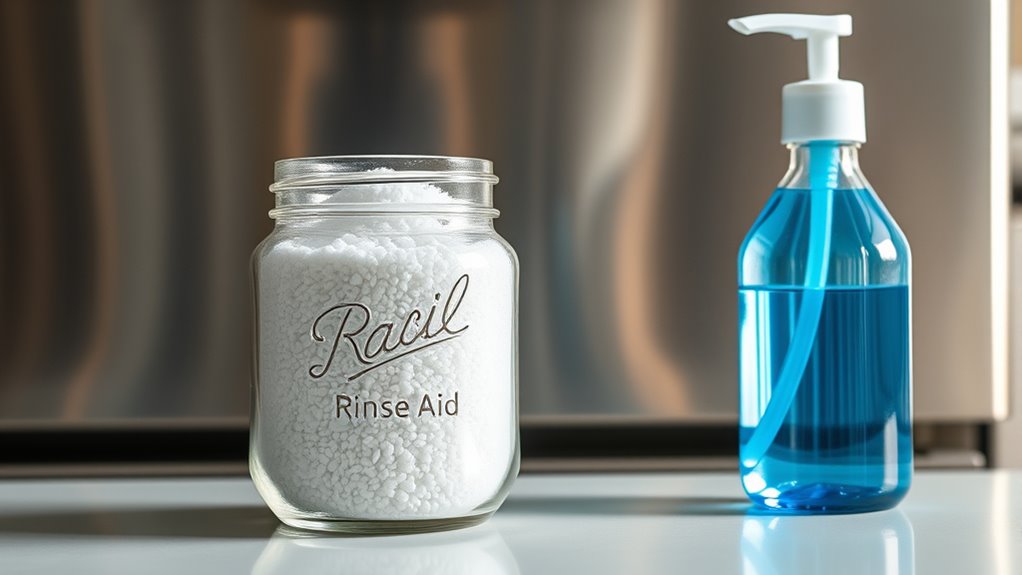

Using dishwasher salt and rinse aid depends on your water hardness and your cleaning needs. Salt softens hard water, preventing mineral buildup and improving cleaning and drying, while rinse aid helps dishes dry faster and minimizes water spots. If your water is hard, using both can substantially boost your dishwasher’s performance. If you’re unsure about your water type or whether you need these products, there’s more helpful information to guide your choice.
Key Takeaways
- Dishwasher salt softens hard water, preventing mineral buildup and ensuring better cleaning and longer appliance lifespan.
- Rinse aid improves drying, reduces water spots, and leaves dishes with a polished, streak-free finish.
- Both are essential in areas with hard water for optimal dishwasher performance and to prevent limescale damage.
- Using only detergent without salt or rinse aid may result in poorer cleaning, longer drying times, and more residue.
- Regularly using both products helps maintain the dishwasher’s efficiency and ensures cleaner, brighter dishes.
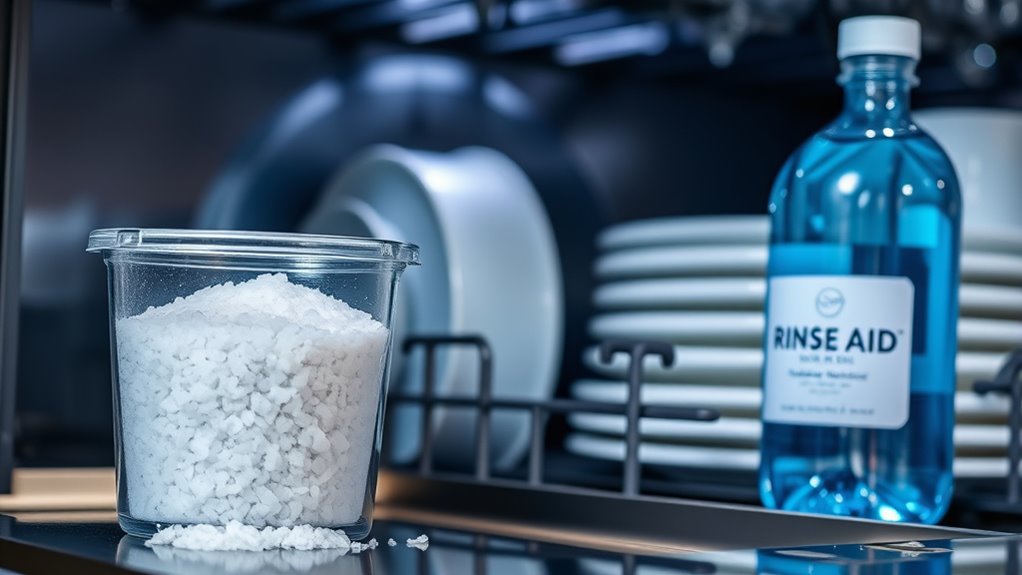
If you want your dishwasher to perform its best, understanding the roles of dishwasher salt and rinse aid is vital. These two products work together to improve your dishwasher’s efficiency, protect your appliance, and guarantee your dishes come out spotless. Dishwasher salt primarily focuses on water softening, which is essential if you have hard water. Hard water contains high mineral levels like calcium and magnesium, which can cause limescale buildup inside your machine and leave spots on your dishes. By using dishwasher salt, you help your appliance’s built-in water softener regenerate properly, reducing mineral deposits and preventing scale buildup. This not only extends the lifespan of your dishwasher but also guarantees that your dishes come out cleaner and brighter. Additionally, proper water softening improves drying performance because soft water allows heat and detergents to work more effectively, resulting in faster, shinier drying with fewer water spots. Without enough salt, hard water can hinder both cleaning and drying, leaving you frustrated with streaked glasses and residual grime.
Rinse aid, on the other hand, plays a different but equally important role. Its main job is to reduce water surface tension, helping water slide off dishes more easily during drying. This results in fewer water spots and streaks, especially on glassware and plastics. Rinse aid also enhances drying performance by promoting faster evaporation of residual water, so your dishes dry quicker and with a more polished finish. Using rinse aid is particularly beneficial if you notice that your dishes are still damp or streaky at the end of a cycle. It’s especially useful in areas with hard water, where mineral deposits tend to leave marks. You don’t need rinse aid every time if your water quality is good, but in most cases, adding it regularly guarantees better drying results.
Furthermore, understanding home appliance technology can help you optimize your dishwasher’s performance and troubleshoot issues more effectively. While both dishwasher salt and rinse aid improve your dishwasher’s performance, they serve different purposes. Salt focuses on water softening to prevent mineral buildup and bolster cleaning and drying, whereas rinse aid concentrates on enhancing the drying process and preventing water spots. If you skip either one, you might notice more spots, longer drying times, or build-up that could impair your machine’s efficiency. Using them correctly and regularly guarantees your dishwasher runs smoothly, your dishes come out spotless, and you get the best possible drying results. In short, incorporating both dishwasher salt and rinse aid into your routine keeps your dishwasher functioning at its best and your dishes looking their best.
Frequently Asked Questions
Can I Use Regular Table Salt Instead of Dishwasher Salt?
You shouldn’t use regular table salt instead of dishwasher salt. Table salt contains additives that can damage your dishwasher’s softening system, unlike dishwasher salt, which is pure and designed for this purpose. When considering rinse aid alternatives, you can try vinegar or lemon juice, but they may not work as effectively. Always stick with dishwasher-specific salt for peak performance and to protect your appliance.
How Often Should I Refill Rinse Aid?
You should refill rinse aid once the dispenser’s indicator light turns on, typically every few weeks. Research shows that water softening improves cleaning efficiency by 30%, preventing residue buildup. By regularly refilling your rinse aid, you help prevent water spots and soap scum, ensuring spotless dishes. Keep an eye on the indicator, and don’t wait until it’s empty—consistent use maintains peak water softening and residue prevention.
Are Rinse Aids Safe for All Dishware Types?
Rinse aids are generally safe for most dishware types, but you should check their compatibility first. Some delicate or non-stick items might not be compatible with certain rinse aids, so always read the label for dishware compatibility. If you’re unsure, test a small, inconspicuous area first. Overall, using rinse aid safely depends on following manufacturer instructions and considering your dishware’s material to prevent any damage.
Do All Dishwashers Require Both Salt and Rinse Aid?
Not all dishwashers require both salt and rinse aid. While dishwasher maintenance often involves using rinse aid for spot-free dishes, water softening with salt is essential only if your water’s hard. If your appliance’s manual recommends it, add salt to prevent mineral buildup. Otherwise, rinse aid helps with drying and shine, but isn’t always necessary. Check your dishwasher’s instructions to determine what’s needed for peak performance.
Can Using Salt and Rinse Aid Damage My Dishwasher?
Using salt and rinse aid typically won’t damage your dishwasher when used correctly. Salt helps with water softening, preventing limescale buildup, while rinse aid improves cleaning efficiency and drying. However, overusing or misusing them can cause issues like leaks or residue. Always follow your dishwasher’s instructions, and verify you’re using the right type of salt and rinse aid for your model. Proper use keeps your appliance running smoothly.
Conclusion
Think of your dishwasher as a trusted steed, needing just the right supplies to conquer grime and water spots. While salt and rinse aid aren’t always essential, they’re like the knight’s armor—ready to defend your dishes’ shine. If you live in hard water regions, consider them your secret weapons. Without them, your kitchen might resemble a battlefield, but with their help, your dishes will emerge sparkling—ready to impress, just like a hero victorious in the end.