
Many dishwasher owners overlook advanced options like energy-efficient cycles and sanitize settings that can boost cleaning, save water and power, and improve hygiene. Using these features wisely reduces utility bills and keeps your family safer, especially with delicate or heavily soiled items. Experimenting with different options open up better results tailored to each load. Stay tuned—there’s more to discover about making your dishwasher work smarter and more effectively than you ever imagined.
Key Takeaways
- Many users overlook the energy-efficient cycle, which saves water and power for regular loads without sacrificing cleaning quality.
- Sanitize options are often underused but are essential for disinfecting baby bottles, cutting boards, and heavily soiled dishes.
- Customizing cycles by combining options like quick wash and sanitize can optimize cleaning for specific needs.
- Some dishwasher models have specialized settings, such as eco or delicate modes, that can extend appliance lifespan and improve results.
- Activating energy-saving or eco modes during lighter loads can significantly reduce utility bills and environmental impact.
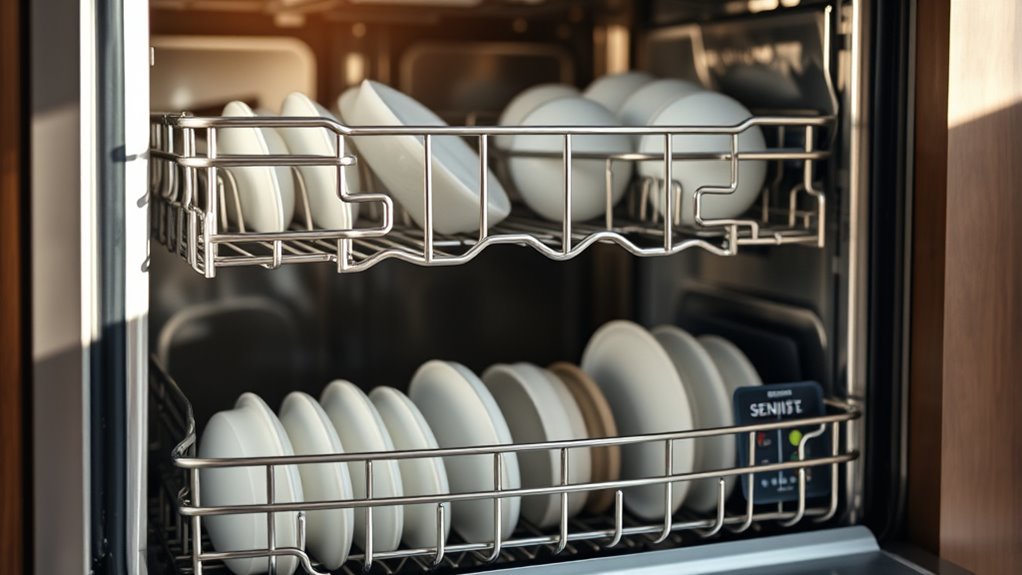
Have you ever wondered what each dishwasher setting does and how to choose the right one? It’s a common question, especially since many dishwashers come with a variety of options that can seem overwhelming. Understanding these settings can help you save energy, water, and even extend the life of your appliances. One of the most useful features you might overlook is the energy efficient cycles. These modes are designed to use less power and water while still thoroughly cleaning your dishes. If you’re conscious of your carbon footprint or want to cut down on utility bills, selecting an energy efficient cycle makes a lot of sense. They often take a little longer than standard cycles, but the tradeoff is worth it—less energy consumption means more savings and less environmental impact.
Energy efficient cycles save water and power while still cleaning thoroughly, helping you cut costs and protect the environment.
In addition to energy efficiency, many dishwashers have sanitize options that you should consider using, especially when washing items like baby bottles, cutting boards, or heavily soiled dishes. These sanitize cycles are specifically designed to reach higher temperatures than regular cycles, killing bacteria and germs more effectively. If you’re concerned about hygiene or have vulnerable family members, utilizing the sanitize option can give you peace of mind, ensuring your dishes are not just visually clean but also hygienically safe. Keep in mind that sanitize cycles tend to consume more energy and water, so reserve them for items that truly need that extra level of clean.
Choosing the right cycle depends on what you’re washing and your priorities. For everyday dishes, a normal cycle with an energy efficient option can save you money and conserve resources. When dealing with heavily soiled pots or pans, use a heavier cycle, but consider activating the sanitize option if hygiene is a priority. Some dishwashers allow you to customize cycles by combining options—for instance, a quick wash with a sanitize setting—so you can tailor the cleaning process to fit your needs. It’s worth reading your dishwasher’s manual to understand what each setting does, as manufacturers often include useful tips for ideal use.
Getting familiar with these settings means you’ll not only clean your dishes more effectively but also make smarter choices about energy and water use. Don’t shy away from experimenting with different cycles to see which ones work best for your household. By consciously selecting energy efficient cycles and utilizing sanitize options when necessary, you’re making a positive impact on your utility bills, the environment, and your family’s health—all without sacrificing clean dishes.
Frequently Asked Questions
Can I Use Special Detergents With Different Dishwasher Settings?
Yes, you can use special detergents with different dishwasher settings, but check cycle compatibility first. Some detergents work best with specific cycles, like heavy-duty or eco modes, to optimize cleaning. Always read the detergent label and your dishwasher manual to guarantee compatibility. Using the right detergent for each setting ensures your dishes come out spotless and your machine runs efficiently without any damage or residue.
How Do I Adjust the Water Temperature for Specific Cycles?
Think of your dishwasher as a symphony conductor—adjusting water temperature is like tuning the instrument. To customize cycles, locate the temperature control, often a dial or digital setting, and set it higher for tough stains or lower for delicate items. Most dishwashers let you tweak water temperature directly within cycle options, giving you control over cycle customization. This way, your dishes always get the precise care they deserve.
Are There Eco-Friendly Settings That Save Energy and Water?
Yes, your dishwasher likely has eco-friendly settings that save energy and water. Look for cycles labeled “energy-efficient” or “water-saving options” on your control panel. These cycles use lower water temperatures and reduced water amounts to cut down on resource use without sacrificing cleaning performance. Using these settings regularly helps you save money on utility bills and reduces your environmental impact. Give them a try for everyday loads!
What’s the Best Setting for Heavily Soiled Pots and Pans?
For heavily soiled pots and pans, use the heavy-duty or pots and pans setting on your dishwasher. Load your dishwasher racks properly to guarantee thorough cleaning, placing dirtier items on the bottom rack. Use a detergent compatible with deep cleaning cycles, and select the highest temperature setting if available. This combo helps break down stubborn grease and grime effectively, leaving your cookware spotless and ready to use.
How Do I Troubleshoot if Dishwasher Cycles Aren’T Completing Properly?
If your dishwasher leaks or shows cycle error codes, start by inspecting the door seal for cracks or debris, ensuring a tight seal. Check the water inlet valve and filters for blockages, and verify proper drainage. Reset the machine by unplugging it briefly. If issues persist, consult the user manual or call a professional. Troubleshooting these common signs helps keep your dishwasher running smoothly, avoiding incomplete cycles and leaks.
Conclusion
Now that you know these hidden dishwasher settings, your appliance becomes a secret weapon in your cleaning arsenal. Think of your dishwasher as a symphony conductor, with each setting like a vital instrument. When you access their potential, your dishes come out sparkling and fresh, like a well-orchestrated performance. So, don’t just press start—tune into these settings and let your dishwasher play its best tune every time. Your spotless dishes will thank you.