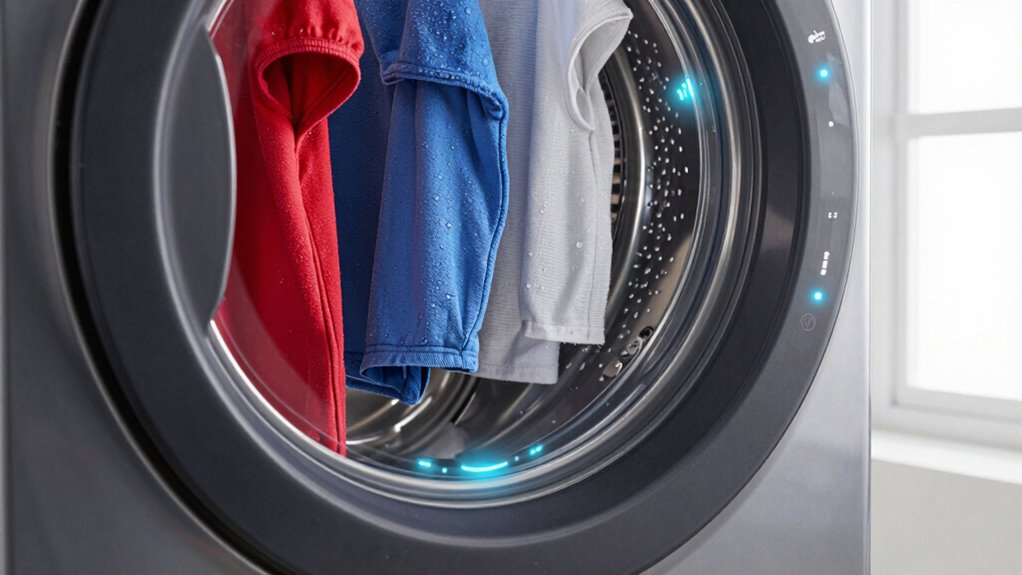

If your clothes feel damp after drying, your smart dryer sensors might be malfunctioning or blocked. Dust, lint, or debris can obstruct sensor views, causing false moisture readings that stop the cycle too early. Over time, sensors can also misalign or wear out, reducing accuracy. Regular cleaning and calibration can fix these issues, improving performance. Keep exploring to learn simple steps to troubleshoot and restore your dryer’s efficiency effectively.
Key Takeaways
- Sensor buildup from lint and dust can obstruct moisture detection, causing clothes to feel damp even after drying.
- Misaligned or worn sensors may provide inaccurate readings, leading to premature cycle termination or damp clothes.
- Regular cleaning and calibration of sensors improve moisture detection accuracy and drying performance.
- Sensor malfunctions or control board issues can disrupt proper drying cycles, resulting in clothes feeling damp.
- Addressing sensor problems through cleaning, calibration, or professional repair restores optimal dryer operation.

Smart dryer sensors are revolutionizing how you do laundry by making drying more efficient and convenient. These sensors work by continuously monitoring the moisture levels inside your dryer drum, helping prevent over-drying or under-drying your clothes. However, if your clothes still feel damp after a cycle, it might be time to look into your dryer’s sensor calibration. Proper sensor calibration ensures the moisture detection system is accurate, which is essential for peak drying performance. Over time, sensors can become less sensitive or misaligned due to dust, lint buildup, or general wear and tear. When this happens, the dryer may misread the moisture content, leading to clothes that seem dry but still feel damp. To fix this, you often need to reset or recalibrate the moisture detection system according to your dryer’s instructions. This process typically involves running a calibration cycle or cleaning the sensors to restore their accuracy.
Understanding how moisture detection works can help you troubleshoot why your clothes aren’t drying properly. The sensors inside your dryer detect the moisture level in your laundry by measuring electrical conductivity or other properties that change with humidity. When the sensors are clean and properly calibrated, they send precise signals to the dryer’s control system, indicating when your clothes are dry enough. If these sensors are dirty or misaligned, they may give false readings, causing the dryer to stop prematurely or continue running unnecessarily. In some cases, moisture detection issues can also stem from a malfunctioning sensor or an outdated control board, which might require professional repair or replacement. Regular maintenance, including sensor calibration, can help prevent these issues and prolong your dryer’s lifespan.
Keeping your sensors clean is one of the simplest ways to maintain accurate moisture detection. Regularly check for lint buildup or dust that may obscure the sensors’ view. Using a soft cloth or a brush to gently clean the sensor areas can greatly improve their performance. If your dryer has a calibration feature, follow the manufacturer’s instructions to reset the sensors periodically. Proper maintenance and calibration can extend the life of your smart dryer sensors and ensure your clothes come out perfectly dry every time.
In essence, understanding sensor calibration and moisture detection is key to fixing clothes that feel damp after drying. When your smart dryer’s sensors are properly calibrated and clean, they can accurately measure moisture in your laundry, saving you time, energy, and frustration. So, take the time to check your sensors regularly, clean them as needed, and recalibrate if necessary. Doing so guarantees your dryer operates at top efficiency, leaving your clothes perfectly dry and ready to wear.
Frequently Asked Questions
Can Sensor Issues Cause Clothes to Over-Dry or Under-Dry?
Sensor issues can definitely cause your clothes to over-dry or under-dry. When moisture detection or sensor calibration is off, your dryer might not accurately gauge humidity levels, leading to improper drying cycles. You should check and recalibrate the sensors regularly, ensuring they accurately detect moisture. Proper maintenance helps prevent over-drying or under-drying, saving energy and protecting your clothes from damage.
How Often Should I Clean or Replace Dryer Sensors?
Think of your dryer sensors as the heart of moisture detection—staying healthy keeps your clothes perfectly dry. You should clean your sensors every 3-6 months to maintain ideal sensor calibration. If they’re dirty or damaged, replace them promptly. Regular maintenance ensures accurate readings, preventing damp clothes and over-drying. Keep an eye on sensor performance, and don’t hesitate to replace them when they no longer respond properly.
Are There DIY Methods to Troubleshoot Sensor Problems?
Yes, you can troubleshoot sensor problems yourself. Start by inspecting the wiring connections for any damage or looseness, ensuring proper sensor calibration by cleaning the sensors gently with a soft cloth. If the dryer still detects dampness, test the sensor with a multimeter to check for proper resistance. These steps can help identify if the sensor needs replacement or if wiring adjustments are necessary before calling a professional.
Do Sensor Problems Affect Energy Consumption?
Yes, sensor problems can decrease your dryer’s energy efficiency, causing it to run longer than necessary. When sensors don’t detect clothes are dry, it leads to over-drying, wasting energy and increasing your utility costs. Fixing sensor issues guarantees your dryer functions at its best, reducing energy consumption and saving you money. Regular maintenance and timely repairs can help prevent these problems, keeping your dryer running efficiently and lowering overall cost implications.
Can External Factors, Like Detergent or Fabric Softener, Impact Sensor Function?
Yes, external factors like detergent residue and fabric softener can impact sensor function. When you use too much detergent or softener, they can leave buildup on the sensors, causing them to misread moisture levels. This buildup may lead to clothes feeling damp even after drying. To fix this, clean the sensors regularly with a soft cloth and mild detergent, ensuring they stay free of residue for accurate moisture detection.
Conclusion
Now that you understand why your clothes stay damp, you hold the power to restore your dryer’s harmony. Think of the sensors as the silent guardians of your laundry, quietly working to keep your garments perfectly dry. With a little troubleshooting and care, you can turn the tide and banish dampness for good. Reclaim your laundry room as a sanctuary of freshness—your clothes deserve nothing less than the crisp, comforting hug of truly dry fabric.