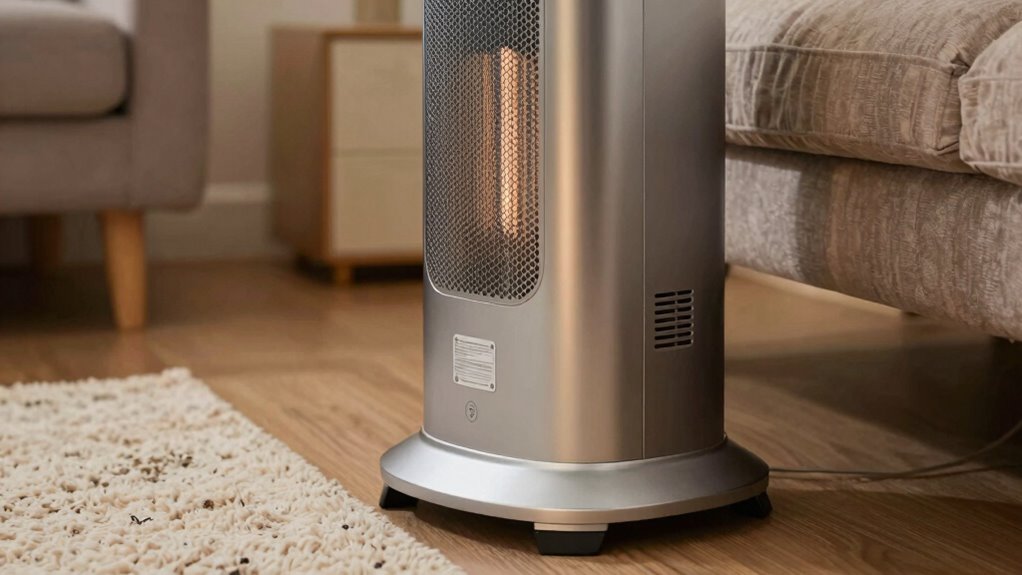

The common advice to keep space heaters five feet away from objects is a myth; safety isn’t just about distance. Focus on placing your heater on a stable, flat surface and avoiding unstable or high-traffic spots. Never use extension cords, and always inspect cords for damage before turning on. Proper placement, electrical safety, and cautious handling matter most for preventing fires and shocks. Keep these tips in mind, and you’ll better understand what truly guarantees safe heating.

Get the little things that make your day delivered free with Prime
- Fast, free delivery on millions of items
- Prime Video, Amazon Music and more included
- Member-only deals all year
Key Takeaways
- Focus on proper placement: keep heaters on stable, flat surfaces away from water and high-traffic areas.
- Avoid using extension cords or power strips; plug heaters directly into grounded outlets.
- Regularly inspect for damaged cords, frayed wires, or cracks before use.
- Turn off and unplug heaters when unattended, leaving rooms, or sleeping.
- Prioritize electrical safety and stable positioning over the outdated 5-foot distance myth.
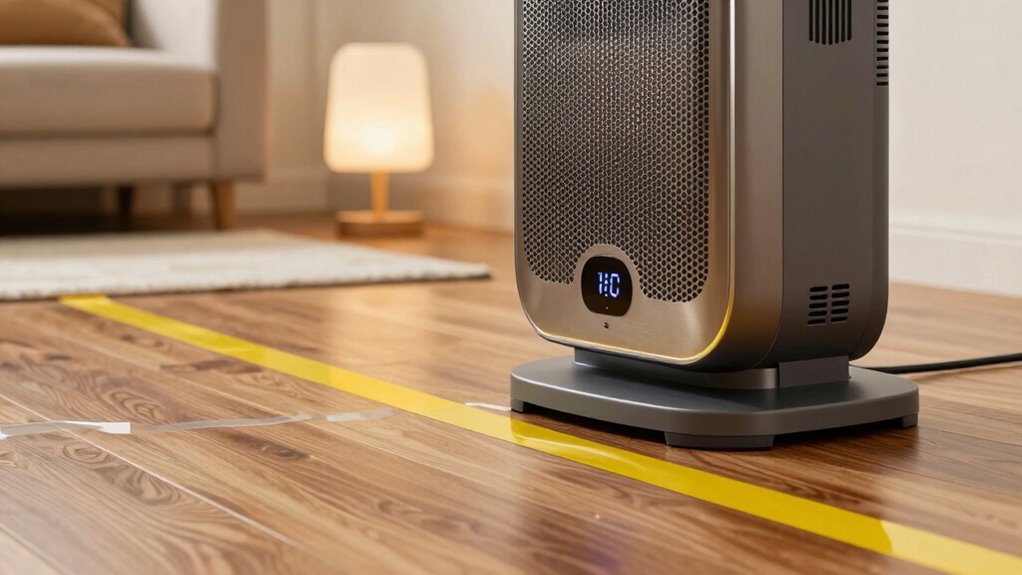
Space heaters can keep you warm and cozy during cold months, but they also pose fire and safety risks if not used properly. One of the most common misconceptions is the “5-foot rule,” which suggests you need to keep space heaters at least five feet away from furniture, curtains, and other flammable materials. While maintaining some distance is wise, focusing solely on this myth can distract you from more critical safety practices. Instead, your priority should be guaranteeing portable safety and understanding electrical hazards that come with using these appliances.
Portable safety is essential because space heaters are often moved around your home, plugged into different outlets, and placed in various spots. You need to choose a stable, flat surface where the heater won’t tip over easily. Never place a space heater on uneven or unstable surfaces, as this increases the risk of knocking it over, which can cause fires. Additionally, keep the heater away from high-traffic areas to prevent accidental bumps or trips. When it comes to portable safety, also consider the length of the power cord. Avoid using extension cords or power strips, as they can overheat and cause electrical hazards. Instead, plug the heater directly into a grounded outlet to ascertain risks.
Electrical hazards are one of the most serious dangers associated with space heaters. Faulty wiring, damaged cords, or improper use can lead to electrical fires or shocks. Always inspect your space heater before plugging it in—check for frayed cords, cracks, or exposed wires. Never use a heater with a damaged cord or plug. If your heater has a damaged cord, replace it or have it repaired by a professional. When plugging in your heater, ensure the outlet is in good condition and is not overloaded with multiple devices, which can cause overheating. Avoid running your space heater through an extension cord, no matter how tempting, because extension cords are not designed to handle the high current loads that space heaters draw. Proper placement and load management are crucial for safety.
Furthermore, always follow the manufacturer’s instructions regarding placement and operation. Keep the heater away from water or moisture, as electrical hazards increase considerably in damp environments. Turn off and unplug the heater when you leave the room or go to sleep. Never leave it unattended for long periods. By being vigilant about portable safety and electrical hazards, you dramatically reduce your risk of accidents, fires, and electrical shocks. Remember, the goal isn’t just to keep warm but to do so safely. Proper placement, regular inspections, and cautious handling make all the difference in preventing disasters and ensuring your space heater keeps you cozy without hazards.
space heater with tip-over safety switch
As an affiliate, we earn on qualifying purchases.
As an affiliate, we earn on qualifying purchases.
Frequently Asked Questions
Are Space Heaters Safe for Children and Pets?
Yes, space heaters can be safe for children and pets if you follow proper child proofing hazards and pet safety precautions. Always keep the heater out of reach, use models with tip-over and overheat protection, and never leave them unattended. Regularly inspect cords for damage, and make certain your kids and pets can’t access the hot surfaces. These steps help prevent accidents and keep everyone safe around space heaters.
Can Space Heaters Be Left Unattended Overnight?
You shouldn’t leave your space heater unattended overnight, as it’s like leaving a campfire burning — risks of cord fire hazards and overheating increase. Always turn it off and unplug when not in use. Keep the thermostat set to a safe, moderate temperature, and make certain there’s nothing flammable nearby. It’s better to be safe than sorry, especially with children or pets around while you sleep.
What Are the Signs of a Malfunctioning Space Heater?
If your space heater malfunctions, you’ll notice signs like heater overheating, which can cause it to shut off unexpectedly, and unusual smells, such as burning or chemical odors. You might also see sparks, smoke, or experience flickering power. These signs indicate a problem, so turn off the heater immediately, unplug it, and inspect for damage or dirt buildup. Never disregard these warning signs to ensure your safety.
How Often Should I Clean My Space Heater?
Ever wonder how often you should clean your space heater? You should perform a maintenance checklist and clean it at least once a month during heavy use or every three months if used less frequently. Regular cleaning prevents dust buildup and guarantees safe operation. Remember, a clean heater runs more efficiently and reduces fire risks. So, set a cleaning frequency and stick to it for ideal performance and safety.
Are There Any Electrical Code Requirements for Space Heater Placement?
Yes, there are electrical code requirements for your space heater placement. You should guarantee the cord placement avoids tripping hazards and keeps the cord away from heat sources. Use outlets that are properly grounded and meet capacity requirements, avoiding extension cords or power strips. Always plug the heater directly into a wall outlet, and position it away from water, furniture, or drapes to prevent fire risks and ensure safe operation.
Conclusion
Remember, safety isn’t about chasing myths like the 5-foot rule; it’s about respecting the power of your space heater. Think of it as tending a delicate flame—keep it clear of clutter, never leave it unattended, and always stay vigilant. By treating your heater with the reverence it deserves, you turn a simple device into a guardian against cold, rather than a hidden threat lurking in the shadows. Safety, after all, keeps your warmth shining bright.
Fall Picks
fall essentials
As an affiliate, we earn on qualifying purchases.