If your dryer is taking forever to dry clothes, it’s likely a sign of vent blockage or lint buildup. Watch for longer drying times, clothes staying damp, or the vent feeling hot to the touch. You might notice lint around the vent opening or a musty smell, which indicates obstructions. Ignoring these signs can waste energy and increase fire risk. Keep an eye out—there’s more to know if you want to keep your dryer running efficiently.
Key Takeaways
- Longer drying times and clothes remain damp after cycles suggest a vent blockage.
- Excessive heat and a burning smell during drying indicate lint buildup or vent obstruction.
- Visible lint around the vent opening signals it’s time for cleaning.
- Resistance when detaching the vent hose points to significant lint accumulation.
- Frequent overheating or premature dryer shutdowns are warning signs of poor vent airflow.
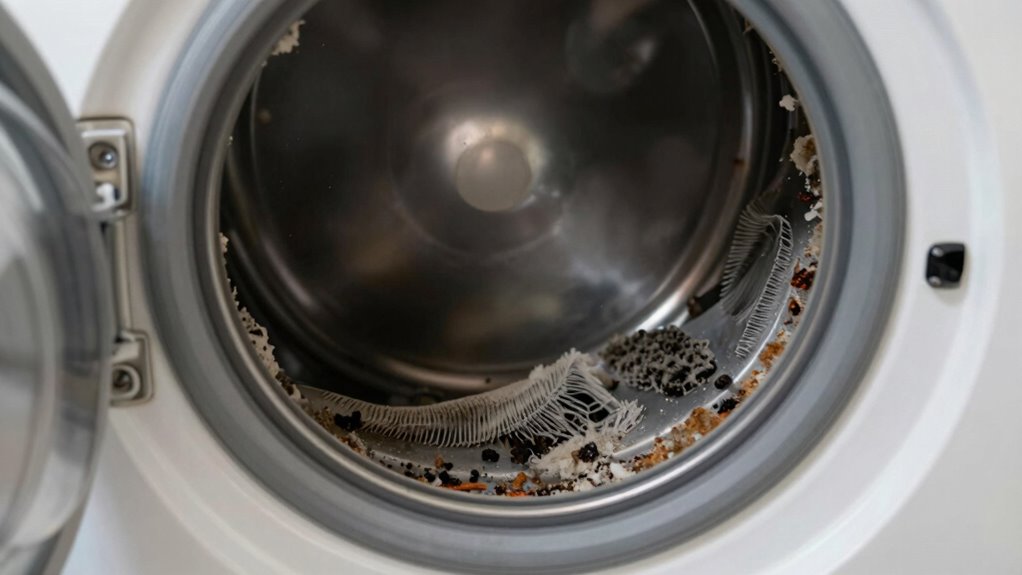
Have you noticed your dryer taking longer to dry clothes or feeling unusually hot during operation? These can be signs that something’s wrong with your appliance’s vent system. One common culprit is lint buildup, which accumulates over time and restricts airflow. When lint collects in the vent or duct, it acts like a barrier, preventing hot, moist air from escaping efficiently. This not only increases drying time but also forces your dryer to work harder, putting extra strain on its components. If you see your clothes still damp after a full cycle, or your dryer feels excessively hot, it’s a clear warning that lint buildup and vent obstruction are likely obstructing proper airflow.
Another indicator to watch for is increased energy consumption. When your vent is clogged, your dryer consumes more electricity because it has to run longer to dry clothes. This not only raises your utility bills but also accelerates wear and tear on your appliance. If you notice your energy bills creeping up without a change in usage habits, it might be time to inspect your vent system. Moreover, if your laundry area smells musty or has a burning odor during or after drying, it could be a sign of lint buildup igniting or vent obstruction causing excessive heat. Don’t ignore these warning signs, as they can escalate into more serious problems, including the risk of a house fire.
Clogged vents can also cause your dryer to shut off prematurely or trigger safety features designed to prevent overheating. This can be frustrating because your drying cycle won’t complete, and you’ll have to run multiple cycles to get your clothes dry. Over time, vent obstruction can cause your dryer to overheat, leading to potential damage or costly repairs. Regularly inspecting and cleaning your vent system is key to avoiding these issues. If you notice lint around the vent opening or feel resistance when you try to detach the vent hose, these are signs that lint buildup is significant and needs removal. Additionally, understanding the importance of proper deep-sky imaging setup can help you better maintain your equipment and avoid unnecessary malfunctions.

Waterless Essential Oil Diffuser, Portable Aromatherapy Diffuser with 20mL Capacity, Battery Operated Mini Scent Diffuser,3 Mist Levels & Timers, Leak-Free, for Home, Car, Office (Black)
【Waterless Essential Oil Diffuser for Pure Aroma】Our advanced waterless diffuser technology transforms your favorite essential oils into a...
As an affiliate, we earn on qualifying purchases.
Frequently Asked Questions
How Often Should I Schedule Professional Dryer Vent Cleaning?
You should schedule professional dryer vent cleaning at least once a year to guarantee proper dryer maintenance and prevent fire hazards. If you notice longer drying times, increased energy bills, or musty odors, it’s time for a vent inspection. Regular cleaning keeps your dryer running efficiently, reduces fire risks, and extends its lifespan. Don’t wait until problems escalate—annual vent inspections are a simple, proactive step for safe, effective dryer operation.
Can a Clogged Vent Cause a Fire Hazard?
A clogged vent is like a ticking time bomb, silently increasing your fire risk. When lint and debris block airflow, heat builds up, turning your dryer into a potential hazard. Ignoring this safety concern can lead to a devastating fire. Regular vent cleaning keeps that danger at bay, ensuring your home remains safe. Don’t wait for warning signs—prevent fires by maintaining clear, well-maintained vents.
What Are the Costs Associated With Vent Cleaning Services?
The cost estimate for vent cleaning services varies based on your home’s size and vent length, typically ranging from $100 to $300. Service charges depend on the provider and whether additional repairs are needed. You should expect to pay for a thorough cleaning, which can improve dryer efficiency and reduce fire hazards. Always request a detailed quote beforehand to understand the total costs involved.
Are There DIY Methods to Clean My Dryer Vent Effectively?
You can tackle vent cleaning yourself with DIY maintenance using vent cleaning tools like a brush, vacuum, or dryer vent cleaning kit. First, unplug your dryer for safety. Next, disconnect the vent hose, then insert the brush or vacuum to clear lint buildup, pushing and pulling to loosen debris. Repeat until the vent is clear. This hands-on approach keeps your dryer running efficiently and reduces fire hazards.
How Can I Tell if My Vent Needs Immediate Attention?
You can tell if your vent needs immediate attention by checking for vent blockage or excessive lint buildup. Is your dryer taking longer to dry clothes, or does it feel unusually hot? You might also notice a burning smell or see lint around the vent opening. These signs indicate a blocked vent, which can cause fire hazards and reduce efficiency. Address these issues promptly to keep your dryer safe and functioning properly.

USB C Wall Fast Charger Block,40W 4-Port Type C Fast Charging Dual Type C+Dual USB-A Plug Multiport Charger Brick for iPhone 17/16/15/14/13/12 Pro Max, iPad, Galaxy
【High Speed Charging for 4 Devices】With 2 USB-C ports and 2 USB-A ports, The USB-C charger block charges...
As an affiliate, we earn on qualifying purchases.
Conclusion
If your dryer’s taking longer to dry clothes, it’s a sign you should check the vent. Regular cleaning can cut drying time by up to 30%, saving you energy and money. Don’t ignore these warning signs—clean vents prevent fires and keep your dryer running efficiently. Remember, a clogged vent isn’t just frustrating; it’s a safety hazard. Stay proactive, clean your vents regularly, and enjoy quicker, safer drying sessions.
USB C Wall Charger Block,20W USB C&USB A Dual Port Charging Block Plug USB C Power Adapter Compatiblefor iPhone 17/17e /17 Pro Max/Air/16e/16 ProMax/16Plus/15/14/13/12/11/XS,iWatch,iPad Pro/Air/Mini
USB C Charger Fast Charging: The USB-C port supports a Max 20W power. Dual-port design with USB-C and...
As an affiliate, we earn on qualifying purchases.

ChaGeer Big and Tall Office Chair with Foot Rest and Waist Lumber Support 300lbs, Executive Home Office Chair with Adjustable Headrest and Armrests, High-Back Big and Tall Computer Chair with Rocking
Reclining Ergonomic Office Chair: Executive chair is designed to be user-friendly. Chair back fits human body curves, and...
As an affiliate, we earn on qualifying purchases.