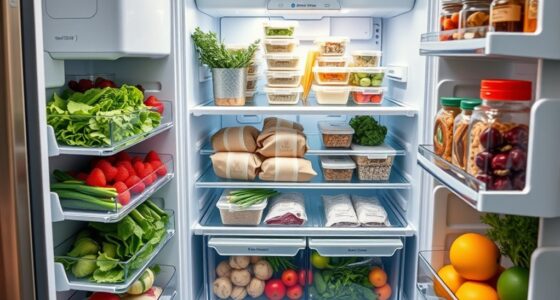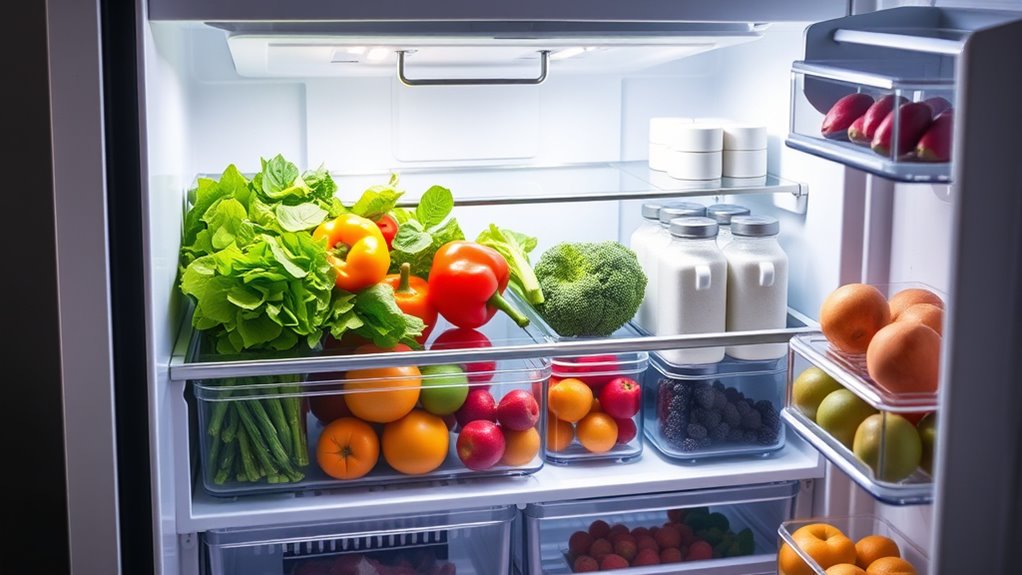

Creating specific zones in your fridge helps keep your food fresher longer. Designate a produce drawer for fruits and vegetables, and keep dairy on a dedicated shelf for ideal storage. Store leftovers in clear containers and place frequently used items at eye level for easy access. Less often used items can go on higher or lower shelves. Maintaining these zones and checking expiry dates regularly will enhance freshness and reduce waste—discover more tips to keep your fridge organized.
Key Takeaways
- Designate specific zones for produce, dairy, leftovers, and drinks to prevent cross-contamination and maintain freshness.
- Keep fruits and vegetables in a dedicated crisper drawer to regulate humidity and extend freshness.
- Store perishable items at optimal temperatures by placing them in the main body of the fridge, away from the door.
- Use clear, airtight containers for leftovers and prepared foods to reduce spoilage and maintain quality.
- Regularly clean and reorganize zones to ensure proper airflow and prevent spoilage-causing bacteria buildup.

A well-organized fridge can make meal prep easier and reduce food waste, but it starts with creating designated zones for different items. When you set up specific areas for various food groups, you streamline your shopping and cooking routines, making it simpler to find what you need quickly. To do this effectively, start by emptying your fridge and giving it a thorough clean using refrigerator cleaning tips—removing expired items, wiping down shelves, and checking seals. A clean fridge not only looks better but also helps prevent spoilage and keeps your food fresher longer.
Once clean, divide your fridge into zones based on the types of food you store most often. For instance, designate a produce drawer for fruits and vegetables, a separate area for dairy products, and a shelf or bin for leftovers. By assigning specific spots, you reduce the chance of cross-contamination and keep everything accessible. This setup encourages better meal prep ideas because you’ll see what ingredients you have at a glance, making it easier to plan meals without overbuying or letting things spoil.
It’s helpful to keep frequently used items at eye level, so you don’t have to rummage through the fridge every time. For example, place drinks, condiments, or snacks in easily reachable zones. Less frequently used items, like holiday leftovers or specialty ingredients, can go on higher or lower shelves. Clear storage containers also help you identify contents quickly, reducing the need to open multiple containers and wasting energy.
Incorporating these zones can also improve your refrigerator organization habits. When you make a habit of putting things back in their designated areas, you’ll find it easier to maintain order over time. This consistency minimizes clutter and helps you keep track of expiration dates, which is vital for reducing food waste. Plus, organized zones make meal prep ideas more manageable because you’ll always know where everything is. For example, if you’re planning a salad, you’ll just head to the produce zone, rather than wasting time searching or digging through clutter.
Finally, sticking to a regular cleaning schedule will keep your zones functional and your fridge smelling fresh. Every few weeks, wipe down shelves, check for expired food, and reorganize if necessary. This routine ensures your refrigerator remains a clean, efficient space that supports your cooking habits and keeps food fresher longer, saving you money and stress in the long run.

Kenmore 2296853 5.6 cu. ft. Front Control Electric Induction Range Oven - 4 Dual Ring Elements, True Convection, Air Fry, Self Clean, Turbo Boil, Chrome Racks, Storage Drawer - Stainless Steel
Powerful Induction Cooking: This electric range oven with 5.6 cu. ft. capacity and induction elements delivers faster, more...
As an affiliate, we earn on qualifying purchases.
Frequently Asked Questions
How Often Should I Reorganize My Fridge Zones?
You should reorganize your fridge zones about once a month to guarantee peak freshness. Regularly check temperature monitoring devices and adjust as needed to keep food safe. When meal prepping, keep ingredients in designated zones to prevent cross-contamination and spoilage. Reorganizing helps you spot expired items and maintain proper storage, ultimately extending your food’s freshness and reducing waste. Stay attentive to how your fridge functions and make adjustments accordingly.
Can Zone Organization Prevent Food Spoilage?
Imagine you keep fresh vegetables in a dedicated crisper with proper humidity settings. By maintaining correct temperature monitoring and ensuring proper air circulation within that zone, you can considerably prevent food spoilage. Zone organization helps you keep perishables at ideal conditions, reducing bacteria growth and spoilage risks. When each zone is properly managed, your food stays fresh longer, and you avoid unnecessary waste.
What Are the Best Labels for Fridge Zones?
You should use clear, concise labels like “Dairy,” “Fruits,” and “Vegetables” for your fridge zones. Incorporate labeling techniques such as color-coded zones to quickly identify each section—green for vegetables, blue for dairy, and red for meats. This system helps you stay organized, reduces cross-contamination, and keeps food fresher longer. Consistent, visible labels make it easier to maintain your fridge’s order and hygiene.
How Do I Adjust Zones for Different Seasons?
Your fridge is like a chameleon, adapting to seasonal changes! To handle seasonal temperature adjustments, start by changing your zone settings—lower the fridge temperature in winter and slightly raise it in summer. Use zone shift tips like labeling zones clearly and adjusting shelf placements. This way, you keep your food fresh all year round, no matter the season, by making smart, easy adjustments to your fridge’s organization.
Are There Eco-Friendly Storage Solutions for Fridge Zones?
Yes, there are eco-friendly storage solutions for fridge zones. You can use biodegradable containers that break down naturally, reducing waste. Reusable storage bags are also a smart choice, as they cut down on single-use plastics and keep your food fresh. These options help you maintain organized zones while being environmentally friendly. Just make certain they’re dishwasher-safe for easy cleaning and long-term use, making your fridge both sustainable and tidy.

Airversa Smart Waterless Essential Oil Diffuser Scent Air Machine with 12A1V Power Adapter for Large Rooms Spaces Home and Commercial Use, Up to 2000 sq ft 400 mL Capacity Scent Diffuser, Black ANA
Transform Any Space: Expansive Waterless Scent ::: Immerse yourself instantly! Our waterless diffuser covers up to 2000 sq...
As an affiliate, we earn on qualifying purchases.
Conclusion
Now that you’ve set up your fridge with strategic zones, you’re in control of freshness like never before. But remember, the real secret isn’t just the layout—it’s how you use it every day. Will you stick to these zones or let clutter and forgetfulness take over? The choice is yours, and your fridge’s future depends on it. Stay vigilant, and your food will stay fresher, longer—just waiting for you to release its full potential.
Waterless Essential Oil Diffuser, Hotel Scent Diffuser, Essential Oil Diffuser Large Room Up to 3000 Sq.Ft, 500mL Capacity Home Diffusers for Large Home, Whole House Air Freshener (White)
【Waterless Essential Oil Diffuser】The scent diffusers for home covers an area of up to 3,000 sq. ft. Its...
As an affiliate, we earn on qualifying purchases.

InnoGear Aromatherapy Diffuser & 10 Essential Oils Set, 400ml Diffuser Ultrasonic Diffuser Cool Mist Humidifier with 4 Timers 7 Colors Light Waterless Auto Off for Valentine's Gift, Dark Wood Grain
Reminder: To ensure proper mist function, please do not refill under tap (use measuring cup only to prevent...
As an affiliate, we earn on qualifying purchases.