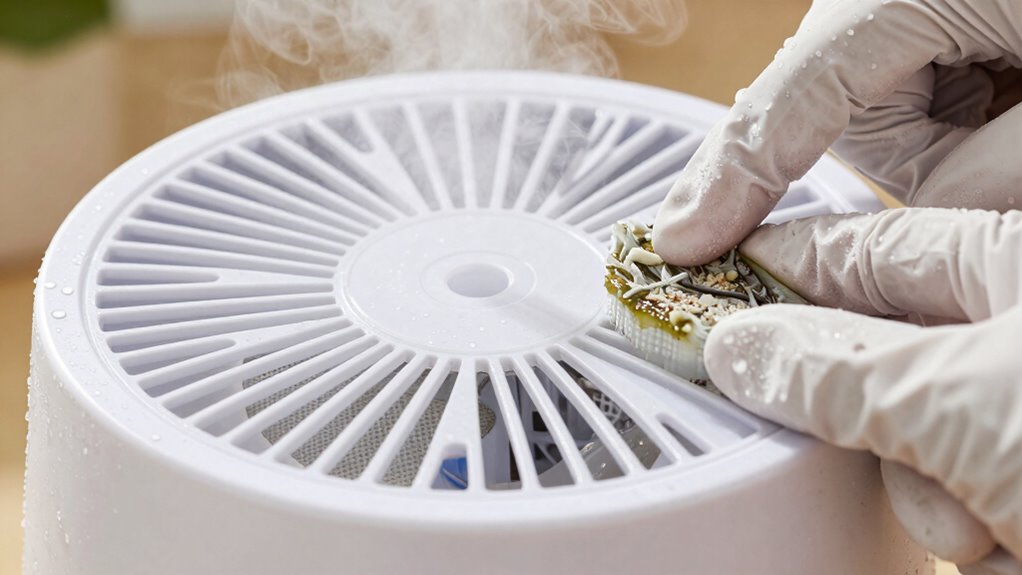

To prevent biofilm and keep your humidifier clean, regularly empty and rinse the water reservoir, avoiding standing water. Use distilled water to minimize mineral buildup and soak parts in vinegar or a mild descaling solution for about 30 minutes, then scrub gently and rinse thoroughly. Replace filters as recommended, and avoid harsh chemicals. Consistent maintenance keeps bacteria at bay and guarantees your device works efficiently—keep going to discover more tips for a safe, germ-free humidifier.

Get the little things that make your day delivered free with Prime
- Fast, free delivery on millions of items
- Prime Video, Amazon Music and more included
- Member-only deals all year
Key Takeaways
- Regularly inspect and clean the water reservoir and heating element to prevent mineral buildup.
- Use distilled water and soak parts in vinegar or mild descaling solutions to loosen deposits.
- Replace or clean filters every 1-3 months to prevent mold and biofilm formation.
- Gently scrub affected areas with a soft brush during cleaning to remove slimy biofilm layers.
- Avoid harsh chemicals; focus on vinegar or gentle solutions for safe, effective maintenance.
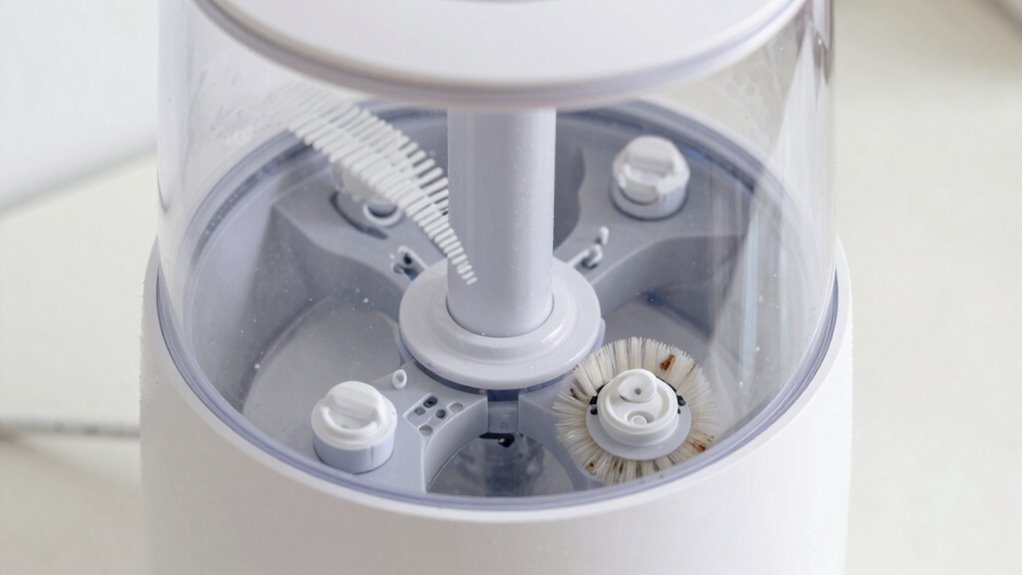
Keeping your humidifier clean is essential for maintaining healthy air quality in your home. If you neglect this task, mineral buildup and mold can quickly develop, reducing the device’s efficiency and potentially harming your health. Regular filter maintenance is a key part of this process, ensuring that your humidifier operates smoothly and that the air you breathe remains pure. When you change or clean the filter as recommended, you prevent mineral deposits from accumulating, which can clog the system and diminish its ability to produce moisture evenly. Mineral buildup occurs when hard water evaporates inside the unit, leaving behind calcium, magnesium, and other mineral residues. Over time, these deposits can become thick and stubborn, making cleaning more difficult and decreasing the lifespan of your device.
To stay ahead of mineral buildup, you should inspect your humidifier regularly for signs of deposits, especially around the water reservoir and heating element if your model has one. When mineral deposits start to appear, it’s time for a thorough cleaning. Using distilled water can help reduce mineral buildup since it contains fewer impurities than tap water. During cleaning, avoid harsh chemicals that might damage the unit; instead, opt for vinegar or a mild descaling solution. Fill the water tank with a mixture of vinegar and water, then let it sit for 30 minutes to loosen deposits. After soaking, scrub gently with a soft brush or cloth, focusing on areas with visible buildup. Rinse thoroughly to remove any residue before reassembling.
In addition to addressing mineral buildup, filter maintenance plays a critical role in preventing the growth of biofilm—those slimy, bacteria-laden layers that can thrive inside humidifiers. Regularly replacing or cleaning your filters ensures that airborne contaminants don’t circulate back into your room. Most filters need to be changed every one to three months, depending on usage and water quality. When you handle filters, check for signs of mold or discoloration, which indicate it’s time for a new one. Proper filter maintenance not only keeps your air clean but also prevents the spread of germs that can cause respiratory issues. Maintaining humidifier hygiene is essential for optimal performance and health safety.
As an affiliate, we earn on qualifying purchases.
Frequently Asked Questions
How Often Should I Replace My Humidifier Filter?
You should replace your humidifier filter every 1 to 3 months, depending on your usage and water quality. Maintaining a regular filter replacement schedule helps prevent mold, bacteria, and biofilm buildup. Check your manufacturer’s instructions for specific recommendations, but don’t wait too long—neglecting filter replacement can lead to poor air quality and device inefficiency. Keep track of your maintenance schedule to guarantee your humidifier operates safely and effectively.
Can I Use Vinegar to Clean My Humidifier?
Yes, you can use vinegar cleaning to disinfect your humidifier. Vinegar is a natural disinfectant that effectively breaks down mineral deposits and biofilm buildup. To clean, fill your humidifier with equal parts white vinegar and water, let it sit for about 30 minutes, then scrub and rinse thoroughly. Regular vinegar cleaning helps keep your humidifier free of germs and maintains ideal performance without harsh chemicals.
Are There Any Natural Disinfectants for Humidifiers?
Yes, you can use natural remedies as disinfectant alternatives for your humidifier. Vinegar is a popular choice because it naturally kills bacteria and mold, making it an effective disinfectant alternative. You might also try hydrogen peroxide or tea tree oil, both known for their antimicrobial properties. Regularly using these natural remedies helps keep your humidifier clean and free from harmful biofilm buildup, ensuring healthier air quality in your space.
What Are the Signs of Biofilm Buildup?
You’ll notice biofilm buildup if you see mold indicators or slimy, cloudy residues in your humidifier. Biofilm detection is key—look for any unusual discoloration or foul odors, which signal microbial growth. Regular cleaning prevents this. If you spot these signs, it’s time for a thorough disinfecting routine to keep your humidifier safe and functioning properly. Don’t ignore these clues; they indicate biofilm presence that needs urgent attention.
Is It Safe to Run a Humidifier Daily?
Running your humidifier daily can be safe if you follow proper humidifier safety practices. Regularly cleaning and disinfecting prevent biofilm buildup and guarantee healthy air quality. Daily usage helps maintain ideal humidity levels, reducing respiratory discomfort and dry skin. However, neglecting maintenance can pose health risks. So, if you keep up with cleaning routines and monitor humidity, daily operation is safe and beneficial for your environment.
Conclusion
Remember, an ounce of prevention is worth a pound of cure. Regularly cleaning your humidifier keeps mold and bacteria at bay, ensuring the air you breathe stays healthy. Don’t wait until you see mold or notice a bad smell—stay proactive. A simple routine now saves you from bigger headaches later. Keep your humidifier clean, and breathe easy knowing you’re doing your best to protect your health every day.
NFL season / tailgating Picks
team gear
As an affiliate, we earn on qualifying purchases.