Recirculating range hoods might seem convenient, but they’re ultimately ineffective because they only filter air temporarily without removing smoke, odors, and airborne particles at the source. The filters can clog over time and don’t eliminate pollutants, often making odors linger. Proper venting outside provides a direct path to remove all pollutants, making your kitchen safer and cleaner. If you want to discover why external venting is the better choice, there’s more to uncover.

Get the little things that make your day delivered free — and shop member deals
- Fast, free delivery on millions of items
- Access to Prime Big Deal Days deals on October 6–7
- Prime Video, Amazon Music and more included
Key Takeaways
- Recirculating hoods only filter air but do not remove smoke or fumes from the kitchen environment.
- Filters in recirculating hoods become less effective over time, allowing pollutants to persist.
- They create a false sense of cleanliness by recycling air without addressing the source of pollution.
- External venting directly expels smoke, grease, and odors outside, ensuring better air quality.
- Proper outside venting provides long-term, efficient ventilation compared to recirculating systems.
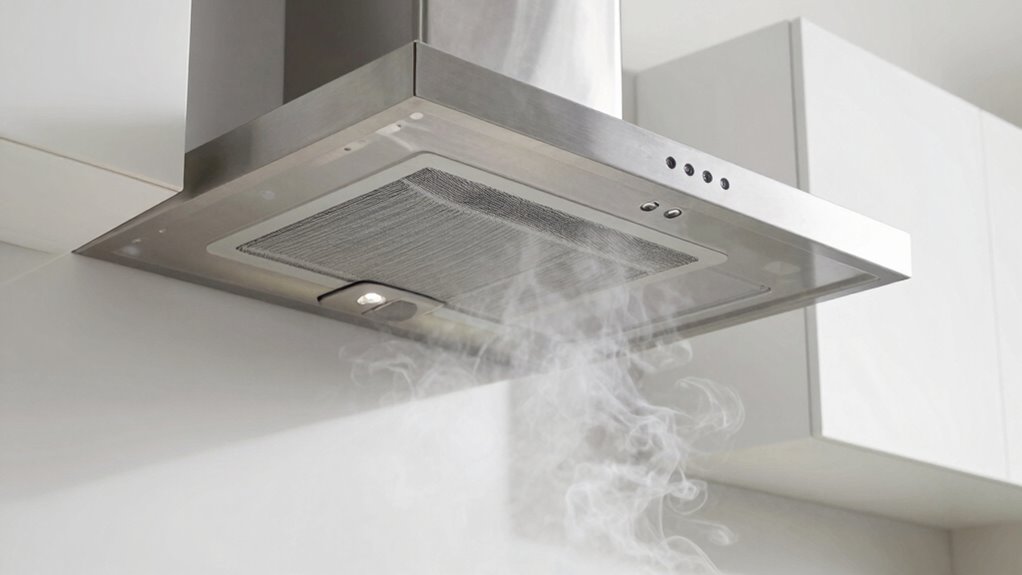
Have you ever wondered how to effectively vent your range hood to keep your kitchen fresh and safe? Proper venting is essential because it directly impacts your kitchen air quality and helps eliminate smoke, grease, and odors. When your range hood is poorly vented or relies solely on recirculating filters, you might notice lingering smells and airborne particles that make the space uncomfortable and potentially unsafe. Recirculating hoods attempt to filter air and then blow it back into the kitchen, but this approach often feels useless because it doesn’t adequately remove the pollutants from your space. Instead, it merely recirculates them, leaving your kitchen with reduced ventilation efficiency and compromised air quality.
You might think that using charcoal or grease filters in a recirculating hood will solve your problems, but in reality, these filters only trap some particles and odors temporarily. They don’t eliminate the source of pollution, which means smoke, fumes, and humidity remain in your environment. Over time, these filters become clogged, reducing their effectiveness and creating a false sense of cleanliness. This can lead to a buildup of airborne contaminants, which could impact your health, especially if you spend a lot of time cooking or have respiratory sensitivities. Proper ventilation systems are crucial for maintaining a healthy and comfortable kitchen environment. Investing in an effective venting system that directs pollutants outside is essential for long-term air quality.
To truly improve your kitchen air quality, you need to guarantee your range hood is vented to the outside. External venting creates a direct pathway for exhaust, ensuring that smoke, grease, and odors are expelled outside. This considerably enhances ventilation efficiency because you’re actively removing pollutants rather than just filtering and recirculating them. When ventilation is efficient, your kitchen stays fresher, odors dissipate faster, and you reduce the risk of grease buildup on surfaces and appliances. Proper venting also helps control humidity levels, preventing mold growth and maintaining a healthier environment. Additionally, proper installation is key to ensuring that your venting system functions correctly and safely over time. Using effective venting methods can significantly reduce the need for frequent cleaning and maintenance, saving you time and effort. Moreover, understanding the importance of air exchange rates can help you select the most suitable venting solution for your space.
If you’re considering recirculating systems because they’re easier or cheaper to install, think twice. They might seem convenient, but they’re ineffective in maintaining ideal air quality. External venting might require more effort upfront—like installing ductwork—but the long-term benefits are undeniable. Better air circulation, fewer odors lingering, and a healthier space are worth the investment. Remember, the goal is to create a kitchen environment where air flows freely and pollutants are swiftly removed. That’s only achievable with proper venting to the outside, not with recirculating filters that simply mask the problem.
As an affiliate, we earn on qualifying purchases.
Frequently Asked Questions
How Often Should I Replace the Carbon Filter in Recirculating Hoods?
You should replace the charcoal filter in your recirculating hood every 3 to 6 months, depending on how often you cook and the filter’s usage. Check the manufacturer’s recommended replacement schedule, as it can vary. Regularly inspecting the filter guarantees it remains effective at neutralizing odors and pollutants. When it starts to smell or looks dirty, it’s time for a fresh charcoal filter to keep your kitchen air clean.
Can Recirculating Hoods Effectively Eliminate Smoke During Heavy Cooking?
Recirculating hoods struggle to effectively eliminate smoke during heavy cooking because they rely on filters instead of venting outside. They improve air quality somewhat by trapping grease and odors, but smoke removal isn’t their strength. If you’re cooking heavily, a vented range hood provides better air quality and smoke removal, ensuring your kitchen stays clearer and healthier. For the best results, consider upgrading to a vented system.
Are There Specific Cooking Styles Better Suited for Vented Hoods?
When it comes to cooking styles, you’re better off with vented hoods for high-heat techniques like stir-frying or searing. These methods produce a lot of smoke and grease, so ventilation efficiency is essential to keep your kitchen fresh. While recirculating hoods might suffice for light cooking, they often fall short during heavy-duty cooking. Think of it as putting a band-aid on a bigger problem—you need proper venting for heavy-duty techniques.
What Maintenance Is Required for Ducted Range Hoods?
You need to regularly clean and replace filters, check the ductwork for blockages, and guarantee the fan operates smoothly to maintain ducted range hood performance. Proper kitchen design, including a well-sealed duct system, boosts ventilation efficiency. Regular maintenance prevents grease buildup and ensures fumes vent outside effectively. By staying on top of these tasks, you keep your range hood functioning at its best, improving air quality and maintaining a safe, efficient cooking environment.
Do Recirculating Hoods Improve Indoor Air Quality?
Recirculating hoods don’t substantially improve air quality because their filters often lack effectiveness at removing all pollutants. While they trap grease and some odors, they don’t eliminate airborne contaminants like smoke or volatile organic compounds. You might think they help, but in reality, they only recirculate air, which can leave indoor air less clean. For better air quality, a ducted vent system is more reliable.
Conclusion
Choosing recirculating venting for your range hood is like trying to catch smoke with a butterfly net—ineffective and fleeting. While it might seem convenient, it rarely clears out cooking odors or airborne grease properly. If you want your kitchen to breathe easy, investing in proper venting is like giving your space a fresh start each day. Don’t settle for a band-aid solution; let your range hood do its job and keep your kitchen air clean and vibrant.
Fall Picks
fall essentials
As an affiliate, we earn on qualifying purchases.