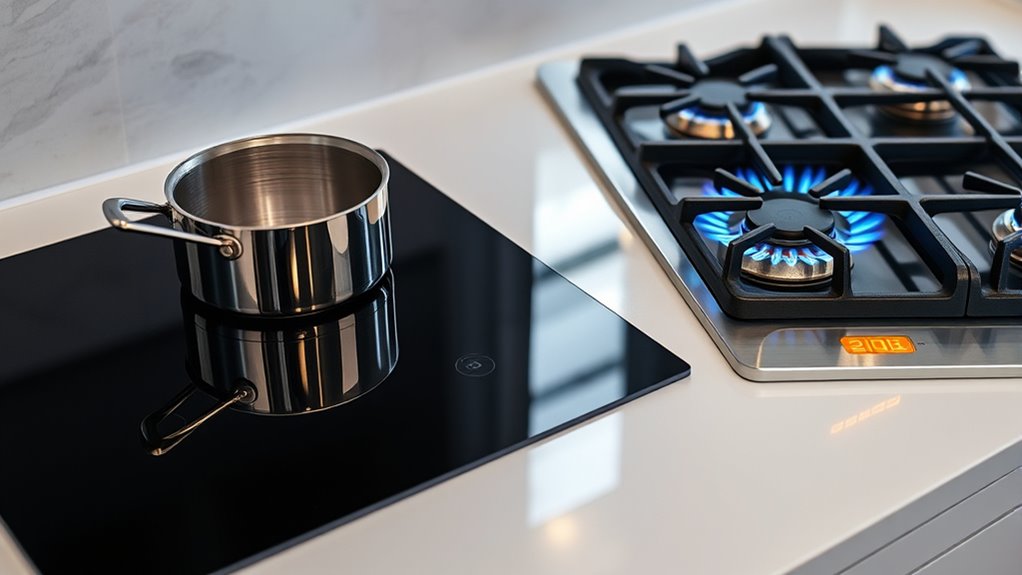

Induction stoves are safer and more efficient than gas because they heat cookware directly through electromagnetic fields, reducing burn risks and hazards from open flames. They offer precise temperature controls and respond instantly to adjustments, which means better cooking results and less energy waste. Plus, the surface stays cooler, lowering the chance of burns. To discover more about how induction compares to gas in safety and efficiency, explore the details below.
Key Takeaways
- Induction stoves are safer as the surface stays cool, reducing burn risks compared to hot gas flames.
- Induction heats cookware directly, making it more energy-efficient and quicker than gas, which loses heat through flames.
- Gas stoves produce open flames, increasing fire hazards and potential gas leaks, whereas induction includes safety features like auto shutoff.
- Induction offers precise temperature control, minimizing overcooking and accidents, unlike gas which responds slower to adjustments.
- Overall, induction provides a safer, more energy-efficient option due to faster heating, better safety features, and less heat waste.

Are induction and gas stoves really different in how they cook your food? The answer is yes, and understanding these differences can help you make smarter choices in your kitchen. When it comes to energy savings, induction stoves stand out because they heat up faster and transfer energy more efficiently. Unlike gas stoves that burn fuel to produce heat, induction stoves use electromagnetic fields to directly heat pots and pans. This means less heat is wasted, and you use less energy overall. If you’re looking to cut down on your utility bills or reduce your carbon footprint, induction can be a more sustainable option. Plus, because the heat is generated directly in the cookware, it responds quickly to changes in temperature, giving you greater control over your cooking process.
Cooking precision is another area where induction and gas stoves differ markedly. With induction, you get very precise temperature control. When you turn the knob or adjust the digital settings, the stove responds instantly, allowing you to simmer, boil, or fry with exact accuracy. This level of control is harder to achieve on a gas stove, where temperature changes depend on adjusting the flame and can take a few moments to stabilize. If you enjoy cooking delicate sauces or need to keep food at a specific temperature, induction offers a clear advantage. The quick response not only improves your cooking results but also helps prevent overcooking or burning.
Safety is a major concern with both types of stoves, but induction has some built-in advantages. Since the cooktop itself doesn’t get hot—only the cookware does—there’s less risk of burns or accidental fires. When you remove the pan, the surface cools down rapidly, reducing hazards, especially in households with children. Gas stoves, on the other hand, produce open flames and can leak gas if not properly maintained, posing safety risks. Additionally, induction stoves often have safety features like auto shutoff or lock functions, giving you peace of mind during busy kitchen moments.
Frequently Asked Questions
Are Induction Cooktops Suitable for All Types of Cookware?
Induction cooktops aren’t suitable for all types of cookware. You need cookware with compatible material, like cast iron or magnetic stainless steel, for effective heating. Non-magnetic materials, such as aluminum or glass, won’t work unless they have a magnetic base. Check the cookware’s compatibility beforehand to avoid frustration. Material restrictions are key; if your cookware isn’t suitable, the cooktop won’t heat properly or at all.
Which Cooking Method Offers Better Heat Retention?
You’ll find induction offers unbeatable heat retention, vastly surpassing gas. Its precise heat distribution heats your food faster and keeps it warmer longer, preventing energy loss. Gas might seem traditional, but induction’s efficiency conserves energy like a superhero saving the day. When you need consistent, long-lasting warmth, induction’s rapid response and superior heat retention make it the champion. Say goodbye to uneven cooking and hello to perfect meals every time!
How Do Maintenance Costs Compare Between Induction and Gas Stoves?
You’ll find that induction stoves generally have a lower maintenance cost compared to gas stoves. They tend to require less frequent repairs because their electronic components are more durable and less prone to wear and tear. Gas stoves, on the other hand, often have higher repair frequency due to issues with burners, igniters, and gas lines. Overall, the cost comparison favors induction for lower ongoing maintenance expenses.
Can Induction Stoves Be Used During a Power Outage?
During a power outage, induction stoves can’t be used because they rely on electricity to operate, much like a smartphone needs a charge. If you want emergency cooking options, you’ll need a gas stove or a portable camp stove. Keep a backup plan in mind, especially in emergencies, since induction stoves won’t work without power. Always have a reliable alternative ready for power outages.
Are There Environmental Benefits Associated With One Technology Over the Other?
You’ll find that induction stoves often have environmental benefits because they use electricity, which can come from renewable energy sources, leading to emission reductions. Gas stoves, on the other hand, emit greenhouse gases directly, contributing more to pollution. By choosing induction, you support cleaner energy use and help lower your carbon footprint, making it a more eco-friendly option for your kitchen.
Conclusion
When choosing between induction and gas, consider safety and efficiency like weighing a delicate balance beam. Induction heats quickly and safely, like a lightning bolt, while gas offers a traditional, responsive touch. Think of it as finding the perfect fit for your kitchen’s rhythm—smooth and reliable or bold and classic. Whichever you pick, understanding their strengths helps you cook smarter, making your kitchen both safer and more efficient, just like a well-conducted symphony.