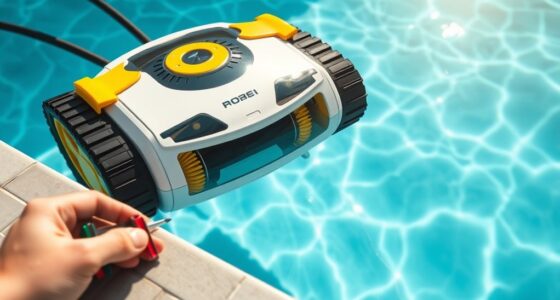
Even with an automatic cleaner handling debris, you still need to stay on top of water chemistry and filter maintenance. Test your pH, alkalinity, and sanitizer levels regularly, and adjust as needed to keep the water balanced. Don’t forget to clean or backwash filters to prevent clogs and maintain flow. These manual tasks guarantee your pool stays clear, safe, and inviting—all essential tasks that automation alone can’t handle. Keep going for more tips to keep your pool in top shape.
Key Takeaways
- Regularly clean and maintain the pool’s filter system, including backwashing sand filters and rinsing or replacing cartridge filters.
- Test and adjust water chemistry weekly to maintain proper pH, alkalinity, and sanitizer levels.
- Manually remove debris that automatic cleaners might miss, especially around corners and steps.
- Recharge DE filters with fresh DE powder during routine maintenance to ensure optimal filtration.
- Inspect and service automatic cleaner components periodically to prevent malfunctions and extend their lifespan.

Keeping your pool clean can be time-consuming, but automatic cleaners make the task much easier. These devices handle the bulk of debris removal, allowing you to enjoy your pool without constant manual effort. However, even with a reliable cleaner, some maintenance tasks require your attention to keep everything running smoothly. Two critical aspects that often get overlooked are understanding filter types and maintaining proper chemical balancing.
Automatic cleaners simplify pool upkeep, but understanding filters and chemical balance is essential for perfect swimming water.
First, knowing your filter type is essential for effective pool maintenance. There are three main types: sand, cartridge, and DE (diatomaceous earth). Each has its advantages and maintenance needs. Sand filters are low-cost and require less frequent cleaning, but they may not trap smaller particles as efficiently. Cartridge filters offer better filtration and are easier to clean—simply remove and rinse the cartridges. DE filters provide the highest level of filtration, capturing even tiny debris, but they need more careful handling and periodic replacement of the DE powder. Choosing the right filter type for your pool depends on your usage, budget, and desired water clarity. Regardless of the filter type, regular cleaning is necessary to prevent clogging and ensure proper flow, which automatic cleaners can’t do alone. Regularly inspecting and maintaining your filter system can extend its lifespan and improve overall water quality.
Chemical balancing is another task that plays a crucial role in maintaining a healthy pool. Your automatic cleaner keeps debris out of the water, but it doesn’t manage the chemical levels. Regular testing of your pool’s pH, alkalinity, and sanitizer levels helps prevent algae growth, cloudy water, and skin irritation. The ideal pH level should be between 7.2 and 7.6. If your water’s pH drifts out of this range, it can cause scaling or corrosion, and your sanitizer may become less effective. Alkalinity acts as a buffer for pH, so keeping it balanced helps stabilize these levels. Chlorine or other sanitizers keep bacteria and algae at bay, but their effectiveness depends on proper chemical balance. Use test strips or a reliable testing kit weekly, especially during peak swimming season, to identify any imbalances early. Adjustments with pH increasers or decreasers, alkalinity adjusters, or sanitizers should be made carefully, following manufacturer instructions. Additionally, filter maintenance like backwashing sand filters, rinsing cartridge filters, or recharging DE filters is essential to keep your system functioning optimally. Maintaining proper chemical levels also helps prevent equipment corrosion and extends the life of your pool’s components.
While your automatic cleaner works tirelessly to keep your pool free of dirt and debris, it’s up to you to manage the filter system and chemical balance. Neglecting these tasks can lead to cloudy water, algae growth, or equipment damage. Staying on top of filter maintenance—such as backwashing sand filters, rinsing cartridge filters, or recharging DE filters—and regularly testing and adjusting the water chemistry will guarantee your pool remains inviting and safe. Combining these manual efforts with automated cleaning gives you a hassle-free swimming experience that’s both enjoyable and healthy. Proper pool maintenance routines ensure your pool stays pristine and prolongs the life of your equipment.
Frequently Asked Questions
How Often Should I Manually Skim My Pool?
You should skim your pool daily, especially during high usage or storms, to keep debris out of the skimmer and guarantee clear water. Regular skimmer maintenance prevents clogs and helps your automatic cleaner work efficiently. Also, don’t forget to clean your pool cover regularly, as it traps dirt and leaves. This routine helps maintain overall water quality and reduces the workload on your automatic cleaner, keeping your pool sparkling.
What Chemical Levels Require Manual Adjustments?
You should manually test your pool’s chemical levels regularly to maintain proper chemical balance. Adjust the chemicals if your pH drops below 7.2 or rises above 7.6, or if chlorine levels fall below 1 ppm or go over 3 ppm. These manual testing and adjustments guarantee your pool stays clean, safe, and comfortable. Don’t rely solely on automatic cleaners; consistent chemical checks are key to perfect maintenance.
How Do I Troubleshoot a Malfunctioning Automatic Cleaner?
Think of your automatic cleaner as a loyal helper that sometimes hits a bump in the road. If it malfunctions, start by inspecting for debris blockage, which can clog the brushes or impeller. Check the power supply and verify the automatic repair parts aren’t worn out. Clean or replace filters if needed. Troubleshooting like this keeps your cleaner running smoothly, so you can enjoy a sparkling pool without manual scrubbing.
When Should I Replace Pool Filters?
You should replace your pool filters when their filter lifespan nears the end, typically every 1-2 years, depending on usage and water quality. Keep an eye on replacement frequency; if you notice decreased water flow, cloudy water, or increased filter pressure, it’s time for a change. Regularly inspecting and maintaining your filters ensures peak cleaning and prolongs their effectiveness, preventing costly repairs down the line.
Are Manual Cleaning Tools Necessary With Automatic Cleaners?
Manual cleaning tools are still necessary even with automatic cleaners because they help you perform manual skimming and address spots the automated system might miss. You’ll need to check and modify chemical balancing regularly to keep your pool safe and clean. Automatic cleaners do a lot, but manual tasks like skimming leaves and fine-tuning chemicals ensure your pool stays crystal clear and healthy.
Conclusion
Even with automatic cleaners doing the heavy lifting, don’t forget manual tasks like skimming, brushing, and chemical balancing. Think of your pool as a garden—you can’t just plant seeds and walk away; regular care keeps it thriving. An automatic cleaner is a helpful tool, but it’s your hands-on attention that truly keeps your pool sparkling and inviting. After all, “A stitch in time saves nine,” so stay proactive to enjoy a crystal-clear oasis all season long.