You should never put metal containers or items with metallic trim, paint, or reflective coatings in your microwave, as they can cause sparks, fires, or appliances damage. Avoid plastic wraps not labeled microwave-safe, broken plastic containers, foam trays, and damaged or cracked plastics, since they may leak harmful chemicals or melt. Also, steer clear of anything with metallic accents or elements inside dishes. Staying safe involves using only microwave-safe glass or ceramic vessels; more tips await to keep you protected.
Key Takeaways
- Avoid metal containers, including those with metallic trims or accents, to prevent sparks and fires.
- Do not use non-microwave-safe plastics, especially damaged or cracked containers, due to chemical leaching risks.
- Keep away from foam trays and plastics not labeled microwave-safe, as they can melt or release harmful substances.
- Never microwave containers with metallic paints, trims, or reflective coatings that can cause arcing.
- Use only microwave-safe glass or ceramic containers, avoiding damaged or unsafe plastics for heating food.
Have you ever wondered if your microwave is safe to use? It’s a common concern, especially when you’re rushing to reheat or cook something quickly. The truth is, not all containers are microwave-safe, and using the wrong ones can be dangerous. Understanding which types of containers to avoid helps prevent accidents and keeps your microwave functioning properly.
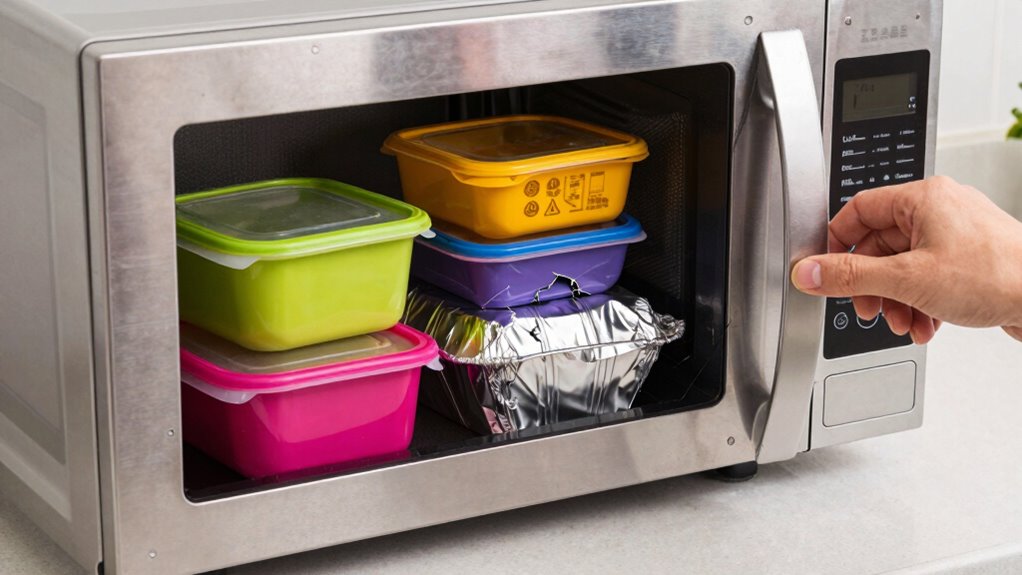
One of the biggest no-no’s is metal containers. When you put metal in a microwave, it can cause sparks, fires, or damage to the appliance. Metal reflects microwave radiation, which can lead to arcing—sparks flying inside the microwave. This not only damages the microwave but also poses a fire risk. Even small metal accents on dishes or utensils can create sparks, so it’s best to keep metal out altogether. If you’re unsure whether a container contains metal, check for metallic paints, trims, or reflective coatings. Always use microwave-safe glass or ceramic instead, which won’t interfere with the microwave’s operation.
Metal containers cause sparks and fires; always use microwave-safe glass or ceramic instead.
Plastic wraps are another common item people use to cover food in the microwave, but not all plastic wraps are safe. Many plastics contain chemicals that can leach into your food when heated, especially if they aren’t labeled microwave-safe. Using plastic wraps that aren’t designed for microwave use can result in the release of harmful substances into your meal. furthermore, plastic wraps can cling tightly to food, creating a sealed environment that causes steam to build up. This can lead to the plastic melting or warping, which might contaminate your food or damage your microwave. To avoid this, look for plastic wraps explicitly marked as microwave-safe, or opt for microwave-safe lids and covers. Alternatively, a paper towel or microwave-safe plate can do the job without risking chemical contamination.
In addition to metal containers and plastic wraps, avoid using foam trays, non-microwave-safe plastics, or any container with cracks or damage. These can break down when heated, leaching chemicals or causing spills. Always check the bottom or packaging for labels indicating microwave safety. When in doubt, transfer food to glass or ceramic containers, which are generally safe and won’t interfere with microwave radiation.
Frequently Asked Questions
Can I Microwave Metal Containers Safely?
You should never microwave metal containers because they can cause sparks or fires, making it unsafe. Metal reflects microwave energy, which can damage your appliance or create dangerous electrical arcs. Instead, transfer your food to microwave-safe containers and avoid using plastic wraps that aren’t labeled microwave-safe, as they can melt or release harmful chemicals. Always prioritize microwave-safe containers for safe heating and to protect your appliance and health.
Are Plastic Wraps Safe for Microwave Use?
Plastic wraps can be safe for microwave use if they’re labeled as microwave safe. Think of it like a passport—only wraps with the proper ‘microwave safe’ label are approved for the oven’s heat. Be cautious of plastic wrap hazards; some can melt or release chemicals into your food. Always check the packaging, and avoid using wraps without clear microwave safe labels to keep your meal safe and healthy.
What Are the Risks of Microwaving Non-Microwave-Safe Containers?
Microwaving non-microwave-safe containers risks chemical leaching into your food and container warping. When you heat incompatible plastics or materials, chemicals can seep into your meals, possibly harming your health. Plus, the container may warp or melt, creating a mess or even causing burns. Always use microwave-safe containers to avoid these dangers, ensuring your food stays safe and your microwave remains undamaged.
How Can I Tell if a Container Is Microwave-Safe?
To tell if a container is microwave-safe, look for labeling guidelines and microwave-safe symbols. You can also conduct a simple test: place the empty container and a cup of water inside the microwave, then run it for 30 seconds. If the container stays cool and the water heats up, you’re good to go. If the container gets hot, it’s best to avoid microwaving it.
Do Ceramic Mugs Pose Any Microwave Risks?
Ceramic mug safety depends on whether it’s labeled microwave-safe. Generally, ceramic mugs are safe, but some may contain metals or glazes with lead, posing microwave risks. Always check for a microwave-safe label or avoid mugs with metallic accents. If unsure, test the mug by microwaving it with water for a short time. If it heats evenly and doesn’t crack, it’s likely safe; otherwise, avoid using it in the microwave.
Conclusion
Just like you wouldn’t put a square peg in a round hole, avoid using unsafe containers in your microwave. I once watched a friend melt a plastic container, only to find her microwave ruined and a messy cleanup afterward. Remember, using the right containers keeps your microwave safe and your food tasting great. Think of it as giving your microwave the proper tools—it’ll run smoothly and last longer, just like any well-maintained machine.