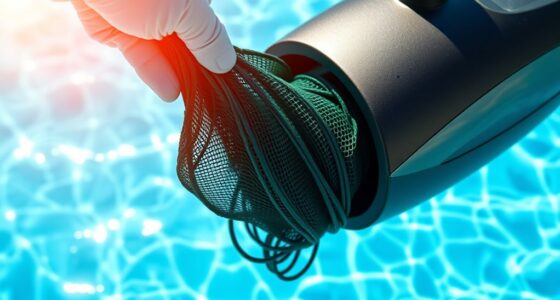
Many pool owners prefer pressure pool cleaners because they reliably handle large debris like leaves and twigs, making cleaning easier. They use your existing pool pump’s energy, saving you money on electricity bills, and have fewer electronic parts that can break down. Their simple, durable design means less maintenance and long-lasting performance. If you want a straightforward, cost-effective way to keep your pool clean, you’ll find more benefits worth exploring.
Key Takeaways
- They effectively clean large debris like leaves and twigs, ideal for outdoor pools with heavy debris.
- They operate using existing pool pump power, making them energy-efficient and cost-effective.
- Mechanical simplicity reduces electronic failures and maintenance, ensuring long-term durability.
- They provide systematic coverage without the need for complex programming or navigation.
- Their straightforward installation and operation appeal to users seeking reliable, hassle-free cleaning solutions.

Pressure pool cleaners are an efficient way to keep your swimming pool spotless without much effort. Many pool owners still prefer them because they deliver reliable cleaning results, especially in larger or more complex pools. Unlike robotic cleaners, pressure cleaners operate by harnessing water pressure from your pool’s pump, which means they’re often straightforward to install and maintain. This simplicity appeals to those who want a dependable device that can handle daily cleaning without fuss. Their robotic efficiency is notable because they are designed to cover the entire pool surface thoroughly, moving systematically to scrub walls and floors. This consistent coverage ensures no area gets overlooked, reducing the need for manual brushing or spot cleaning. Additionally, their mechanical design makes them suitable for various pool types and debris conditions.
Pressure pool cleaners offer reliable, energy-efficient cleaning for larger pools with minimal fuss.
One of the key reasons some owners lean toward pressure pool cleaners is their energy consumption. While robotic cleaners tend to be more energy-efficient due to their low power draw, pressure cleaners are often integrated into your existing pool system, utilizing the energy already being used by your pump. This means they don’t require a separate motor or power source, making them cost-effective in terms of energy efficiency. For pools with high-powered pumps, pressure cleaners can operate effectively without considerably increasing electricity bills, especially if your pump is already running regularly. In fact, many owners appreciate that pressure cleaners don’t add extra electrical consumption, helping keep overall operating costs manageable. Their ease of maintenance is another advantage, as fewer electronic parts mean less risk of failure and simpler repairs. Moreover, their simple mechanical design often results in a longer lifespan compared to more complex devices, providing additional value over time.
Another advantage of pressure pool cleaners is their durability and longevity. They have fewer electronic components than robotic models, reducing the risk of breakdowns and the need for repairs. Since they are mechanically simple, they tend to last longer and require less maintenance. This reliability means you can set them and forget them, knowing they’ll keep your pool clean with minimal intervention. Additionally, they are excellent at handling larger debris, like leaves and twigs, which can clog robotic cleaners more easily. Their robust design makes them suitable for outdoor pools in areas prone to heavy debris, giving you peace of mind that your pool will stay clean regardless of weather conditions. Moreover, some models incorporate advanced navigation features that improve their coverage and efficiency.
While robotic cleaners shine in efficiency and low energy consumption, pressure pool cleaners remain popular because of their straightforward operation, durability, and affordability. They’re a practical choice if you want a cleaning solution that’s easy to install, reliable, and capable of tackling substantial debris. For many pool owners, these benefits outweigh the slightly higher energy use compared to robotic options. Ultimately, pressure pool cleaners offer a dependable, hassle-free way to maintain a pristine pool, making them a favored option despite the rise of more technologically advanced cleaning devices. Their mechanical simplicity also means they are less likely to experience electrical failures, which adds to their appeal for long-term use.

HJTHJT 500ML Essential Oil Diffuser: Aroma Diffuser with Remote Control for Hotel Spa Yoga Room - Humidifiers for Bedroom with 14 Colors LED Night Light for Kids/Women Home Relaxation
Large Capacity Aroma Diffuser: 500 ML essential oil diffusers for home is wonderful for large rooms. This diffuser...
As an affiliate, we earn on qualifying purchases.
Frequently Asked Questions
Are Pressure Pool Cleaners Suitable for All Pool Types?
Pressure pool cleaners aren’t suitable for all pool types. They work best on concrete or gunite surfaces but might struggle with delicate pool surfaces like vinyl or fibreglass, potentially causing damage. Additionally, water chemistry and debris size influence their effectiveness. You should assess your pool surface and water chemistry to determine if a pressure cleaner fits your needs, as some pools require different cleaning methods for ideal maintenance.
How Energy-Efficient Are Pressure Pool Cleaners Compared to Robotic Models?
Pressure pool cleaners generally have higher power consumption than robotic models, which impacts energy savings. They rely on your pool’s pump for power, leading to increased energy use during cleaning cycles. Robotic cleaners are more energy-efficient because they operate independently with dedicated motors. If you’re looking to reduce power consumption and save on energy costs, robotic models are the better choice, whereas pressure cleaners may result in higher power bills.
Can Pressure Cleaners Handle Large Debris and Algae Buildup?
Did you know that pressure pool cleaners can handle large debris and algae buildup effectively? These cleaners use high-pressure jets, making them powerful for clearing leaves, twigs, and stubborn algae. You’ll find they excel at deep cleaning larger debris from the pool floor and walls, saving you time and effort. Their robust design guarantees thorough removal of algae buildup, keeping your pool cleaner and healthier without frequent manual scrubbing.
What Maintenance Is Required for Pressure Pool Cleaners?
You need to regularly inspect your pressure pool cleaner, checking hoses for leaks and cleaning the filter bag or canister. Make certain your pool’s chemical balancing is maintained to prevent algae and debris buildup. Additionally, verify that your filter system is compatible and functioning properly, as it works alongside the cleaner. Proper maintenance keeps your pressure cleaner efficient and extends its lifespan, making pool cleaning more effective and less hassle.
Do Pressure Pool Cleaners Operate Quietly During Use?
Imagine the peaceful silence of your backyard, suddenly disrupted by a loud, clattering cleaner. Pressure pool cleaners tend to operate with moderate noise levels, but they can sometimes be louder than robotic options. Despite this, many find the user convenience outweighs the noise, appreciating their powerful scrubbing. While they may not be whisper-quiet, they offer effective cleaning without significant disturbance, making them a practical choice for busy pool owners.

ASAKUKI Essential Oil Diffuser for Home, 500ML Aromatherapy Diffuser Humidifier with Remote Control, 7 Color LED Lights, Quiet Cool Mist Diffuser for Bedroom, Living Room, Office (Yellow)
5-IN-1 AROMATHERAPY DEVICE: This ultrasonic essential oil diffuser is an amazing multi-functional aromatherapy device unlike any other you've...
As an affiliate, we earn on qualifying purchases.
Conclusion
Despite the rise of robotic cleaners, nearly 60% of pool owners still prefer pressure pool cleaners for their reliability and power. These cleaners effectively handle stubborn debris and tough dirt, saving you time and effort. If you’re considering your options, remember that pressure cleaners are proven to deliver consistent results, especially in larger or heavily soiled pools. So, if you want a dependable cleaning solution, sticking with pressure pool cleaners might just be your best choice.
Amazon Product B0CKRTZ14Y
As an affiliate, we earn on qualifying purchases.
Amazon Product B07KG548B9
As an affiliate, we earn on qualifying purchases.