To stay safe with your pressure cooker, always check that the steam release valve is clean and functioning before use, and never ignore a clogged valve. Make sure the lid locks securely once pressure builds, and follow manufacturer instructions to release steam safely—either gradually or quickly—waiting for pressure to drop completely before opening the lid. Keeping these safety steps in mind guarantees safe cooking, and you’ll discover more tips to protect your family with continued guidance.
Key Takeaways
- Always check that the steam release valve is clean and functioning before each use.
- Ensure the lid is properly locked and the pressure indicator shows it’s secure before cooking.
- Follow manufacturer instructions for safe pressure buildup and release methods.
- Never open the lid while the cooker is still pressurized; wait for natural or quick release.
- Regularly inspect safety features like the valve and lid lock for proper operation to prevent accidents.
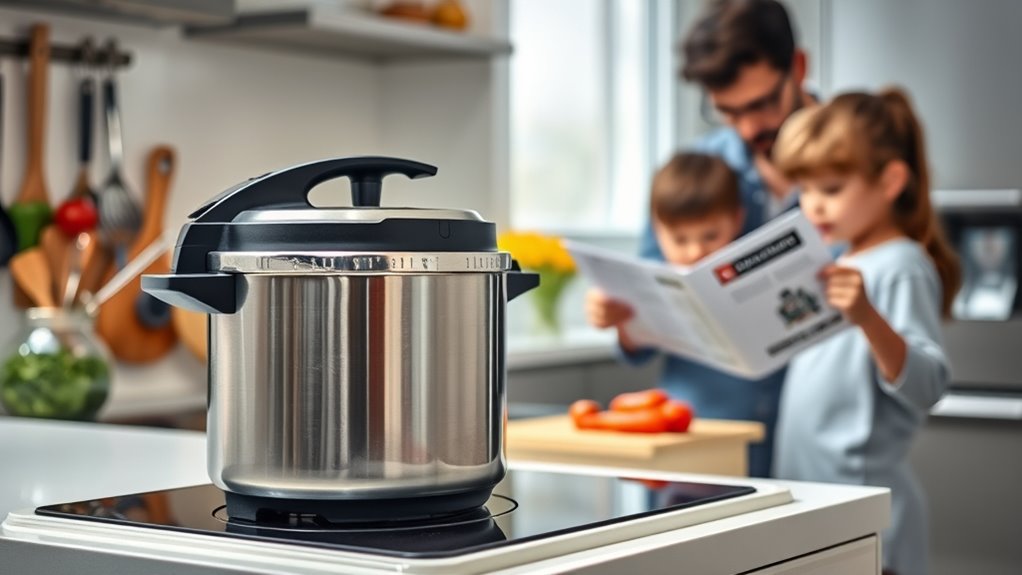
Pressure cookers can be a quick and convenient way to prepare meals, but if you don’t use them properly, they can pose serious safety risks. One of the most important safety features to understand is the steam release valve. This small but critical component controls how steam escapes during cooking. Before you start, always check that the steam release is clean and functioning correctly. When the pressure builds up inside the cooker, the steam release ensures excess pressure doesn’t cause dangerous buildup. As you cook, monitor the steam release to confirm it’s releasing steam steadily and not clogged. If it’s blocked or malfunctioning, do not attempt to use the pressure cooker until it’s repaired—ignoring this can lead to dangerous pressure buildup, risking burns or explosions.
Equally crucial is understanding the lid locking mechanism. Modern pressure cookers are designed with safety features that lock the lid securely once the cooker reaches the proper pressure. This lid locking system prevents you from opening the cooker prematurely, which could result in hot steam or boiling food escaping suddenly. Before you start cooking, always ensure the lid is properly aligned and locked into place. Many models have indicators or signals that show when the lid is securely locked. Never attempt to open the lid while the cooker is still pressurized. Instead, wait for the pressure to naturally release or use the quick-release method, if your model allows, to safely vent the steam and reduce pressure.
When it’s time to release the pressure, always follow your cooker’s specific instructions regarding steam release. Using the quick-release method involves carefully turning or pressing a valve to let the steam escape quickly. Make sure your face and hands are away from the steam vent to avoid burns. If you prefer natural release, allow the pressure to decrease gradually, which can take several minutes. During this process, the lid will remain locked until the internal pressure drops to a safe level, ensuring you don’t accidentally open the cooker prematurely.
Frequently Asked Questions
How Do I Safely Release Pressure After Cooking?
To safely release pressure after cooking, first choose the appropriate venting technique or pressure release method based on your recipe. For quick release, carefully turn the valve or press the button to vent steam, keeping your hands and face away from the steam. For natural release, simply turn off the heat and wait until the pressure drops on its own. Always use oven mitts and follow your pressure cooker’s instructions for safety.
What Should I Do if the Pressure Cooker Lid Won’T Open?
When your pressure cooker lid won’t open, stay calm and avoid forcing it. First, perform a proper pressure release to guarantee all steam is gone. Next, check for any lid obstruction, like food or debris, that might be preventing the lock from releasing. If it still won’t budge, wait a few minutes, then gently try again. Never force the lid open, as this can be dangerous.
Are There Specific Foods I Should Avoid Cooking in a Pressure Cooker?
You should avoid cooking foods with food restrictions like certain beans, pasta, or large cuts of meat that may block the vent or cause over-pressurization. Also, steer clear of foods that expand considerably, such as potatoes or grains, unless you adjust water levels. Always follow safety precautions, including proper liquid amounts and sealing the lid correctly, to prevent accidents and ensure your pressure cooker works safely and efficiently.
How Often Should I Inspect and Maintain My Pressure Cooker?
You should inspect and maintain your pressure cooker regularly, ideally after every few uses or at least once a month. Follow a consistent inspection schedule to check for wear and tear, especially on the gasket and safety valves. Maintenance tips include cleaning the sealing ring thoroughly, ensuring vents are clear, and replacing worn parts promptly. Staying diligent with these steps keeps your pressure cooker safe and functioning efficiently.
Can Children or Pets Be Around the Pressure Cooker While in Use?
Think of your pressure cooker as a ticking time bomb of safety hazards. You shouldn’t have children or pets around while it’s in use, as it can be dangerous. For child safety and pet safety, keep them in a separate, secure area, away from hot surfaces and steam vents. Never leave the cooker unattended, and always supervise your little ones and furry friends when cooking.
Conclusion
Remember, safety is your best recipe for success with a pressure cooker. Keep the lid locked, don’t overfill, and always follow the manufacturer’s instructions—just like a trusty knight guarding his castle. Even in today’s fast-paced world, a little caution can prevent a culinary catastrophe. So, channel your inner Marie Antoinette, and treat your pressure cooker with respect. With these tips, you’ll cook confidently and safely, turning busy weeknights into delightful feasts!