To guarantee your air purifier works effectively, place it in a central spot with unobstructed airflow, away from walls and furniture. Avoid corners, vents, or high humidity areas, as these can restrict performance. Position it near pollution sources like kitchens or pet zones for quicker cleaning. Make sure it’s accessible for regular maintenance, and elevate if designed for higher placement. For more tips on ideal placement, discover how airflow patterns and device design impact its efficiency.

Get the little things that make your day delivered free with Prime
- Fast, free delivery on millions of items
- Prime Video, Amazon Music and more included
- Member-only deals all year
Key Takeaways
- Place the air purifier in a central, unobstructed location for optimal air circulation and coverage.
- Avoid corners, behind furniture, or near walls that block airflow or vents.
- Position away from windows, outdoor entry points, or humid areas to prevent contamination and filter issues.
- Place near pollution sources like kitchens or pet zones for targeted and efficient air cleaning.
- Ensure the device is accessible for maintenance, with filters easy to reach and replace.
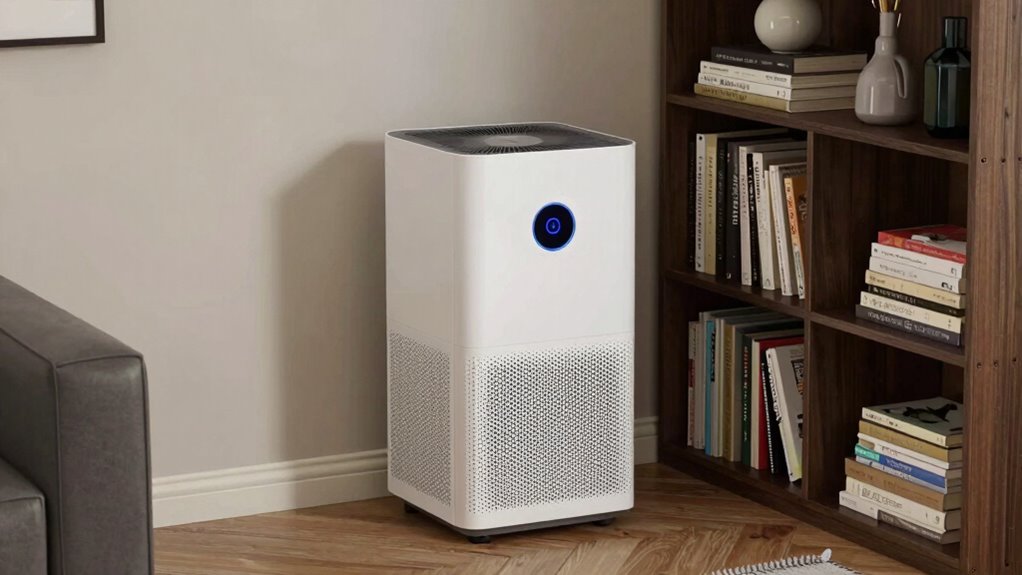
Proper placement of your air purifier is essential to maximize its effectiveness. When you position it correctly, you’ll notice a significant improvement in air quality and a reduction in airborne pollutants. Conversely, placing your device in the wrong spot means it’ll struggle to do its job, wasting energy and possibly requiring more frequent device maintenance. To get the best results, avoid hiding it in corners or placing it behind furniture where airflow is restricted. Instead, choose a central location that allows for unobstructed circulation, ensuring that purified air reaches every corner of the room.
Think about the source of the contaminants when you decide where to put your air purifier. If there’s a specific area with higher pollution levels, like near a smoking zone, pets’ beds, or a kitchen, position the device closer to these spots. This targeted approach boosts the device’s ability to filter out airborne irritants quickly. Keep in mind that placement impacts how well the unit captures dust, pollen, pet dander, and other pollutants, directly affecting air quality. The goal is to avoid placing the purifier near windows or vents that could draw in unfiltered outdoor air or disturb the airflow pattern. It’s best to keep it away from areas with high humidity, as moisture can hinder filter performance and promote mold growth.
Another key aspect is considering ease of access for regular device maintenance. A filter needs to be cleaned or replaced periodically to maintain ideal performance. If you set your air purifier in a hard-to-reach spot, it becomes a hassle to perform routine maintenance, which could lead to neglect and a decline in air quality. Placing it where you can easily access the filters ensures you stay on top of device maintenance, keeping the purifier running efficiently and extending its lifespan. Additionally, understanding the airflow pattern in your room can help you optimize placement for maximum coverage.
Furthermore, avoid placing your air purifier on the floor if it’s a model designed for elevated placement. Many devices are more effective when positioned at chest level or higher, as this helps distribute purified air more evenly throughout the room. Also, keep it away from walls or furniture that could block air intake or output vents, which reduces airflow and diminishes the device’s overall efficiency.
As an affiliate, we earn on qualifying purchases.
Frequently Asked Questions
How Often Should I Clean My Air Purifier?
You should clean your air purifier’s filter every 4 to 8 weeks, depending on usage and filter type. Regular filter maintenance keeps it running efficiently and helps reduce noise levels, so you won’t have to deal with increased noise from a clogged filter. Check the manufacturer’s instructions for specific cleaning schedules, and replace filters as needed to maintain ideal air quality and performance.
Can I Place It Near a Window?
Placing your air purifier near a window isn’t a disaster, but it definitely isn’t perfect either. Sometimes, it’s like trying to catch a tornado with a teaspoon! For ideal airflow, keep it a few feet away from the window to prevent outside pollutants from sneaking in and to maximize its filtering power. Proper placement helps it work efficiently and keeps your air clean, so choose a spot that promotes airflow and performance.
Does Room Size Affect Placement Strategy?
Yes, room size affects your placement strategy. For larger rooms, you should position the air purifier centrally to guarantee even airflow and coverage. In smaller rooms, placing it near the center or away from walls maximizes efficiency. Always consider the room size when deciding where to put your air purifier, as proper placement ensures ideal air cleaning and better air quality throughout the space.
Can Multiple Purifiers Improve Air Quality?
Multiple purifiers can considerably improve air quality by enhancing airflow optimization and covering more space. You should strategically place each purifier based on their capacity and the room’s layout, ensuring they work together without creating air currents that reduce efficiency. By doing so, you maximize filtration, reduce pollutants faster, and create a healthier environment. Proper placement and understanding purifier capacity are key to making the most of multiple units.
Is It Better to Turn It off at Night?
Yes, it’s better to turn off your air purifier at night if it has a sleep mode. Sleep mode reduces noise levels, helping you rest comfortably without disruptions. If your purifier runs quietly, you might leave it on, but if noise bothers you, turning it off saves energy and keeps your sleep undisturbed. Ultimately, choose based on your comfort and the purifier’s noise level in sleep mode.
Conclusion
Think of your air purifier as a loyal guardian—place it wisely, and it’ll breathe life into your space like a gentle breeze through an open window. Position it in the right spot, and it’ll work like a well-oiled machine, clearing out the chaos and leaving fresh air in its wake. But misplace it, and your efforts are like trying to catch smoke with your bare hands—futile and frustrating. Choose your spot wisely, and let fresh air flow freely.
Halloween Picks
halloween
As an affiliate, we earn on qualifying purchases.