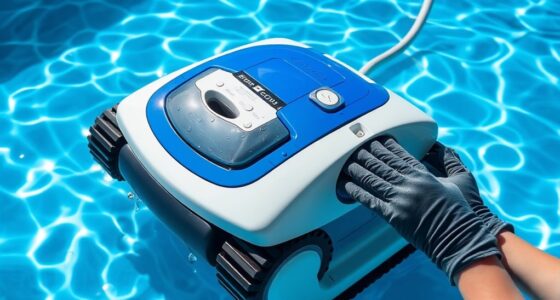
If you’re choosing between pressure and robotic pool cleaners, consider your budget and cleaning needs. Pressure cleaners are simpler, cheaper, and use existing pool equipment, but they might miss spots and require more manual effort. Robotic cleaners cost more upfront but offer thorough, automated cleaning and easy operation. If you want a low-maintenance, efficient solution, robotic options are great. To weigh your options better, discover the key differences and which one suits your pool best.
Key Takeaways
- Pressure cleaners are cheaper upfront and easier to operate, ideal for budget-conscious users seeking basic cleaning.
- Robotic cleaners are more expensive initially but provide thorough coverage, including stairs and corners.
- Pressure cleaners rely on existing pool systems, while robotic cleaners are self-contained with their own motors and filters.
- Robotic cleaners require regular maintenance like filter cleaning and software updates, whereas pressure cleaners need minimal upkeep.
- Robotic cleaners deliver more comprehensive cleaning with advanced navigation, making them suitable for a spotless pool.
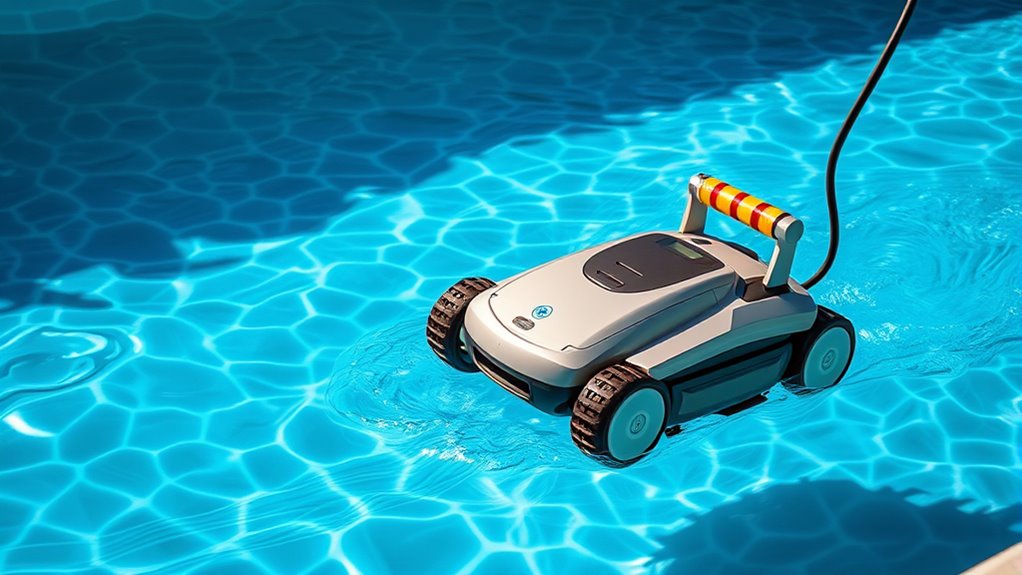
Pressure cleaners are generally less expensive upfront, making them appealing if you’re looking for a cost-efficient option. They work by attaching to your existing pool equipment, like the skimmer or dedicated booster pump, and use water pressure to move around the pool, vacuuming dirt and debris along the way. Because they rely on your pool’s pump system, their ongoing costs are often lower, but keep in mind that they can be less efficient at cleaning certain areas, especially corners and stairs. Additionally, some seniors find that the simplicity of pressure cleaners makes them easier to operate and maintain. The reliance on your pool’s existing equipment can sometimes limit their effectiveness in achieving a comprehensive clean.
When it comes to maintenance requirements, pressure cleaners tend to be straightforward. They have fewer moving parts, so the chances of breakdowns are lower, and repairs are usually simple and inexpensive. However, since they depend on your pool’s existing filtration system, any issues with the pump can affect their performance. Regular cleaning of the cleaner’s hose and brushes is necessary to prevent clogs or tangling, but overall, they don’t demand extensive upkeep. This simplicity makes them a good choice for pool owners who prefer a low-maintenance device and are comfortable with occasional checks and minor adjustments. Low-cost options make pressure cleaners especially popular among budget-conscious consumers. Additionally, their reliance on existing systems can sometimes limit their ability to perform thorough cleaning.
Robotic pool cleaners, on the other hand, come with a higher initial price tag but often provide more thorough and efficient cleaning. They are self-contained units with their own motors and filters, allowing them to operate independently of your pool’s filtration system. This independence means they can clean more thoroughly, reaching tricky spots like stairs, corners, and the pool floor with ease. While their upfront cost might seem steep, their ability to clean more effectively can save you time and effort in the long run, especially if you want a spotless pool without much manual intervention. Advanced navigation technology helps robotic cleaners optimize their cleaning paths and coverage. The integration of smart features in robotic cleaners reflects ongoing technological advancements in pool maintenance.
In terms of maintenance, robotic cleaners require more attention. Their filters need regular cleaning, and they might need occasional software updates or minor repairs, depending on the model. However, because they are designed to be user-friendly, routine maintenance is usually straightforward. Many models have programmable features, allowing you to set cleaning schedules that fit your routine, which adds to their convenience. Furthermore, recent advancements in digital literacy programs have made robotic cleaners more accessible to seniors who want hassle-free pool maintenance. Overall, robotic pool cleaners are ideal if you prioritize thorough cleaning and are willing to invest a bit more time and money into upkeep, while pressure cleaners suit those seeking a budget-friendly, low-maintenance solution.
Frequently Asked Questions
Which Cleaner Is More Energy-Efficient?
When choosing a pool cleaner, you wonder which one uses less energy. You’ll want to contemplate energy consumption because it impacts your utility bills and the environment. Generally, robotic cleaners are more energy-efficient since they operate on low power and are designed to clean thoroughly without wasting energy. By selecting a more energy-efficient cleaner, you reduce environmental impact and save money in the long run.
Can Pressure Cleaners Handle Large Debris?
You might wonder if pressure cleaners can handle large debris. They generally have a decent debris capacity, but their cleaning speed varies depending on the model. While some pressure cleaners can manage larger debris, they often struggle with smaller or more delicate particles. For maximum performance, choose a model with a higher debris capacity and faster cleaning speed, ensuring your pool gets thoroughly cleaned without frequent interruptions.
Are Robotic Cleaners Suitable for All Pool Types?
You wonder if robotic cleaners suit your pool. They work well across various pool surfaces, from tiles to vinyl, adapting seamlessly. You’ll appreciate their chlorine compatibility, ensuring they won’t corrode or malfunction with your sanitizer. Whether your pool is deep or shallow, small or large, robotic cleaners handle it efficiently, cleaning thoroughly without fuss. So, yes, they’re suitable for all pool types, providing a reliable, versatile cleaning solution tailored to your needs.
How Often Should I Maintain Each Cleaner?
You should maintain your pool cleaners regularly to keep them working efficiently. For robotic cleaners, follow the manufacturer’s recommended maintenance frequency, usually weekly, including cleaning filters and brushes. Pressure cleaners often need more frequent checks, especially of hoses and pressure valves. Establish consistent cleaning schedules to prevent buildup and guarantee peak performance. Regular maintenance not only prolongs your cleaner’s lifespan but also keeps your pool sparkling clean and ready to swim.
Do Both Cleaners Require Professional Installation?
When considering installation requirements, both types of pool cleaners generally don’t need professional setup, offering greater user convenience. Pressure cleaners usually connect to existing equipment, making installation straightforward for most users. Robotic cleaners often come pre-assembled and are easy to set up without tools. However, some models may require minor adjustments, so always check the user manual. Overall, both are designed for simple, hassle-free installation, enhancing your convenience.
Conclusion
So, which cleaner wins your battle against dirt? Think of pressure and robotic pool cleaners as knights—each with unique strengths. But remember, the right choice depends on your pool’s size, shape, and your needs. Don’t let debris reign supreme—take control and choose wisely. After all, your pool deserves a champion that fights tirelessly, turning your backyard oasis into a sparkling paradise. The choice is yours—dare to make it!