
To enjoy your rain shower system fully, guarantee your home’s water pressure is between 40-60 psi, with at least 2.5 GPM flow. Low pressure can reduce the drenching effect, so you might need a booster pump or plumbing upgrades. Check that your pipes support the flow rate and that fittings are secure with quality plumber’s tape. Proper installation and understanding your system’s plumbing will help prevent leaks and pressure drops. Keep exploring to learn more tips for peak performance.
Play games included with Prime
Start a Prime free trial and play with Amazon Luna on your devices.
As an affiliate, we earn on qualifying purchases.
Key Takeaways
- Ensure your home’s water pressure is between 40-60 psi for optimal rain shower performance.
- Verify plumbing can support the shower head’s required flow rate (2.5 GPM or higher).
- Upgrading pipes or fittings may be necessary to prevent pressure drops and leaks.
- Use a pressure booster or regulator to maintain consistent water flow.
- Proper installation, including secure fittings and alignment, ensures steady pressure and prevents issues.
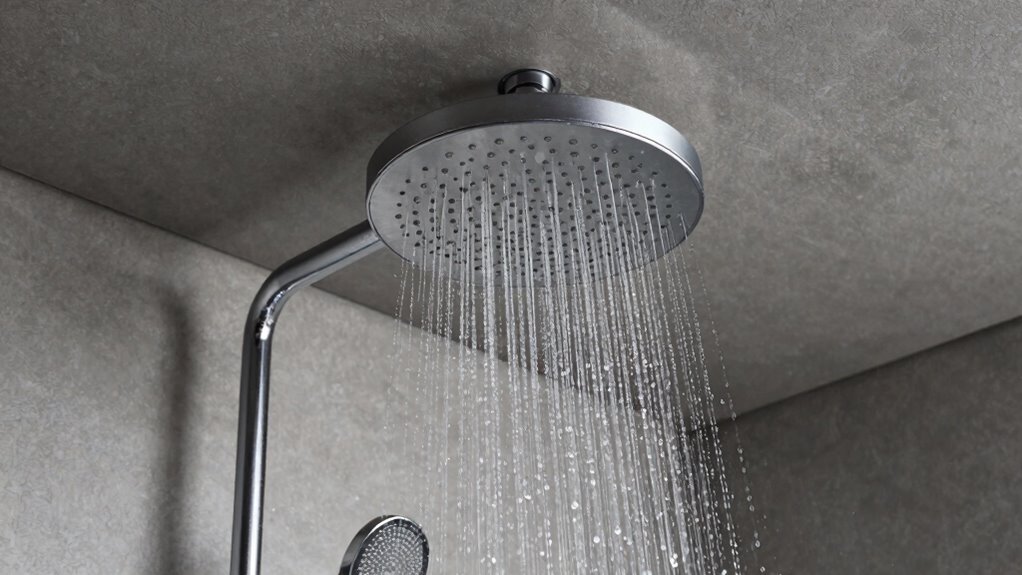
Have you ever wondered how to transform your daily shower into a soothing, spa-like experience? One of the key elements is choosing the right rain shower system, which hinges on understanding water flow and plumbing expectations. Rain shower systems are designed to mimic natural rainfall, offering a gentle, enveloping stream that elevates your shower routine. But to ensure you get the full experience, you need to consider how water flow impacts the system’s performance. Generally, a good rain shower head requires a steady water flow of at least 2.5 gallons per minute (GPM), but some high-end models push this to 3.0 GPM or more. If your home’s water pressure is low, you might not achieve that luxurious drenching effect. Before installation, check your current water pressure — typically measured in pounds per square inch (psi) — to see if it meets the system’s requirements. Most rain shower heads work best with a minimum of 40-60 psi, so if your pressure falls below this, you might need a booster pump or consider plumbing upgrades. Ensuring your plumbing system can support the necessary flow rate is crucial for optimal performance.
When it comes to installation tips, focusing on water flow and plumbing compatibility is essential. First, ensure your existing plumbing can handle the flow rate of the rain shower head you select. Upgrading pipes or fittings might be necessary to prevent pressure drops or leaks. For a seamless and effective installation, position the shower arm securely to avoid any wobbling or leaks, and use high-quality plumber’s tape on threaded connections to ensure a tight seal. Also, verify that your shower arm is compatible with the size and type of the rain shower head—most are designed to fit standard 1/2-inch fittings. If you’re installing a ceiling-mounted rain shower system, make sure the plumbing can support the weight of the fixture and that the water inlet is properly aligned. Proper water flow isn’t just about the head itself; it’s also about ensuring your home’s plumbing can deliver consistent pressure without fluctuations. Understanding your plumbing system can help prevent issues such as pressure drops or leaks down the line. Recognizing the importance of pressure regulation can also aid in maintaining consistent water flow and avoiding discomfort during your shower. Additionally, being aware of your home’s water pressure can help you decide whether to upgrade your system or install pressure-boosting devices for optimal performance.
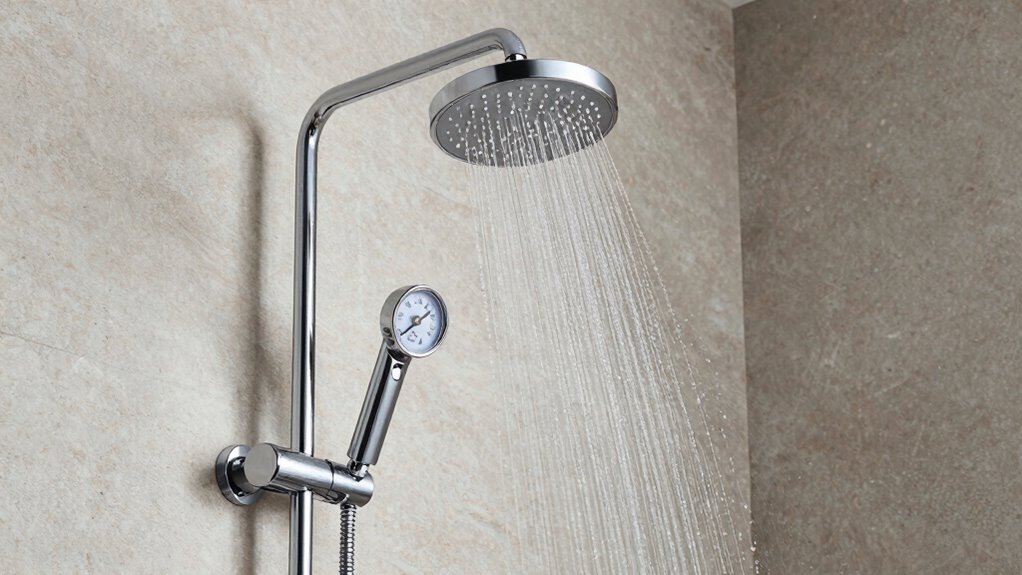
rain shower system with 2.5 GPM flow rate
As an affiliate, we earn on qualifying purchases.
As an affiliate, we earn on qualifying purchases.
Frequently Asked Questions
How Do I Maintain My Rain Shower System?
To maintain your rain shower system, regularly clean the showerhead to prevent mineral buildup, which can affect water flow. Use water conservation techniques, like installing a flow restrictor, to save water and preserve pressure. Follow installation tips carefully during setup to guarantee proper water pressure. Check for leaks and clean filters periodically. Proper maintenance keeps your system functioning smoothly, conserving water and enhancing your shower experience.
Can Rain Shower Systems Work With Low Water Pressure?
Yes, rain shower systems can work with low water pressure, but you might notice reduced water flow. To improve performance, use pressure regulation devices or flow restrictors designed for low pressure. These help optimize water flow and guarantee a consistent, soothing shower experience. Keep in mind, upgrading your plumbing or installing a pump can also boost pressure, making your rain shower system more enjoyable even with limited water pressure.
What Is the Average Lifespan of a Rain Shower System?
A rain shower system typically lasts about 8 to 12 years, depending on how well you maintain it. The rain shower lifespan is influenced by shower system durability, which can vary based on the quality of materials and installation. To extend its life, clean the showerhead regularly, check for leaks, and replace worn parts promptly. Proper upkeep guarantees your shower remains functional and enjoyable for years to come.
Are Rain Shower Systems Energy-Efficient?
Yes, rain shower systems can be energy-efficient, especially when you choose models with eco-friendly designs. They often incorporate water conservation features that reduce water usage without sacrificing comfort. By using less hot water, you lower energy consumption, making your shower more sustainable. Look for systems with low-flow heads or smart controls, which help you save energy and water, benefiting both your utility bills and the environment.
How Do I Troubleshoot Common Pressure Issues?
To troubleshoot common pressure issues, start by checking your water flow to guarantee it’s consistent. If flow seems weak, inspect your showerhead for clogs and clean or replace it if needed. Next, examine your pressure regulation device; it might be set too low or faulty. Adjust the pressure regulator to improve flow, and if problems persist, consider consulting a plumber to assess your plumbing system and confirm proper water pressure.
Conclusion
Imagine stepping into your shower and feeling the gentle cascade of rain, soothing every muscle as water flows effortlessly from your rain shower system. Don’t let worries about pressure or plumbing hold you back—modern systems are designed to deliver consistent, luxurious water even in homes with lower pressure. With the right setup, you’ll enjoy this spa-like experience daily, turning your bathroom into a calming retreat that feels like a personal oasis.
Fall Picks
fall essentials
As an affiliate, we earn on qualifying purchases.