
To cut your fridge and freezer energy use, upgrade to energy-efficient models with the latest features, and keep temperatures around 37°F for the fridge and 0°F for the freezer. Position them away from heat sources, guarantee proper ventilation, and regularly clean condenser coils. Maintain seals, avoid overfilling, and limit door openings. Good organization and proper maintenance can make a big difference—if you want detailed tips, keep going to discover more ways to save energy.
Key Takeaways
- Keep fridge at 37°F and freezer at 0°F, using a thermometer to verify temperatures.
- Regularly clean condenser coils and check door seals for cracks or gaps.
- Position appliances away from heat sources and ensure proper ventilation around units.
- Avoid overfilling or keeping appliances empty; organize contents for optimal airflow.
- Limit door openings and close doors promptly to prevent cold air loss.
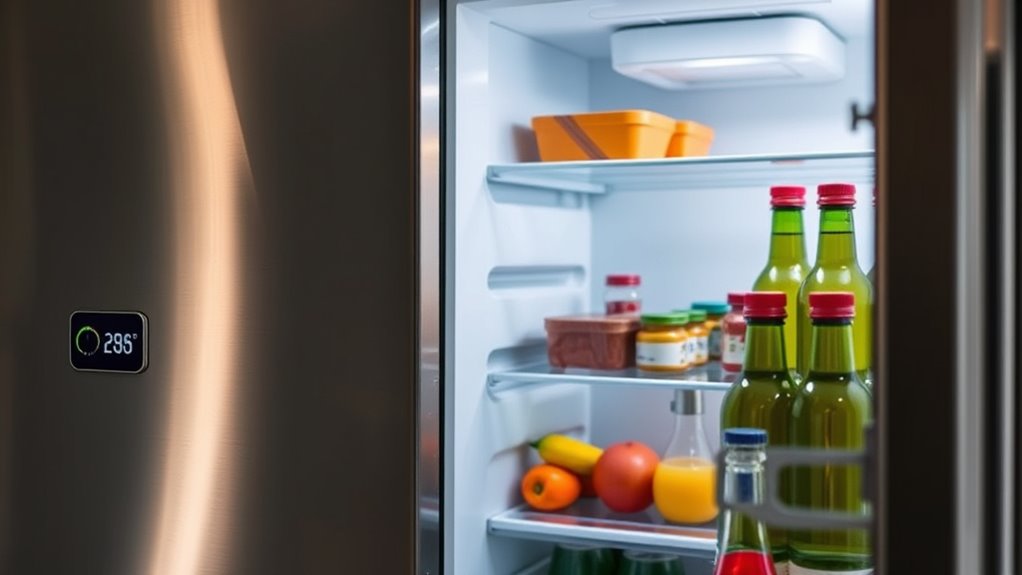
Reducing the energy consumption of your fridge and freezer not only saves you money but also helps the environment. One of the most effective ways to achieve this is by making energy efficient upgrades. Modern appliances often feature advanced technology designed to minimize energy use, so consider replacing older models with energy-efficient ones. If upgrading isn’t an option, ensure your current fridge and freezer have the latest energy-saving features or accessories, such as door seals that prevent cold air from escaping. These upgrades can considerably cut down on unnecessary power consumption and keep your appliances running smoothly.
Another essential step is setting the ideal temperature. Your fridge should stay at around 37°F (3°C), and your freezer at about 0°F (-18°C). Keeping these temperatures steady prevents your appliances from working overtime to compensate for incorrect settings. Many people tend to set their fridges colder than necessary, which consumes more energy without providing additional benefits. Use a thermometer to verify the internal temperature and adjust accordingly. This small change ensures your appliances operate efficiently and helps maintain food safety without wasting energy.
Placement also plays an important role. Make sure your fridge and freezer are positioned away from heat sources such as direct sunlight, stoves, or heating vents. When appliances work harder to maintain cool temperatures because they’re exposed to external heat, their energy use spikes. Allowing proper ventilation around the units, especially at the back and sides, helps them run more efficiently. Keep the doors closed as much as possible and avoid leaving them open longer than necessary. Each time you open a door, warm air enters, forcing the appliance to work harder to restore the temperature, increasing energy consumption.
Regular maintenance is equally significant. Clean the condenser coils at the back or underneath your fridge and freezer at least twice a year. Dust and dirt buildup on coils reduce their efficiency, making the compressor work harder and consuming more energy. Check the door seals frequently for cracks or gaps. A good seal prevents cold air from escaping and warm air from sneaking in, which keeps your appliance running less often and with less effort. If you notice any issues, replace damaged gaskets immediately to preserve energy.
Additionally, understanding compressor efficiency can help you make better maintenance decisions, as it directly impacts energy consumption. Finally, avoid overfilling your fridge and freezer. While it might seem like a good idea to maximize storage, overloading hampers air circulation and forces the compressor to work harder to cool everything evenly. Conversely, an empty fridge can also be inefficient, as the appliance works to maintain cold temperatures constantly. Keep the contents balanced and organized to allow proper airflow. By following these simple guidelines, you’ll not only lower your energy bills but also extend the lifespan of your appliances, all while doing your part for the environment.
energy-efficient refrigerator
As an affiliate, we earn on qualifying purchases.
As an affiliate, we earn on qualifying purchases.
Frequently Asked Questions
How Often Should I Defrost My Freezer to Save Energy?
You should defrost your freezer whenever frost buildup reaches about a quarter-inch thick. A regular defrosting schedule, roughly every 3 to 6 months, helps maintain efficiency. Frost buildup increases energy consumption because the compressor works harder. By staying on top of your defrosting schedule, you reduce frost buildup and save energy, ensuring your freezer runs smoothly and efficiently for longer periods.
Does the Type of Fridge Affect Its Energy Consumption?
Think of your fridge as a trusty ship sailing through energy waters. The type of fridge, with its unique appliance materials and compressor types, directly impacts how much energy it consumes. A well-built compressor and quality materials make your fridge sail smoother, using less power. In contrast, older or less efficient designs may struggle, guzzling energy like a ship battling a storm. Choose wisely for calmer, greener sailing.
Are There Specific Foods That Increase Fridge Energy Use?
Certain foods, like leftovers or produce stored in large quantities, can increase your fridge’s energy use because they require more frequent door openings and affect temperature control. To save energy, store foods properly, keep containers sealed, and avoid overloading your fridge. Maintaining a consistent temperature helps your appliance run efficiently, reducing energy consumption. Proper food storage and minimizing door openings ensure your fridge operates at its best and conserves energy effectively.
How Does Ambient Room Temperature Impact Fridge Efficiency?
Think of your fridge as a boat in warm waters—higher room temperatures make it work harder to stay cool. When ambient room temperature rises, insulation quality and ventilation effectiveness become critical; poor insulation allows heat to seep in, and ineffective ventilation causes heat buildup. To keep your fridge running efficiently, maintain a moderate room temperature, ensure proper ventilation, and check that insulation is intact. This way, your fridge stays cool without overexerting itself.
Can Energy-Efficient Appliances Be More Cost-Effective Long-Term?
Yes, energy-efficient appliances can be more cost-effective long-term. They often have a longer appliance lifespan and consume less power, saving you money on energy bills. Although they might cost more upfront, reduced maintenance costs and increased durability make them a smart investment. Over time, these savings outweigh initial expenses, helping you cut costs and enjoy reliable performance for years to come.
fridge thermometer
As an affiliate, we earn on qualifying purchases.
As an affiliate, we earn on qualifying purchases.
Conclusion
Imagine your fridge working like a marathon runner saving every ounce of energy—small tweaks can make a big difference. Just like switching off lights when not needed, optimizing your fridge’s settings can cut energy use by up to 20%. I once reduced my fridge’s power bill by simply cleaning the coils, and it felt like giving my appliances a fresh start. Every little effort helps you save money and protect the planet—start today!
refrigerator door seal replacement
As an affiliate, we earn on qualifying purchases.
As an affiliate, we earn on qualifying purchases.
condenser coil cleaner for fridge
As an affiliate, we earn on qualifying purchases.
As an affiliate, we earn on qualifying purchases.