To prevent spoilage, set your fridge temperature between 35°F and 38°F (1.7°C to 3.3°C). This range effectively slows bacterial growth and keeps food fresh longer. Using an accurate thermometer helps you monitor and maintain this ideal setting. Avoid overloading and keep door seals clean for even cooling. Maintaining these temperature guidelines ensures your food stays safe and fresh, helping you save money and reduce waste—continue exploring to learn more about perfect fridge performance.
Key Takeaways
- Keep your fridge temperature between 35°F and 38°F (1.7°C to 3.3°C) to prevent spoilage.
- Use an accurate thermometer to monitor and verify the fridge’s temperature regularly.
- Setting the dial to around 37°F (3°C) typically ensures optimal storage conditions.
- Avoid overloading the fridge, which can block airflow and cause uneven cooling.
- Maintain door seals and clean coils to ensure consistent temperature and food safety.

Maintaining the right fridge temperature is essential for keeping your food fresh and safe. When your fridge is set correctly, you reduce the risk of foodborne illnesses and spoilage while also maximizing energy efficiency. Setting your refrigerator too cold can lead to unnecessary energy consumption and frozen goods, whereas setting it too warm invites bacteria growth and spoilage. The key is to find that precise range that balances food safety with energy conservation.
The ideal temperature range for your fridge is typically between 35°F and 38°F (1.7°C to 3.3°C). This range is scientifically proven to inhibit bacterial growth, keeping perishable foods like dairy, meats, and leftovers safe to consume. When your fridge maintains this temperature, you can be confident that your food remains fresh longer, reducing waste and saving money. It’s easy to forget that small temperature deviations can have a big impact—just a degree or two above or below this range can accelerate spoilage or cause your appliance to work harder to maintain the temperature, increasing energy consumption. Properly organizing your fridge can also promote even cooling. Avoid overloading it, which can block air vents and create cold spots or warm zones, and keep the door seals clean so they maintain a tight fit.
To ensure your fridge stays within this ideal range, regularly check the temperature with an appliance thermometer. Many fridges have built-in digital displays, but using a separate thermometer offers more accuracy. Once you find the right setting—usually around 37°F (3°C)—make a habit of verifying the temperature weekly, especially during seasonal changes or if you notice fluctuations. Proper organization, including avoiding hot foods, helps maintain consistent temperatures. Properly organizing your fridge can also promote even cooling. Avoid overloading it, which can block air vents and create cold spots or warm zones, and keep the door seals clean so they maintain a tight fit.
Adjusting your fridge to the correct temperature not only enhances food safety but also improves energy efficiency. When your appliance runs efficiently, it consumes less power, which benefits your utility bills and reduces your carbon footprint. Keep in mind that frequent opening and closing the door, or placing hot food inside, can cause temperature fluctuations. Let hot foods cool down before storing them, and try to open the door only when necessary. Additionally, ensure that the condenser coils are clean and that the door seals are intact, as these simple maintenance steps help your fridge operate at peak efficiency.
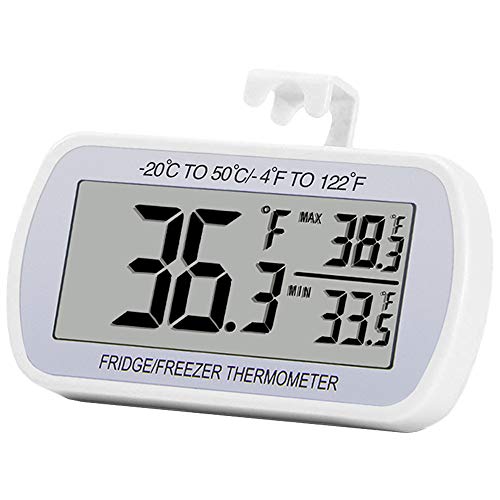
Refrigerator Thermometer Digital Fridge Freeze Room Thermometer Waterproof Large LCD Display Max/Min Record Function, White
- Large LCD Display: Clear, easy-to-read temperature readings
- Compact Size: Small footprint for space-saving use
- Wide Temperature Range: -4°F to 122°F with high accuracy
As an affiliate, we earn on qualifying purchases.
As an affiliate, we earn on qualifying purchases.
Frequently Asked Questions
How Often Should I Check My Fridge’s Temperature?
You should check your fridge’s temperature at least once a month to guarantee ideal placement of items and prevent spoilage. Use calibration techniques like placing a thermometer inside to verify the built-in sensor’s accuracy. Regular checks help you catch any temperature fluctuations early, keeping food fresh. Adjust settings as needed, especially if you notice temperature variations, so your fridge stays within the perfect range for food safety.
What Causes Fridge Temperature Fluctuations?
Imagine your fridge as a diligent guardian, constantly adjusting its stance. Temperature fluctuations happen when the defrost cycle kicks in, warming the interior temporarily. If door seal integrity falters, warm air sneaks in, forcing the fridge to work harder and causing instability. These natural processes, combined with frequent door openings, create a battleground of temperature shifts, but regular checks help you maintain the perfect environment for your food.
Are There Specific Settings for Different Types of Food?
Yes, you should adjust fridge settings based on different food types for ideal food safety and storage. For example, keep dairy and leftovers at around 37°F, while produce benefits from slightly higher temperatures, around 40°F. Properly setting your fridge helps prevent spoilage and ensures storage enhancement. Always use a thermometer to monitor temperatures regularly and make adjustments as needed for the best food safety practices.
How Do I Reset My Fridge’s Temperature if It Malfunctions?
If your fridge malfunctions, start by unplugging it for about 5 minutes to reset the system. Plug it back in and locate the temperature control panel. Adjust the settings to the recommended range for proper fridge maintenance, typically between 37°F and 40°F. Use a thermometer to verify temperature accuracy. If issues persist, consider performing a temperature calibration or contacting a technician for professional help.
Can a Thermometer Be Inaccurate Inside the Fridge?
Like a watch needing calibration, your fridge thermometer can be inaccurate. You should regularly check its calibration against a trusted external thermometer to guarantee fridge sensor accuracy. Factors like placement, humidity, or device quality can cause inaccuracies. If you notice inconsistent readings, calibrate your thermometer or consider replacing it. Accurate measurements help maintain the proper temperature range and prevent spoilage, keeping your food fresh and safe.
Conclusion
Remember, a well-set fridge is your best friend in keeping food fresh and safe. Keep your fridge temperature between 37°F and 40°F, and you’ll prevent spoilage and avoid unnecessary waste. Don’t forget, “An ounce of prevention is worth a pound of cure,” so taking a moment to check and adjust your settings can save you time, money, and headaches down the line. Stay vigilant, and your food will stay fresher longer.