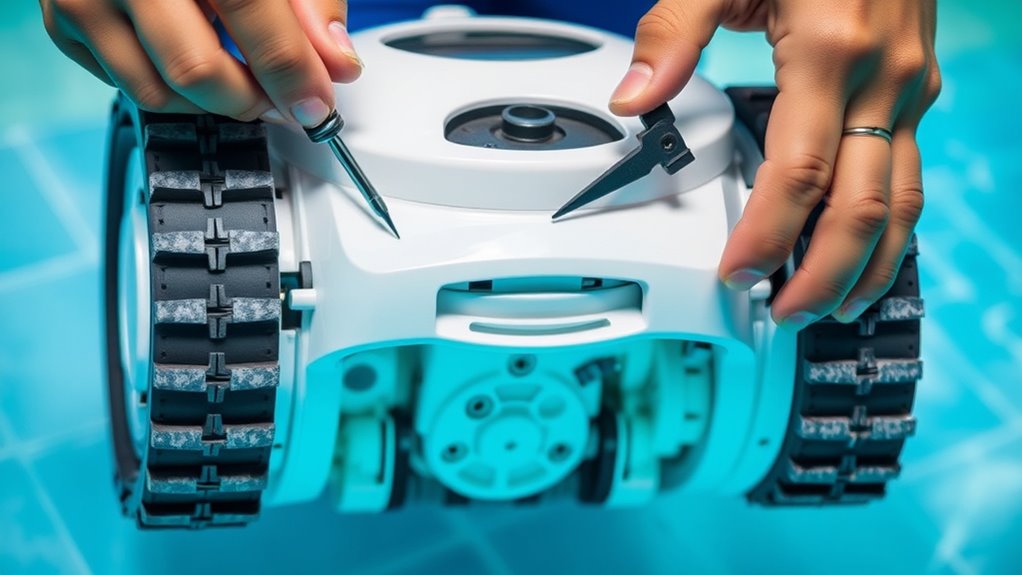

To replace worn parts on your robotic pool cleaner, regularly inspect components like brushes, filters, wheels, and internal mechanisms for signs of wear or damage. Use genuine replacement parts designed for your model, and follow the manufacturer’s instructions for easy, quick swaps. Timely replacements help keep your cleaner running efficiently, prevent breakdowns, and extend its lifespan. Continue exploring to learn detailed tips on maintaining and replacing each component effectively.
Key Takeaways
- Regularly inspect brushes, filters, and wheels for signs of wear or damage to determine replacement needs.
- Use genuine, model-specific parts for easy installation and to ensure compatibility.
- Follow the manufacturer’s instructions for removing and replacing worn components safely and effectively.
- Replace worn parts promptly to maintain optimal water flow, suction, and cleaning efficiency.
- Perform routine maintenance and inspections to prolong the lifespan and performance of the robotic pool cleaner.
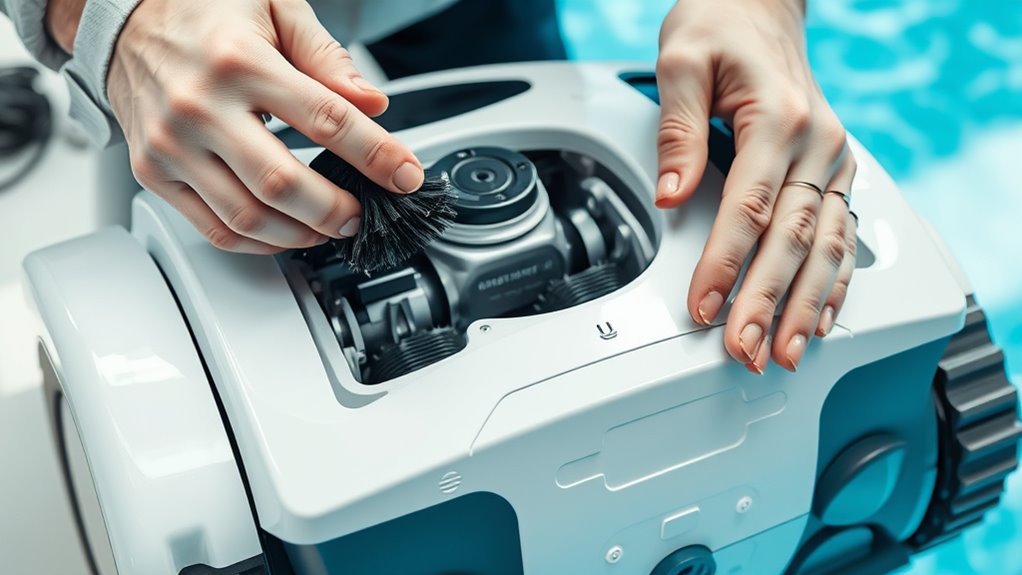
Over time, the parts on your robotic pool cleaner can wear out, reducing its cleaning efficiency. As a result, your pool maintenance routine may become more challenging, and you might notice debris accumulating faster or spots that aren’t getting cleaned thoroughly. To keep your robotic technology performing at its best, replacing worn parts is essential. When components like brushes, filters, or wheels start to show signs of deterioration, replacing them promptly ensures your cleaner continues to operate smoothly and effectively.
Worn robotic pool parts reduce cleaning efficiency; timely replacements keep your cleaner running smoothly and effectively.
Start by inspecting the brushes and scrub pads regularly. These parts are constantly in contact with the pool surface, scrubbing away dirt and algae. Over time, they become frayed, warped, or less effective at scrubbing. Replacing them is straightforward—most models have easily removable brushes that you can swap out with new ones designed for your specific cleaner. Using genuine replacement parts guarantees compatibility and longevity. Don’t forget to check the filters as well. Clogged or dirty filters restrict water flow, which hampers the robotic cleaner’s ability to pick up debris. Regularly replacing or cleaning filters ensures ideal suction and filtration. Many robotic pool cleaners have HEPA or fine mesh filters that are user-friendly to swap out during routine pool maintenance.
Wheels and track systems also experience wear, especially if your pool has uneven surfaces or rough patches. Worn wheels can cause the robot to get stuck or move inefficiently. Replacing wheels is a simple task, often involving just a few screws. Make sure to choose parts designed specifically for your model to prevent compatibility issues. Additionally, check the drive motors and internal brushes if your robotic cleaner has them. These components are vital for movement and cleaning action, and worn motors may result in decreased performance or erratic operation. In some cases, the internal mechanisms may need lubrication or adjustment to optimize performance. Proper maintenance of these parts can prevent performance decline and extend the life of your cleaner.
Robotic technology has advanced considerably, but like any machinery, it depends on well-maintained parts to function properly. Keeping a routine of inspecting and replacing worn components not only extends the lifespan of your robotic pool cleaner but also minimizes the need for costly repairs or replacements. Always consult your user manual for specific part numbers and replacement instructions tailored to your model. Investing a little time in replacing worn parts ensures your robotic cleaner continues to deliver top-notch pool maintenance, saving you time and effort in the long run. Staying mindful of lifestyle factors like maintenance habits can help you enjoy a cleaner pool with less hassle. By staying proactive with maintenance, you’ll keep your pool sparkling clean and your robotic technology running smoothly for seasons to come.
Frequently Asked Questions
How Often Should I Inspect My Robotic Pool Cleaner for Wear?
You should inspect your robotic pool cleaner regularly to stay ahead of potential issues. Follow a maintenance schedule that includes checking for wear indicators, such as cracks or damaged brushes, at least once a month. Regular inspections help you catch wear early, ensuring peak performance and preventing costly repairs. Staying vigilant and maintaining a consistent inspection routine keeps your cleaner running smoothly and extends its lifespan.
Can I Replace Parts Myself or Need Professional Help?
You can definitely handle DIY repairs if you’re comfortable with basic tools and following instructions. Many worn parts, like brushes or filters, are designed for easy replacement. However, for complex issues or electrical components, it’s best to seek professional assistance to avoid damage or safety risks. Assess your skills first, and don’t hesitate to contact a professional if you’re unsure—it’s better to be safe than sorry.
Are Aftermarket Parts Compatible With My Specific Model?
Think of your pool cleaner as a trusted friend; you want only the best for it. When considering aftermarket compatibility, remember that genuine parts are like trusted friends—built for perfect fit and durability. Aftermarket parts, like new acquaintances, can work well but may vary in quality. Check reviews and compatibility details to guarantee your chosen parts match your model, so your cleaner continues to perform like new.
What Signs Indicate a Part Needs Replacing Before Failure?
You should watch for signs that indicate a part needs replacing before it fails. Leaking seals are a clear sign, as water escaping suggests deterioration. Strange noises, like grinding or squealing, also signal issues, possibly from worn gears or motors. Addressing these signs early prevents further damage and keeps your robotic pool cleaner running smoothly. Regular inspections help catch these problems before they lead to complete failure.
How Can I Prevent Future Wear and Tear on Parts?
Did you know that regular preventive maintenance can increase part longevity by up to 30%? To prevent future wear and tear, you should clean your robotic pool cleaner regularly and inspect parts for early signs of damage. Keep the brushes, wheels, and filters in good condition, and follow the manufacturer’s maintenance schedule. This proactive approach helps your cleaner work efficiently longer and reduces the need for costly repairs.
Conclusion
Now that you’ve replaced those worn parts, your robotic pool cleaner will perform like it’s brand new, faster than ever, and unstoppable! Imagine it zipping through your pool, devouring dirt and debris with superhero speed—making your swimming paradise gleam like a crystal lake. Don’t settle for a sluggish, tired machine. With your quick fixes, you’ve unleashed a cleaning beast that’ll conquer every speck of dirt, leaving your pool perfectly pristine and the envy of every neighbor!