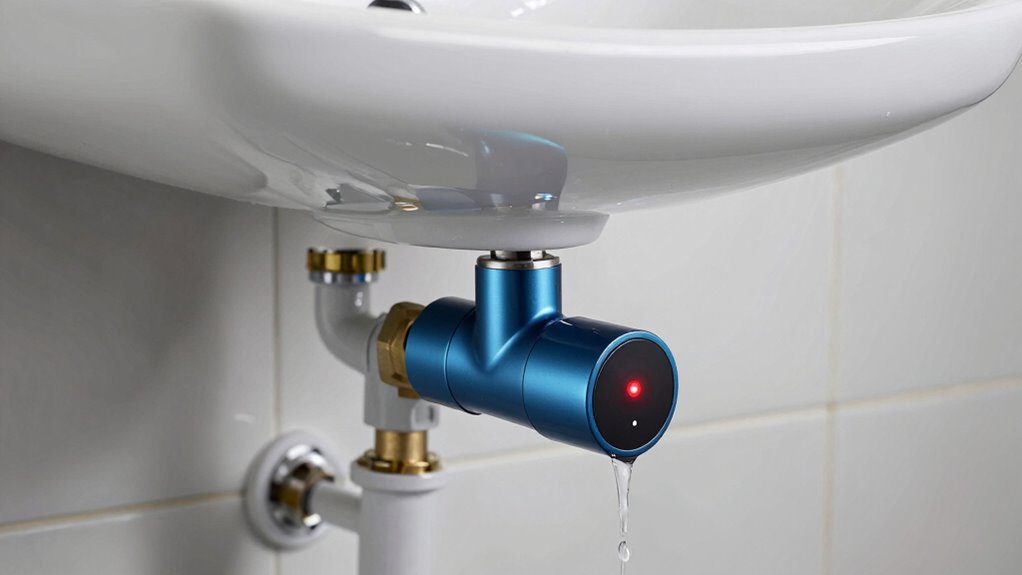

When your smart water shutoff valve triggers for the first time, it quickly shuts off the water supply to prevent damage. You’ll receive an instant notification on your phone or home system, alerting you to the situation. You can then inspect your system, check for leaks or damage, and respond accordingly. Knowing what to expect helps you act confidently. Keep exploring to discover tips on managing and maintaining your system effectively.
Key Takeaways
- Immediately, the valve activates to shut off water supply upon leak detection.
- You receive instant notifications via your smartphone or home automation app.
- Inspect the valve and surrounding pipes for visible damage or leaks after activation.
- Verify system functionality by checking alerts and performing test functions regularly.
- Follow maintenance steps to ensure reliable operation and prevent false alarms.

Have you ever worried about water leaks causing costly damage or wasting resources? If you’ve recently installed a smart water shutoff valve, that concern might soon become a thing of the past. When the first trigger occurs, it’s natural to feel a mix of relief and curiosity. Your smart valve is designed to detect leaks and automatically shut off your water supply, preventing major damage. But knowing what to expect during that initial activation can help you stay calm and prepared.
Once the sensor detects a leak or abnormal water flow, the valve will activate almost instantly, shutting off the water supply. You’ll likely receive a notification on your smartphone or through your home automation system, alerting you to the event. This immediate notification is vital because it allows you to assess the situation quickly. You might want to check your app for details—such as which zone triggered the alarm or if the leak is ongoing. This quick access helps you decide whether to investigate further or call a professional.
When a leak is detected, the valve activates instantly and sends a notification to your device.
After the valve shuts off, it’s a good idea to follow a simple maintenance checklist. First, inspect the valve and surrounding pipes for visible damage or leaks. Check that the valve is in the correct position and hasn’t been accidentally tampered with. It’s also helpful to verify that your app’s notifications and alerts are functioning properly. Regularly updating your smart system’s firmware ensures you benefit from the latest features and security improvements, keeping your system dependable.
To keep your smart water shutoff valve working effectively, pay attention to installation tips. Make sure the valve is installed according to the manufacturer’s guidelines—correct placement, secure fittings, and proper calibration are essential. If you’re unsure about the installation, consulting a professional can save you headaches later. Proper installation reduces false alarms and ensures the valve responds accurately when needed.
In addition to initial setup, maintaining your system involves routine checks. Test the valve periodically by simulating a leak or using the test function if available. Keep the area around the valve clear of debris and ensure your Wi-Fi connection remains strong so alerts aren’t delayed. Being aware of the importance of high-quality components and proper calibration can significantly enhance your system’s performance. By following a maintenance checklist and adhering to installation tips, you’ll maximize your system’s lifespan and reliability.
Ultimately, the first time your smart water shutoff valve triggers, you’ll appreciate the peace of mind it provides. Being prepared with knowledge about its operation, maintenance, and proper installation helps you respond confidently and keep your home protected. It’s a small investment that offers significant protection against water damage, saving you money and stress down the road.
Frequently Asked Questions
Can Smart Water Shutoff Valves Be Manually Overridden?
Yes, smart water shutoff valves can usually be manually overridden, giving you user control when needed. You can typically do this through the valve’s manual override feature or a nearby control lever. This allows you to bypass automatic shutoff in certain situations, like maintenance or emergencies. Just make certain you’re familiar with your specific model’s instructions, so you can safely and effectively operate the manual override when necessary.
What Maintenance Is Required for These Valves Over Time?
You gotta keep an eye on your smart water shutoff valve to guarantee it performs smoothly over time. Follow the installation guidelines carefully and check for any debris or corrosion regularly. Replace batteries if your model uses them, and keep software up to date for long-term durability. Periodic inspections help catch issues early, so your system stays reliable—think of it as giving your home a health check-up to keep everything flowing seamlessly.
How Quickly Does the Valve Respond During a Leak?
During a leak, your smart water shutoff valve responds almost instantly, often within seconds, thanks to advanced leak detection technology. The response time is vital to minimize water damage. Once leak detection identifies a problem, the valve automatically shuts off the water supply, preventing further leaks. This quick response helps protect your home, giving you peace of mind knowing the system acts swiftly to address potential water issues.
Are Smart Water Shutoff Valves Compatible With Existing Home Systems?
Yes, smart water shutoff valves are compatible with most existing home systems, especially if you have a home automation setup. They integrate with leak detection sensors and smart home hubs, allowing you to monitor your plumbing remotely. Just verify your system supports Wi-Fi or Z-Wave, and you might need a hub or app for seamless control. Compatibility varies, so check your specific model’s requirements before installation.
What Are the Common False Alarms or Triggers?
False alarms are like sudden gusts of wind—unexpected and disruptive. Common triggers include sensor sensitivity settings being too high, causing the valve to activate from minor leaks or water splashes. Sometimes, temperature fluctuations or low water pressure can also falsely trigger the system. To prevent this, you should modify the sensor sensitivity and regularly check the system for proper calibration. Staying proactive helps ensure your smart water shutoff works smoothly.
Conclusion
So, when your smart water shutoff valve finally triggers, it might feel like a random coincidence—until you realize it’s actually protecting your home. That unexpected moment could save you from costly damage or flooding, reminding you that technology often works behind the scenes, quietly watching out for you. Next time, trust the system; it’s there to catch those little surprises before they turn into big problems.