Pellet grill temperature swings happen when airflow, pellet feed rate, or fan speed fluctuate, causing sudden heat increases or drops. External weather conditions like wind or cold temperatures can make maintaining steady heat more challenging. If your grill’s components aren’t clean or calibrated, it can contribute to instability. Proper airflow, high-quality pellets, and regular maintenance help keep temperatures steady. Continue exploring to uncover more tips on mastering your grill’s temperature control.

Get the little things that make your day delivered free with Prime
- Fast, free delivery on millions of items
- Prime Video, Amazon Music and more included
- Member-only deals all year
Key Takeaways
- Inconsistent pellet feed rates can cause sudden temperature spikes or drops.
- Fan speed that is too high or too low disrupts even heat distribution.
- External weather conditions like wind and cold temperatures influence temperature stability.
- Blocked vents or ash buildup restrict airflow, leading to temperature fluctuations.
- Calibration issues or faulty sensors can cause inaccurate temperature readings.
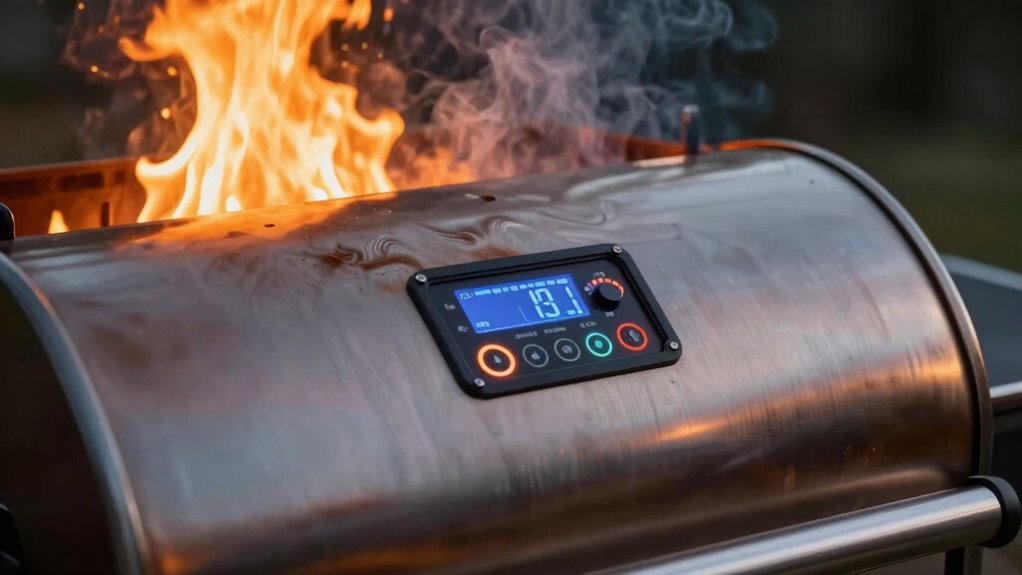
A notable factor behind temperature swings is smoke regulation. Your pellet grill relies on a complex system that controls airflow, pellet feed rate, and fan speed to manage temperature and smoke production. If any of these elements aren’t working harmoniously, you’ll notice your temperatures bouncing around. For example, if the fan runs too aggressively or the pellet feed isn’t consistent, the grill can overcompensate, causing sudden temperature spikes. Conversely, if airflow is restricted or the pellets aren’t feeding properly, the temperature can plummet, leaving you with a sluggish cook. Proper smoke regulation isn’t just about keeping the smoke flowing; it’s about balancing the airflow and pellet feed to create stable conditions that promote even heat and smoke distribution. Understanding grill mechanics can help you troubleshoot issues more effectively. Additionally, understanding the role of temperature sensors in your grill can assist in diagnosing calibration problems that contribute to fluctuations. Regularly checking for sensor calibration can ensure your grill maintains accurate temperature readings. Maintaining proper airflow and pellet feed rates, as well as ensuring the quality of pellets, are essential for consistent temperatures.
Understanding why these swings happen is the first step to controlling them. Regular maintenance of your pellet grill, such as cleaning out ash buildup and checking for obstructed vents, can markedly improve temperature stability. Also, investing in a quality pellet with consistent burn properties helps reduce unpredictable fluctuations. When your grill’s internal components are functioning well, it can better regulate temperature and smoke, leading to more reliable results. Keep in mind that weather conditions, such as wind or cold temperatures, can also affect your grill’s ability to maintain steady heat. In these situations, adjusting your grill’s settings or using insulation can help mitigate temperature swings.
In the end, recognizing the importance of stable temperature control for flavor consistency and smoke regulation will make you a better griller. When you understand what causes these fluctuations and how to manage them, you’ll enjoy more predictable, delicious results every time you fire up your pellet grill.
Popular right now

Ninja Foodi 10-Qt DualZone Smart XL Air Fryer, 6-in-1, DZ550

TCL 85 Designer Series QD-Mini LED TV (Model 85A400U) with Google Smart TV

Bose QuietComfort Headphones (2nd Gen), Wireless Noise-Cancelling Over-Ear Headphones, Eucalyptus Green
As an affiliate, we earn on qualifying purchases.
Frequently Asked Questions
How Can I Prevent Temperature Swings on My Pellet Grill?
To prevent temperature swings on your pellet grill, focus on maintaining consistent fuel quality and managing smoke control. Use high-quality pellets, as inferior ones can cause irregular burning. Keep the lid closed as much as possible to stabilize heat and adjust your smoke control settings for steady airflow. Regularly clean your grill and guarantee the auger and fan are working properly. These steps help maintain a more consistent temperature during your cook.
Do Pellet Grill Brand Differences Affect Temperature Stability?
Yes, pellet grill brand differences can affect temperature stability. While some might think all grills perform similarly, higher-quality pellets and a reliable ignition system make a big difference. Better brands often use advanced sensors and thermostats, helping maintain consistent temps. Don’t overlook pellet quality—poor pellets can cause fluctuations regardless of brand. Selecting a reputable brand with a dependable ignition system guarantees more stable temperatures and better overall grilling results.
Can Outdoor Weather Impact Pellet Grill Temperature Consistency?
Yes, outdoor weather can impact your pellet grill’s temperature consistency. Wind, rain, and cold temperatures challenge its weather resilience, making temperature regulation harder. Strong winds can cause fluctuations by cooling the grill, while cold weather can slow down pellet combustion. To maintain steady temperatures, consider using a grill cover, placing it in a sheltered spot, or adding insulation. These steps help improve temperature stability despite changing outdoor conditions.
Is It Normal for Pellet Grills to Have Temperature Fluctuations?
Think of your pellet grill as a ship steering through unpredictable waters. Yes, fluctuations in temperature are normal because pellet feed and smoke consistency can vary with factors like ambient temperature or pellet quality. These changes are part of the journey, but with proper calibration, your grill can stay steady. Embrace these minor swings—they’re just the natural currents of outdoor cooking, guiding you toward delicious results.
How Often Should I Clean My Pellet Grill to Maintain Temperature?
You should clean your pellet grill after every few uses to maintain consistent temperatures and guarantee ideal cooking techniques. Regular cleaning prevents grease buildup and ash accumulation, which can cause temperature swings. A clean grill also helps preserve that authentic smoke flavor, enhancing your dishes. Focus on cleaning the fire pot, grates, and interior surfaces to keep your grill functioning smoothly and to produce the best smoky flavor every time.
Conclusion
Think of your pellet grill as a steady lighthouse beam guiding your culinary voyage. When temperature swings occur, it’s like the lighthouse flickering in a storm—temporary, but unsettling. By understanding the reasons behind these swings, you can adjust your course and keep your cooking ship steady. With patience and a little tuning, you’ll navigate through any weather, ensuring your smoked masterpieces shine bright, just like that unwavering lighthouse guiding you home.