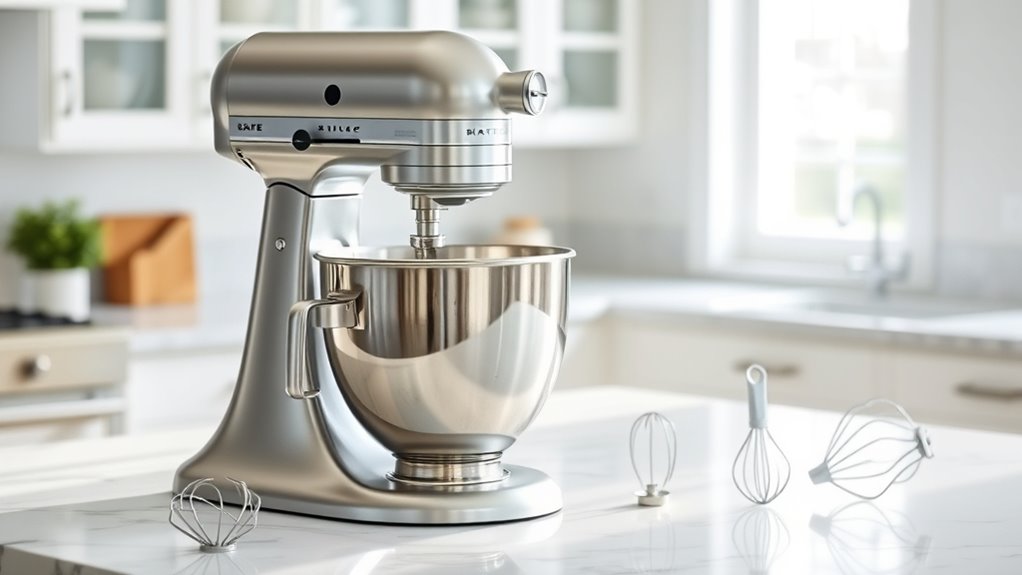

To keep your stand mixer purring for decades, regularly clean and inspect all attachments, removing food residue and grease after each use. Dry everything thoroughly and store in a dry, safe place. Wipe down the body with a damp cloth and check the cord and plug for damage. Follow manufacturer instructions for lubrication and mechanical checks. Consistent maintenance will extend its lifespan and ensure reliable performance—continue exploring tips to keep it in top shape.
Key Takeaways
- Regularly clean and dry attachments, bowls, and the mixer body to prevent rust, bacteria, and grime buildup.
- Follow manufacturer instructions for safe cleaning, including checking if attachments are dishwasher safe.
- Lubricate gears or joints with food-grade lubricant as recommended to ensure smooth operation.
- Inspect power cords and components regularly for damage, replacing parts promptly to maintain safety.
- Store attachments in a dry, clean place and perform routine mechanical checks for long-lasting performance.
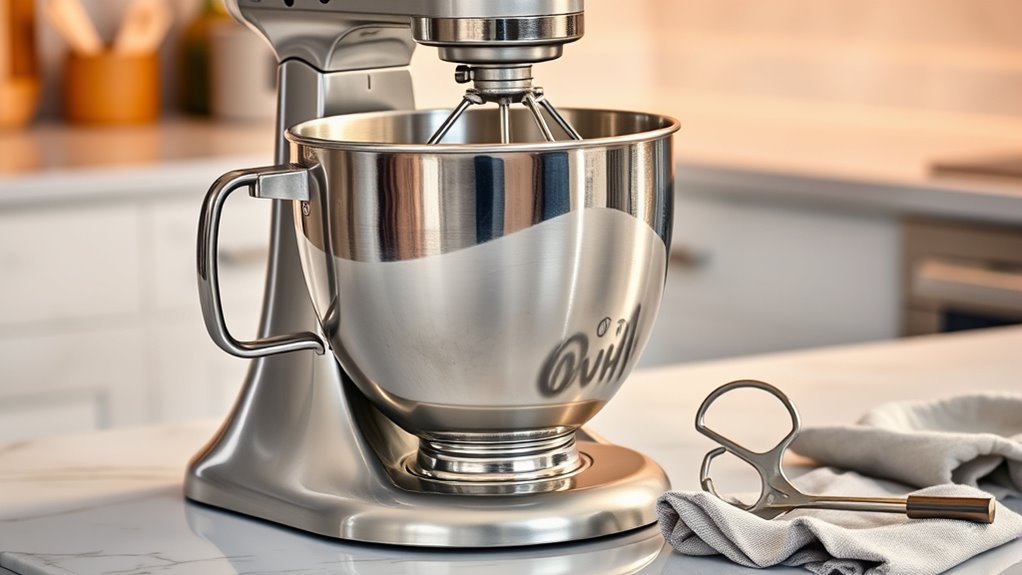
A stand mixer is a valuable kitchen tool that can last for years with proper care. To keep it running smoothly, paying attention to attachment maintenance is essential. Over time, beaters, whisks, and dough hooks can accumulate food residue, grease, and dust, which may impact their performance and hygiene. Regularly inspecting these attachments ensures they stay in top shape. After each use, remove the attachments and wash them thoroughly with warm, soapy water. For stubborn spots, a gentle scrub with a soft brush can help eliminate baked-on residue. Dry them completely before storing to prevent rust and corrosion. Some attachments are dishwasher safe—just check your manufacturer’s instructions to avoid damage. Keeping attachments properly maintained not only prolongs their lifespan but also guarantees your mixer operates efficiently every time.
Cleaning tips are a crucial part of stand mixer care. Start by unplugging the unit before cleaning to ensure safety. Wipe down the mixer’s body with a damp cloth to remove dust and splatters, avoiding the motor and electrical components. For stubborn stains, a mild detergent solution works well. Pay close attention to the area beneath the head and around the attachment hub, where grime can build up. Use a soft brush or cloth to reach tight spots. The mixing bowl and attachments should be washed after each use—this prevents buildup of food particles and bacteria. For stainless steel bowls, a mixture of baking soda and water can help polish and remove stains. Regular cleaning not only keeps your mixer looking good but also prevents cross-contamination and mechanical issues caused by debris buildup.
Another tip for attachment maintenance involves greasing moving parts when recommended by the manufacturer. Some mixers have gears or joints that benefit from light lubrication to ensure smooth operation. Always use food-grade lubricant and follow the instructions for application. Additionally, routinely check the power cord and plug for damage or fraying, replacing parts if necessary to maintain safety and performance.
Frequently Asked Questions
How Often Should I Replace Mixer Attachments?
You should replace mixer attachments when they show signs of wear, damage, or become incompatible with your stand mixer. Regularly check attachment compatibility to guarantee they fit securely and work efficiently. In general, it’s wise to contemplate replacement frequency every few years or if you notice rust, cracks, or decreased performance. Doing so keeps your mixer running smoothly and extends its lifespan, ensuring safe and effective baking every time.
Can I Use My Stand Mixer Outdoors?
You shouldn’t use your stand mixer outdoors because it’s not designed for outdoor usage. Weather protection is essential, as exposure to rain, humidity, or direct sunlight can damage the motor and electrical parts. If you need to use it outside, make sure to keep it sheltered under a weatherproof cover and only operate it in dry, controlled environments. This helps guarantee it stays in good condition for years to come.
What Should I Do if My Mixer Makes Unusual Noises?
If your mixer makes unusual noises, like a noisy motor or strange sounds, stop using it immediately. Check for any debris or food buildup around the blades and motor. Sometimes, loose attachments or worn-out parts cause the noise. If you can’t find an obvious issue, consult your user manual or contact a professional for repair. Regular maintenance helps prevent these problems and keeps your mixer running smoothly.
Is It Safe to Wash the Motor Housing?
It’s not safe to wash the motor housing directly. Instead, you should perform motor housing cleaning by wiping it with a damp cloth and mild detergent, then dry thoroughly. Always follow safety precautions, such as unplugging the mixer before cleaning and avoiding excess moisture. Never immerse the motor housing in water, as this can damage the internal components and pose electrical hazards. Proper maintenance keeps your mixer running smoothly for years.
How Do I Store My Stand Mixer Long-Term?
To store your stand mixer long-term, first clean and dry it thoroughly. Use cord storage to keep the power cord neatly tucked away, preventing damage. Consider aesthetic upgrades, like a decorative cover or a stylish storage box, to protect it and keep it looking new. Store it in a cool, dry place away from direct sunlight, ensuring it remains in excellent condition for years to come.
Conclusion
Taking care of your stand mixer isn’t just about preventing scratches or keeping it shiny; it’s about preserving its ability to create, inspire, and bring joy for decades. Just as a garden needs tending to flourish, your mixer needs regular attention. When you invest time in its maintenance, you’re not only ensuring perfect batches today but also safeguarding countless memories and moments of kitchen triumphs tomorrow. A well-cared-for mixer is a true partner in your culinary journey.