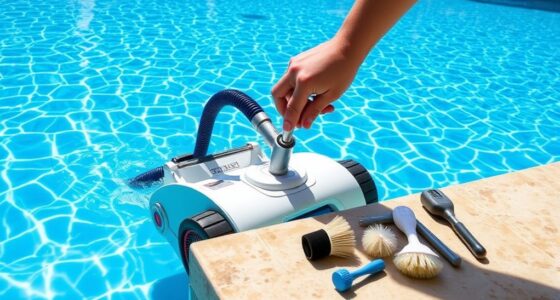
Robotic pool cleaners are increasingly becoming the preferred choice for effortless maintenance, gradually overtaking traditional suction models. They offer advanced navigation, thorough cleaning, and require less manual effort, making them attractive for busy pool owners. While suction cleaners remain popular for budget-friendly and straightforward needs, the market trend shows a shift toward smarter, automated options. If you want to discover how this change may impact your pool care routine, there’s more to contemplate below.
Key Takeaways
- Robotic pool cleaners offer superior coverage and automation, increasingly replacing manual and suction-based cleaners for many users.
- Market trends show a shift toward robotic models due to their advanced navigation, efficiency, and smart features.
- Suction cleaners remain popular for budget-conscious owners and simple maintenance needs, but their market share is gradually declining.
- Technological advancements are making robotic cleaners more affordable, user-friendly, and effective, accelerating their adoption.
- The overall trend indicates robotic pool cleaners are poised to overtake suction models as the primary choice for pool maintenance.

When it comes to keeping your pool clean, choosing the right cleaning method can make a big difference. You’ve probably considered manual cleaning, which involves brushing, skimming, and vacuuming the pool yourself. While manual cleaning allows you to target specific areas and keep a close eye on your pool’s condition, it also requires consistent effort and time. It’s an essential part of maintenance routines, but it can become tedious, especially if your pool is large or heavily used. This is why many pool owners are now exploring automated options that can reduce the workload.
Manual cleaning is effective but time-consuming; automated options can ease your pool maintenance routine.
In recent years, suction pool cleaners have been a popular choice for many homeowners. They operate by connecting to your pool’s filtration system and use suction to vacuum dirt and debris from the bottom and sides of the pool. These cleaners are generally reliable, cost-effective, and straightforward to operate. They tend to be effective for regular cleaning, especially when you set up a routine that includes manual maintenance routines like weekly brushing and skimming. However, suction cleaners can sometimes get stuck or miss spots, especially around complex pool shapes or obstacles. They also require some initial setup and occasional maintenance of their hoses and filters, but overall, they provide a decent balance of ease and affordability for many users.
On the other hand, robotic pool cleaners are gaining popularity and are starting to challenge the dominance of traditional suction models. These devices are autonomous, running on their own power, and often come with advanced navigation systems that allow them to cover the entire pool surface thoroughly. Robots can reach tight corners and complex shapes more easily than manual or suction cleaners, reducing the need for frequent manual intervention. They also tend to be more efficient at cleaning, saving you time and effort while maintaining a consistently clean pool. Many modern robotic cleaners are integrated with smart technology, allowing you to schedule cleaning sessions or monitor their progress remotely, making them a convenient addition to your maintenance routines. Additionally, high-quality motors in robotic cleaners contribute to their durability and effectiveness over time, ensuring your investment lasts longer. Furthermore, selecting a robot with advanced navigation systems can significantly improve cleaning efficiency, especially for irregularly shaped pools. The integration of smart technology and improved hardware has made robotic cleaners more accessible and user-friendly, encouraging a shift in market preferences. As these devices become more sophisticated, they are also increasingly capable of handling complex pool shapes, which was a challenge for earlier models. The trend toward robotic cleaners is driven by their convenience, efficiency, and technological advancements. While suction cleaners still hold a place for budget-conscious owners or those who prefer a simple, no-fuss approach, the market indicates a shift toward robotic solutions. As technology continues to improve, robotic pool cleaners are likely to become the standard for many, effectively supplementing or even replacing traditional suction models. For you, this means evaluating your pool’s size, shape, and your available time for maintenance to decide which system best fits your needs now—and in the future.
Frequently Asked Questions
How Do Suction Pool Cleaners Handle Algae and Bacteria?
Suction pool cleaners mainly handle algae and bacteria by circulating pool water, but they don’t eliminate these issues alone. You should combine their use with chemical treatments to effectively target algae and bacteria. Regular algae prevention, like proper chlorination and pH balance, is essential. Although suction cleaners help keep debris out, maintaining chemical levels guarantees the pool stays clean and safe, reducing algae buildup and bacterial growth over time.
Are Robotic Pool Cleaners Energy-Efficient Compared to Suction Models?
Robotic pool cleaners generally use less energy than traditional suction models, making them more energy-efficient. Their advanced technology optimizes energy consumption, reducing environmental impact and operational costs. You’ll notice they work smarter, covering your pool efficiently without wasting electricity. By choosing a robotic cleaner, you contribute to a greener environment while enjoying cleaner pools with less energy use overall.
What Maintenance Is Required for Robotic Versus Suction Pool Cleaners?
When comparing maintenance needs, robotic pool cleaners typically require more routine care. You’ll need to regularly replace filters and clean out debris to keep them running smoothly. Motor maintenance is also essential; check for any unusual noises or leaks and follow manufacturer guidelines. Suction models usually need less maintenance, mainly filter replacement and occasional inspection. Overall, robotic cleaners demand more attention but offer advanced cleaning features.
Can Robotic Pool Cleaners Clean Hard-To-Reach Pool Areas?
Did you know that 65% of pool owners find robotic cleaners effective in reaching difficult spots? Robotic pool cleaners excel at maneuvering complex pool shapes and varying depths, tackling hard-to-reach areas that suction models might miss. They adapt to different water chemistry and pool depth, ensuring thorough cleaning. You’ll appreciate how their advanced sensors help them maneuver around steps, corners, and tight spots, keeping your entire pool sparkling clean effortlessly.
How Do Costs Compare Between Suction and Robotic Pool Cleaning Systems?
When comparing costs between suction and robotic pool cleaning systems, you’ll find that suction cleaners typically have lower initial purchase prices and installation expenses. Robotic cleaners often cost more upfront due to advanced features and automation, but they may save you money over time through energy efficiency and less maintenance. Your choice depends on your budget and preferences for convenience, but overall, suction systems usually offer a more affordable cost comparison for basic cleaning needs.
Conclusion
As the market shifts, you might feel like you’re steering a busy river, with traditional suction pool cleaners paddling against the current of robotic technology. Robots are steadily taking over, offering smarter, more efficient cleaning solutions. While suction cleaners have served you well, embracing these tech-savvy swimmers can make your pool maintenance smoother and more effortless. Don’t get left behind in the tide—consider riding the wave of robotic innovation for your pool’s future.