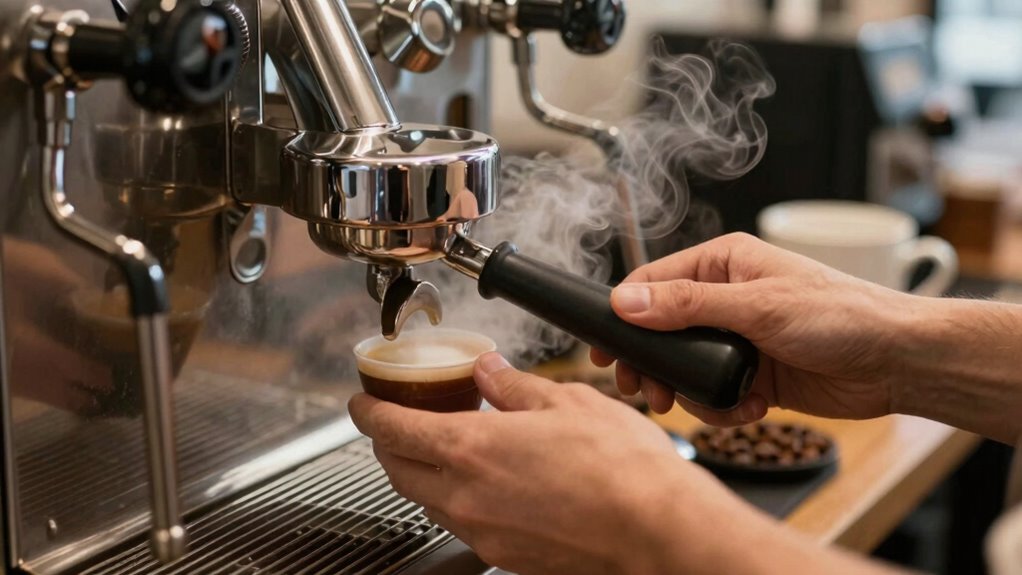

Dialing in espresso means balancing variables like grind size, tamp pressure, water temperature, and brew time to get a perfect shot. You want to avoid under-extraction, which makes the espresso sour, or over-extraction, causing bitterness. Watch for signs like crema thickness and shot flow to fine-tune your process. Mastering these terms and concepts allows you to control your brew with confidence—keep going, and you’ll soon understand how to get the best flavor every time.

Get the little things that make your day delivered free with Prime
- Fast, free delivery on millions of items
- Prime Video, Amazon Music and more included
- Member-only deals all year
Key Takeaways
- Dial-in means adjusting variables like grind size, tamping, and brew time to perfect your espresso shot.
- Fine-tuning extraction involves balancing grind size and brew time to prevent under- or over-extraction.
- Proper tamping pressure ensures even water flow, critical for consistent extraction.
- Monitoring crema helps assess extraction quality; thick, stable crema signals a well-dialed shot.
- Understanding key terms enables precise adjustments, improving your espresso skills and results.
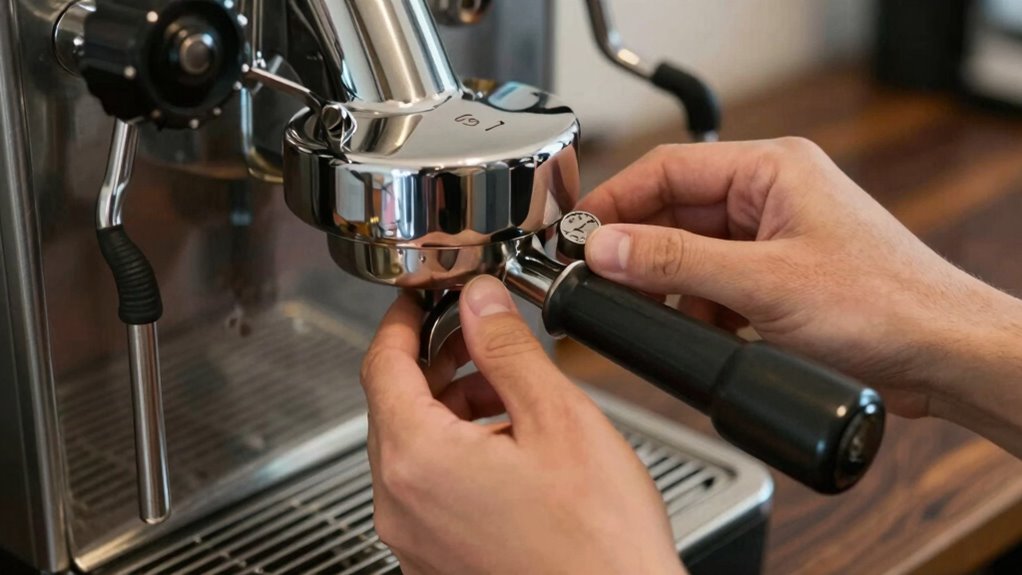
Ever wondered what those espresso terms really mean? Let’s start with coffee extraction, a fundamental concept that can seem complicated but is actually pretty straightforward once you understand it. Coffee extraction refers to how the hot water interacts with the coffee grounds to pull out all the flavors, oils, and compounds that create the taste we love. When you brew espresso, you’re aiming for the perfect extraction—neither under-extracting nor over-extracting. Under-extraction happens when water passes through the coffee too quickly, leaving behind the rich flavors and resulting in a sour, thin shot. Over-extraction, on the other hand, occurs if water takes too long, pulling out bitter, undesirable compounds and making the espresso overly harsh. Achieving the right extraction involves controlling variables like grind size, tamping pressure, water temperature, and brew time. It’s a delicate balance, but once you dial it in, your espresso will taste vibrant and well-rounded. Understanding extraction variables helps you fine-tune your brewing process for optimal results.
Now, onto crema formation—often the first thing you notice when pulling a fresh shot. Crema is that golden, velvety foam that sits atop your espresso, and it’s a sign of a well-made shot. Crema forms during the coffee extraction process when the hot water interacts with the coffee oils and carbon dioxide trapped in the grounds. As the water emulsifies these oils, tiny bubbles form, creating that rich, creamy layer we associate with high-quality espresso. The presence and quality of crema depend on several factors, including the freshness of your coffee beans, the grind size, and the pressure of your espresso machine. Freshly roasted beans tend to produce more crema because they contain more carbon dioxide. Proper tamping pressure ensures even extraction, which helps produce a stable crema. If your espresso has a thick, persistent crema, it’s usually a good sign that your coffee extraction was on point, and the flavors are likely to be balanced and robust.
Understanding these terms helps you appreciate what you’re aiming for with each shot. Coffee extraction isn’t just about time; it’s about controlling the process to unlock the coffee’s full flavor profile. Crema formation is a visual cue that tells you whether the extraction was successful or needs adjusting. Once you get these concepts, you’ll start to see your espresso skills improve, and every shot will become a reflection of your growing expertise. So next time you pull an espresso, pay attention to the extraction and crema—these tiny details reveal a lot about what’s happening behind the scenes.
Popular right now

De'Longhi Dinamica Plus Fully Automatic Espresso Machine

Bose QuietComfort Headphones (2nd Gen), Wireless Noise-Cancelling Over-Ear Headphones, Eucalyptus Green

Dyson Big Ball Multi Floor Canister Vacuum, Yellow
As an affiliate, we earn on qualifying purchases.
Frequently Asked Questions
What’s the Best Way to Practice Dialing in Espresso?
You should practice dialing in espresso by focusing on maintaining consistent grind size and tamping pressure. Start with a standard shot and adjust the grind until your extraction time is around 25-30 seconds. Keep your tamping firm and even each time to guarantee uniform extraction. Record your settings, then tweak the grind and tamping slightly with each shot. Over time, this will help you develop a feel for perfecting your espresso.
How Often Should I Recalibrate My Espresso Grinder?
Think of your grinder as the orchestra conductor for your espresso. You should recalibrate it whenever you notice flavor inconsistencies or after changing beans or roast levels. Regular grinder maintenance ensures your shots stay balanced and flavorful. Typically, recalibrating every few weeks or monthly keeps your grind precise, but always trust your taste buds and visual cues—if your espresso’s off, it’s time for a tune-up.
Can I Dial in Espresso Without Professional Equipment?
Yes, you can dial in espresso at home without professional equipment. With good coffee gear like a quality grinder and a reliable espresso machine, you just need to experiment with grind size, dose, and tamp pressure. Adjust these settings gradually, taste your shots, and keep notes. Home brewing allows you to fine-tune your espresso to get the perfect shot, just like a pro, even without specialized tools.
What Are Common Mistakes When Dialing in Espresso?
Most baristas make common mistakes when dialing in espresso, like neglecting grinder calibration, which affects shot quality. You might also overlook crema consistency, leading to uneven extraction. To improve, fine-tune your grinder settings gradually and pay close attention to how the crema looks and feels. Remember, small adjustments make a big difference. About 80% of espresso quality comes down to mastering these details, so stay patient and precise.
How Do I Know if My Espresso Shot Is Perfectly Dialed In?
You’ll know your espresso shot is perfectly dialed in when it has a rich, balanced flavor with a smooth, caramel-like sweetness. Check the brew temperature to make certain it’s around 195-205°F, and adjust your tamp pressure to about 30 pounds for consistent extraction. The shot should flow in a steady, honey-like stream without over-extracting or under-extracting, indicating your grind size and overall setup are just right.
Conclusion
Now that you’ve got the scoop on espresso terms, you’re practically a coffee wizard ready to conquer any machine. Dialing in your shot might seem tricky at first, but with a little practice, you’ll be pulling perfect espressos faster than lightning strikes. Remember, mastering these terms turns an ordinary coffee into a masterpiece—your secret weapon in the world of brewing. So go ahead, impress everyone with your newfound espresso expertise—nothing’s gonna stop you now!