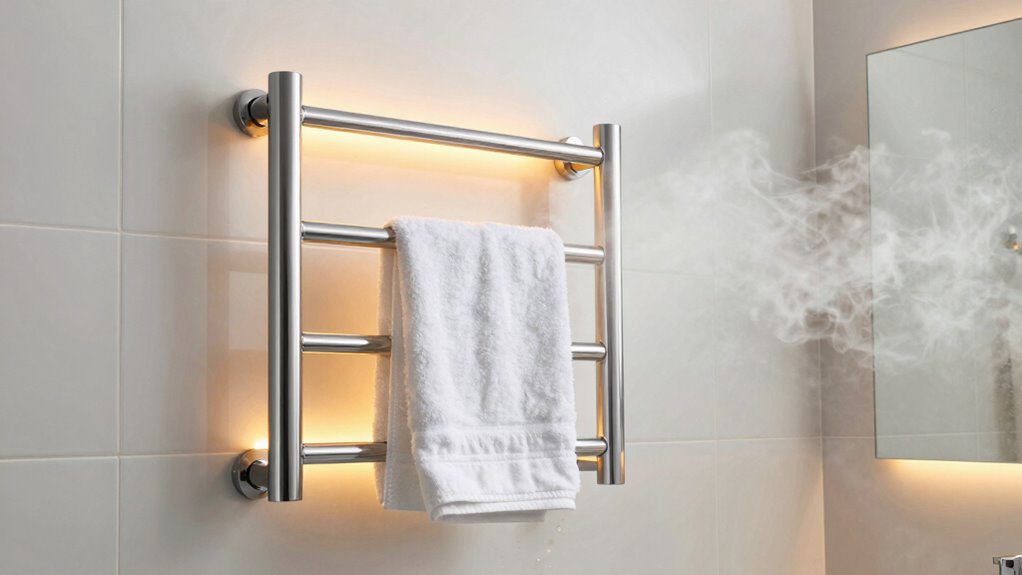

Towel warmers can make your bathroom comfy, but they also increase humidity by adding heat, which can raise moisture levels. If not managed properly, this excess moisture can linger, encouraging mold and mildew growth. Good ventilation, like using exhaust fans or opening doors after showers, helps control the humidity. Monitoring moisture levels and using proper insulation are key. Keep exploring to find effective ways to enjoy warm towels without compromising your bathroom’s health.

Get the little things that make your day delivered free with Prime
- Fast, free delivery on millions of items
- Prime Video, Amazon Music and more included
- Member-only deals all year
Key Takeaways
- Towel warmers increase bathroom heat, which can raise humidity levels and promote mold if not properly ventilated.
- Excess moisture from warmers can linger, especially in poorly ventilated spaces, leading to damp conditions.
- Proper ventilation, such as exhaust fans and opening doors, is essential to manage humidity from towel warmers.
- Monitoring humidity helps prevent mold growth and maintains a healthy bathroom environment.
- Using towel warmers mindfully and ensuring adequate airflow minimizes moisture buildup and mold risk.
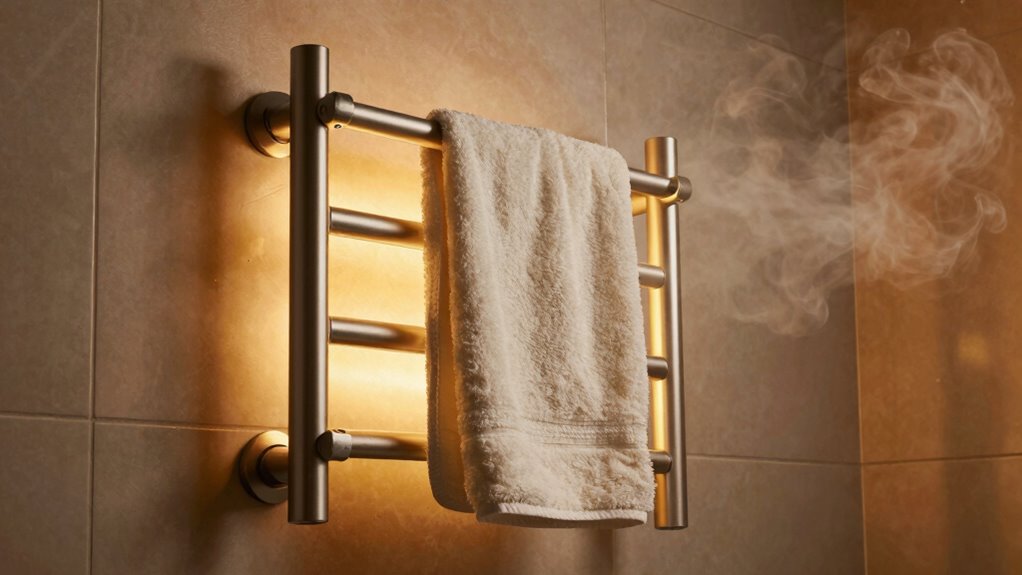
Have you ever wondered how towel warmers impact bathroom moisture levels? When you install a towel warmer, you’re adding more than just a cozy way to dry your towels; you’re influencing the overall humidity in your bathroom. This impacts how moisture behaves in the space, especially during and after your showers. Towel warmers generate heat, which can help speed up the drying process for towels, but this also affects the bathroom’s moisture balance. If you don’t manage the humidity properly, excess moisture can linger, leading to issues like mold or mildew. That’s why understanding how towel warmers interact with drying techniques and humidity control is essential for maintaining a healthy, comfortable bathroom environment. Using a towel warmer can be a great drying technique because it warms towels quickly, making them more comfortable to use. However, the heat produced during this process can also increase the overall humidity in the room, especially if the bathroom isn’t well-ventilated. When moisture from your shower or bath doesn’t escape efficiently, it stays trapped, raising humidity levels. This excess moisture can condense on walls, mirrors, and even your towels, creating a damp environment that promotes mold growth. To counter this, it’s important to incorporate effective humidity control measures, such as exhaust fans or dehumidifiers, particularly if your towel warmer runs frequently. Additionally, the moisture behavior in your bathroom can be influenced by factors like insulation and room size, which further affect humidity levels. Proper ventilation helps carry away the excess moisture produced during drying or showering, preventing it from settling on surfaces. If your bathroom lacks sufficient ventilation, the heat from the towel warmer might inadvertently contribute to a damp environment rather than improve it. You might also consider installing a timer on your towel warmer to prevent it from running longer than necessary, reducing unnecessary humidity buildup. Additionally, keeping bathroom doors open after showers allows steam to escape, further assisting with humidity control. Proper ventilation and humidity management are essential for preventing mold growth and maintaining a healthy indoor air quality. In addition to ventilation, humidity monitoring devices can help you keep track of moisture levels and adjust your drying routines accordingly. Understanding the insulation characteristics of your bathroom can also help manage heat retention and moisture buildup, ensuring a balanced environment. In essence, while towel warmers are a cozy addition to your bathroom, they also require mindful use to avoid moisture issues. Proper drying techniques combined with good humidity control can help you enjoy the comfort of warm towels without compromising your bathroom’s air quality. Regularly ventilating the space and monitoring humidity levels will prevent problems like mold and keep your bathroom fresh and safe. So, when you think about using a towel warmer, remember it’s not just about comfort—it’s about creating a balanced environment where moisture doesn’t get the best of you.
As an affiliate, we earn on qualifying purchases.
Frequently Asked Questions
Do Towel Warmers Increase Overall Bathroom Humidity?
Yes, towel warmers can increase overall bathroom humidity levels, especially if they’re used frequently or in small, poorly ventilated spaces. The warmth from the towel warmer causes moisture in towels, depending on their materials, to evaporate into the air. Over time, this added moisture can raise humidity levels, making your bathroom feel damp or humid. To prevent this, make certain of proper ventilation and avoid overusing the warmer.
How Quickly Do Towel Warmers Dry Damp Towels?
Towel warmers typically dry damp towels within 30 to 60 minutes, depending on the warmer’s power and towel thickness. They work by promoting towel drying and moisture control, effectively reducing dampness and preventing mold. To optimize drying, make certain the warmer is on for adequate time and avoid overcrowding. This quick drying process helps keep your bathroom fresher and minimizes excess moisture that could lead to humidity issues.
Are Towel Warmers Energy-Efficient Compared to Traditional Dryers?
Towel warmers are generally more energy-efficient than traditional dryers, thanks to lower energy consumption, especially if you use them for shorter periods. A quick cost analysis shows they use less electricity over time, saving you money. Plus, they operate quietly and provide consistent warmth, making them a smart investment. Overall, towel warmers offer a more energy-efficient way to dry towels while reducing your utility bills.
Can Towel Warmers Prevent Mold Growth in Bathrooms?
Did you know mold thrives in humidity levels above 60%? Towel warmers help prevent mold growth by actively reducing bathroom moisture through humidity control. As they warm towels, they also dry the air, creating a less hospitable environment for mold. By maintaining lower humidity, towel warmers are a smart solution for mold prevention, keeping your bathroom cleaner and healthier.
What Maintenance Is Required for Towel Warmers?
You need to regularly clean your towel warmer to prevent dust and grime buildup, using a damp cloth and mild soap. Check the towel material for signs of wear or damage, replacing if necessary. Keep an eye on the warmers’ design for any loose parts or connections, ensuring they function safely. Periodic inspections and gentle cleaning will help maintain your towel warmer’s efficiency and longevity.
Conclusion
Now that you understand how towel warmers can influence bathroom moisture, you’re better equipped to make smart choices. Think of your bathroom as a delicate garden—too much moisture can invite unwanted weeds, but with proper ventilation and care, your space can flourish beautifully. By managing humidity, you’ll keep your towels cozy without turning your bathroom into a soggy swamp. A balanced approach guarantees comfort and freshness, making every shower feel like a spa day.
Columbus Day / Indigenous Peoples' Day Picks
long weekend sales
As an affiliate, we earn on qualifying purchases.