
If your pressure pool cleaner isn’t working well, start by inspecting the pump for leaks or clogs. Make sure all hose connections are tight and free of cracks or blockages. Check that the nozzles aren’t damaged and that the water pressure is within the proper range. Regularly clean filters and baskets to maintain peak flow. If these don’t solve the problem, more tips are available to help you get your cleaner back in shape.
Key Takeaways
- Check for leaks, blockages, or worn parts in the pump and hoses to ensure proper water flow.
- Verify all hose connections are secure, tight, and free of cracks or damage.
- Inspect and clean the pump basket, strainer, and impeller to prevent debris buildup and maintain pressure.
- Adjust the pressure regulator and examine nozzles for clogs or damage to optimize cleaning performance.
- Regularly perform maintenance, including filter cleaning and replacing worn hoses, to prevent pressure issues.

A pressure pool cleaner is a valuable tool for keeping your pool sparkling, but when it stops working properly, troubleshooting becomes essential. One common issue revolves around the cleaner not moving or cleaning effectively. Often, the root cause lies in the pump maintenance or hose connections. Regularly inspecting and maintaining your pump ensures it delivers the right pressure, which powers the cleaner efficiently. If your pump isn’t functioning correctly, check for any leaks, blockages, or worn-out parts that might be hindering performance. Cleaning out the pump basket and ensuring the impeller isn’t clogged can make a significant difference. Additionally, verify that the pump’s strainer and filter are clean, as debris can reduce water flow and pressure, impacting the cleaner’s operation.
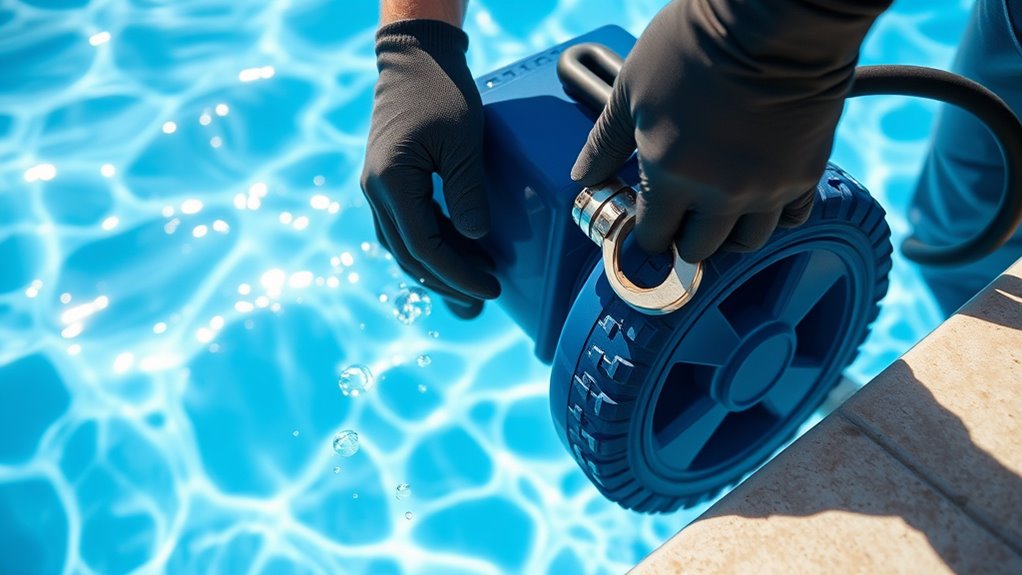
Hose connections are another critical aspect to examine. Loose or damaged hoses can cause a drop in pressure, preventing the cleaner from moving properly or picking up debris. Start by inspecting all hose connections to confirm they’re secure and tight. Sometimes, a simple tightening can restore proper water flow. If hoses are cracked or brittle, replace them to prevent leaks and maintain consistent pressure. Pay special attention to where hoses connect to the cleaner and the skimmer port. If the connections aren’t snug, the pressure can escape, reducing cleaning power. Using hose fittings or clamps can help secure connections better. Also, ensure that the hoses aren’t tangled or clogged, as obstructions can limit water flow, affecting the cleaner’s ability to operate smoothly.
If you’ve checked the pump maintenance and hose connections and still face issues, consider inspecting the pressure valve or the nozzle. A clogged or damaged nozzle can restrict water flow, leading to poor cleaning performance. Cleaning or replacing it might resolve the problem. Sometimes, adjusting the pressure regulator can help, especially if the pressure is too high or too low for your specific pool setup. Remember, a well-maintained pump and secure hose connections create the ideal environment for your pressure cleaner to function at its best. Regularly performing these checks not only keeps your pool clean but also prolongs the lifespan of your equipment.
Frequently Asked Questions
Can I Use a Pressure Pool Cleaner With a Variable Speed Pump?
You can use a pressure pool cleaner with a variable speed pump, but you need to take into account pool cleaner compatibility and pump speed adjustments. Adjust the pump to a higher speed to guarantee enough pressure for effective cleaning. Keep in mind that some variable speed pumps may not provide consistent pressure, so monitor cleaning performance and tweak the settings as needed for ideal results. Always check your cleaner’s specifications for compatibility.
What’S the Ideal Pressure Setting for Optimal Cleaning?
Imagine your pool’s cleanliness as a dance, and the pressure gauge as your rhythm guide. For ideal cleaning, aim for a moderate pressure, typically between 30-50 psi, ensuring the flow rate is steady but not overwhelming. Adjust your pressure settings accordingly, keeping an eye on the gauge to maintain a harmonious balance. This way, your cleaner performs smoothly, leaving your pool sparkling and inviting.
How Often Should I Clean or Replace the Cleaner’S Filter?
You should clean your pressure pool cleaner’s filter weekly to maintain ideal performance. Regular filter maintenance prevents debris buildup, ensuring efficient cleaning. Check the filter for signs of wear or damage, and replace it when you notice persistent clogs or reduced suction. Typically, the replacement frequency depends on usage and filter condition, but generally, it’s best to replace the filter every season or as needed to keep your cleaner working effectively.
Is It Safe to Use Chemical Treatments While the Cleaner Is Operating?
You might wonder if it’s safe to use chemical treatments while your pressure pool cleaner is operating. Generally, it’s best to prioritize chemical safety and avoid adding treatments during cleaning cycles, as chemicals can interfere with the cleaner’s operation or damage it. Always follow the treatment timing instructions on chemical products, and run your cleaner after chemical dispersal to ensure proper filtration. This helps safeguard your equipment and keeps your pool safe.
Can a Pressure Pool Cleaner Be Used in a Saltwater Pool?
Imagine you’re cleaning your saltwater pool, and you’re wondering if your pressure pool cleaner can handle it. Typically, they are saltwater compatible, but you must check pump compatibility first. For example, if your cleaner’s manual states it works with saltwater systems, you’re good to go. Always verify saltwater compatibility and pump compatibility to prevent corrosion or damage, ensuring your cleaner operates efficiently without harm.
Conclusion
Now that you’ve tackled common issues, your pool cleaner should be back in action, gliding smoothly through the water like a diligent swimmer. Remember, troubleshooting is like fixing a puzzle—you just need to find the missing piece. With patience and a little know-how, you’ll keep your pool sparkling and inviting. So, don’t let a small hiccup turn into a big splash—stay confident and let your pool cleaner do the heavy lifting!