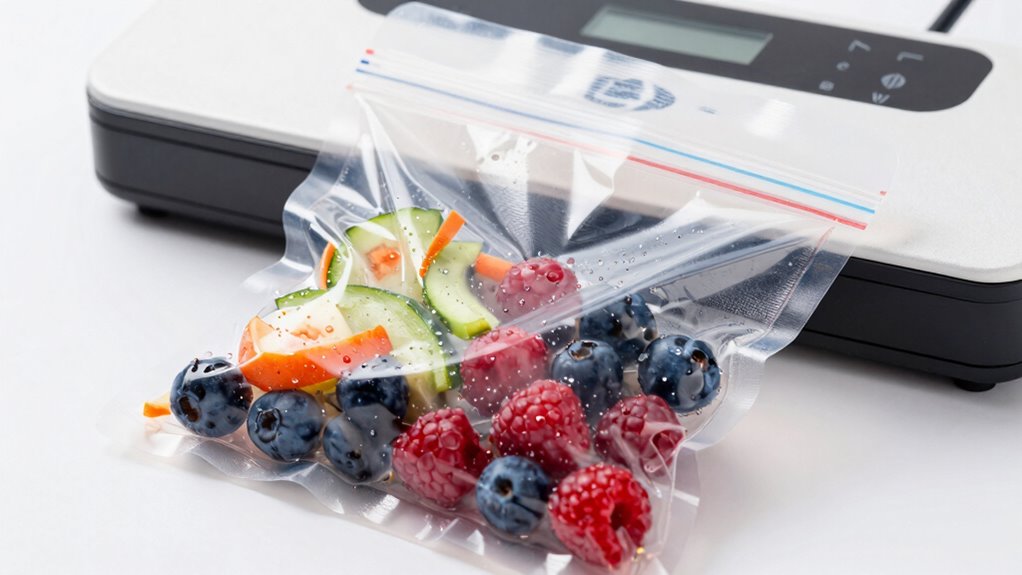

To guarantee your vacuum seal prevents freezer burn, perform a seal test by pressing the bag firmly to check for leaks, and look for an airtight closure after sealing. A proper seal removes air from the bag, blocking oxygen, moisture, and bacteria that cause spoilage. This extends food freshness and prevents ice crystal formation. Want to learn more about perfecting your seal test and maximizing food storage? Keep exploring for expert tips and techniques.

Get the little things that make your day delivered free with Prime
- Fast, free delivery on millions of items
- Prime Video, Amazon Music and more included
- Member-only deals all year
Key Takeaways
- Proper sealing ensures an airtight barrier, preventing air and moisture from causing freezer burn.
- Conducting a seal test involves checking for leaks before freezing food long-term.
- Ensuring the bag is sealed tightly eliminates oxygen exposure that promotes freezer burn.
- Using advanced vacuum sealers with leak detection features enhances seal integrity.
- Regularly inspecting seals helps maintain freshness and prevents freezer burn over time.
Have you ever wondered how to keep your food fresher longer? If so, vacuum sealing might be just what you need. This simple method improves food preservation by removing air from storage bags, which is a major factor in spoilage. When you vacuum seal your food, you significantly extend its shelf life, prevent freezer burn, and reduce waste. It’s a smart way to maximize storage efficiency, especially if you often buy in bulk or like to portion out your meals.
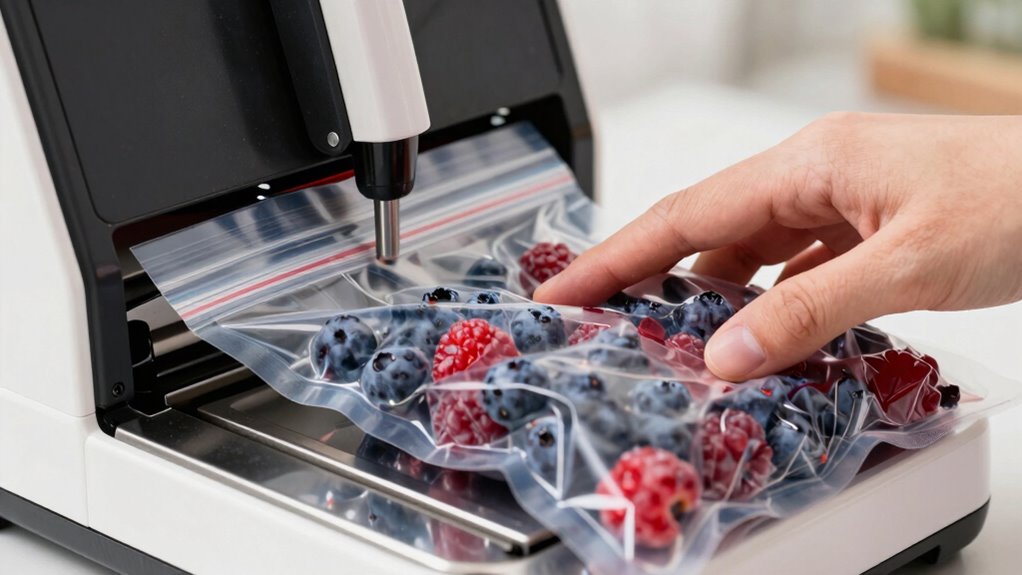
The process is straightforward. You place your food in a specially designed bag, then use a vacuum sealer machine to suck out the air and seal the bag tight. This creates an airtight barrier around your food, reducing exposure to oxygen, moisture, and bacteria—all of which accelerate spoilage. Because there’s no air, your food stays fresh longer, maintaining its texture, flavor, and nutritional value. This is particularly useful for meats, fruits, vegetables, and leftovers.
Vacuum sealing also enhances storage efficiency because it condenses bulky items and prevents freezer burn. Without the air exposure, your food is less prone to dehydration and the formation of ice crystals that can ruin texture and taste. This means you can store more food in less space, making your freezer or pantry more organized and accessible. Plus, vacuum-sealed packages are easier to stack and label, so you can keep track of what you have without digging through piles of loose items. Additionally, understanding food preservation techniques can help you make better choices for storing perishable items effectively. Learning about food safety can also ensure you handle and store your food in ways that minimize risk and prolong freshness.
Vacuum sealing reduces freezer burn and maximizes storage space with organized, easy-to-label packages.
Another advantage is that vacuum sealing helps you plan your meals better. You can portion out ingredients or prepared dishes, then seal and freeze them for future use. This not only saves time but also minimizes waste because you only defrost what you need. Additionally, vacuum-sealed foods retain their quality for a longer period compared to traditional storage methods, which often rely on zip-top bags or containers that don’t provide an airtight seal. Incorporating advanced sealing technology ensures you get the most effective preservation results and prevents leaks or spoilage. Understanding the importance of biodiversity can also motivate us to choose sustainable food storage practices that reduce waste and support environmental health. Using the right storage techniques can also help preserve the nutritional value of your foods, ensuring you get the maximum health benefits from your purchases.
In essence, vacuum sealing is a cost-effective and practical way to improve your food preservation habits. It ensures your food remains fresh, flavors stay intact, and your storage space is used more efficiently. Whether you’re preserving leftovers, bulk purchases, or delicate produce, this method gives you control over your food’s longevity. By adopting vacuum sealing, you’re making a smart investment in reducing waste, saving money, and enjoying better-tasting, fresher food every time you open your freezer or pantry.
vacuum sealer machine with leak detection
As an affiliate, we earn on qualifying purchases.
As an affiliate, we earn on qualifying purchases.
Frequently Asked Questions
How Long Can Vacuum-Sealed Food Last in the Freezer?
You can typically store vacuum-sealed food in the freezer for 2 to 3 years if the seal integrity remains intact. Proper vacuum sealing enhances food preservation by preventing air exposure, which stops freezer burn and spoilage. Confirm your seals are tight and check regularly, especially for long-term storage. This way, you maximize freshness and safety, keeping your food tasty and nutritious for extended periods.
Can Vacuum Sealing Be Used for Liquids or Soups?
Like sealing a treasure chest, you can vacuum seal liquids or soups, but you must follow specific sealing techniques. To prevent liquid spillage, freeze the soup first in a container, then transfer it to a vacuum bag, leaving space for expansion. Carefully vacuum seal, and you’ll preserve your liquids without mess. This method guarantees your soups stay fresh, just like a well-guarded secret, free from freezer burn.
What Are Common Mistakes That Compromise a Seal?
Common mistakes that compromise a seal include not using proper sealing techniques, like leaving enough headspace or not removing excess air, which can cause leaks. Additionally, poor equipment maintenance, such as dirty seals or malfunctioning vacuum pumps, weakens the seal. Always make sure your vacuum sealer is clean and functioning correctly, and follow proper sealing techniques to maintain an airtight seal and prevent freezer burn.
Is Vacuum Sealing Safe for All Types of Food?
Vacuum sealing is generally safe for most foods, but you should always consider food safety and seal integrity. For raw meats, seafood, and dairy, guarantee they’re fresh and properly sealed to prevent contamination. Some foods, like soft cheeses or delicate produce, may not vacuum seal well and could spoil faster. Always follow manufacturer instructions, check seals regularly, and refrigerate or freeze promptly to maintain food safety and prevent spoilage.
How Do I Store Vacuum-Sealed Items for Optimal Freshness?
Ever wondered how to keep vacuum-sealed foods fresh the longest? To do this, store your items in proper storage containers, ensuring they’re upright or flat to maximize space. Keep an eye on seal maintenance, checking periodically that seals remain airtight. For maximum freshness, label your packages with dates and rotate older items to the front. This way, you prevent spoilage and enjoy your food at its best.
Conclusion
By mastering the seal test, you guarantee your food stays fresh and free from freezer burn. It’s a small step that makes a big difference, saving you money and frustration in the long run. Think of it as crossing your t’s and dotting your i’s—attention to detail pays off. So, take the time to double-check your seals; it’s worth it. After all, a good seal means peace of mind and perfectly preserved food every time.
NFL season / tailgating Picks
team gear
As an affiliate, we earn on qualifying purchases.