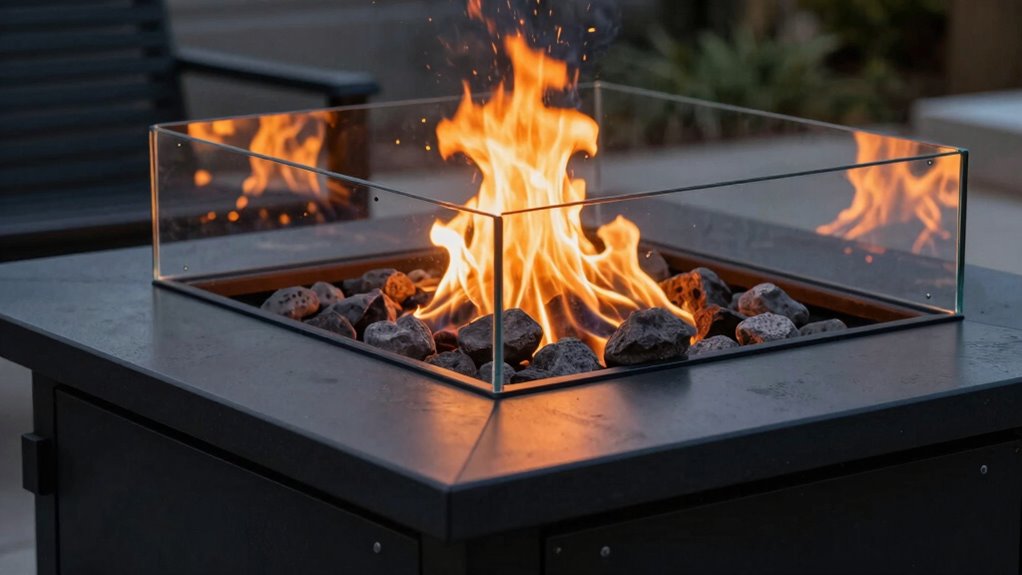

A spark screen only contains sparks and doesn’t prevent chemical hazards, toxic fumes, or chemical fires from fuels and accessories. It also fails to stop burns, accidental tip-overs, or contact with hot surfaces. Relying solely on a spark screen gives a false sense of security and overlooks essential safety measures. To keep yourself and others safe, you need to address fuel storage, proper ventilation, and fire extinguishing options—there’s more to safety than just a spark screen.
Key Takeaways
- Spark screens do not prevent chemical fumes or toxic residues from fuels or accessories.
- They do not control hazards like hot surfaces, burns, or accidental tip-overs.
- Spark screens do not extinguish fires or replace proper fire extinguisher use.
- They do not address chemical hazards from fuel leaks or improper storage.
- Safety barriers and supervision are essential, as spark screens alone cannot prevent all risks.
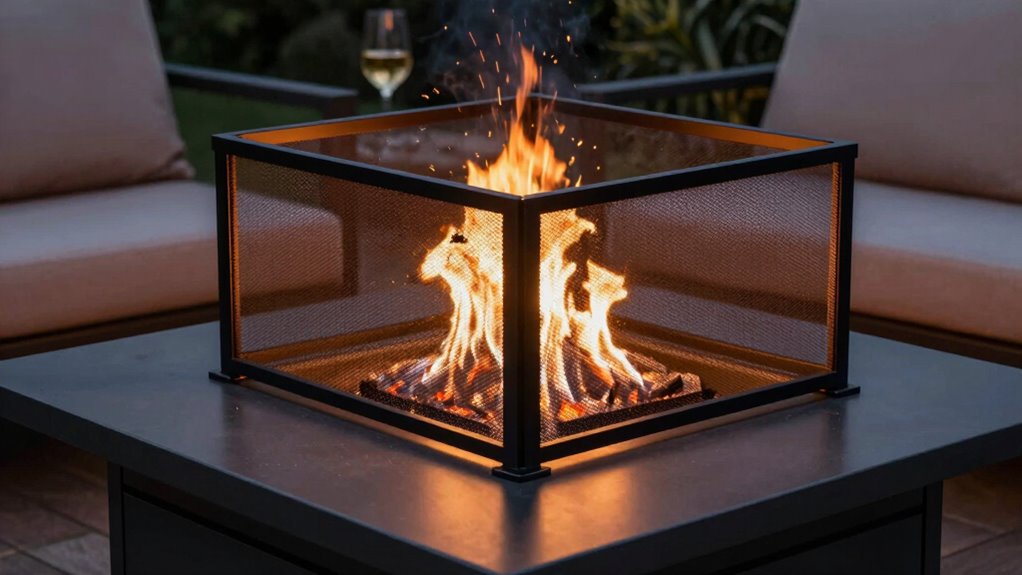
A fire pit table can create a cozy outdoor atmosphere, but safety should always come first. While a spark screen helps contain sparks and prevents embers from flying out, it doesn’t address all safety concerns. One of the key issues it doesn’t solve is chemical hazards. Many fire pit tables use fuels or accessories that can release harmful fumes or residues if not handled properly. For instance, some manufactured fire logs or liquid fuels contain chemicals that, when burned, produce toxic smoke. If you’re not careful, these substances can pose health risks to you and your family. It’s vital to read labels, choose non-toxic options when possible, and guarantee proper ventilation during use. Relying solely on a spark screen gives a false sense of security, overlooking these chemical hazards that can quietly compromise safety. Additionally, understanding the different types of fire extinguishers and their proper use is crucial for effective fire safety. A spark screen doesn’t put out fires; it only prevents sparks from escaping. If a fire suddenly flares up or gets out of control, you need to be prepared with a suitable fire extinguisher nearby. Having a Class A or multi-purpose ABC extinguisher within reach is essential. Remember, never attempt to move a burning fire pit or pour water on a gas fire—doing so can cause dangerous flare-ups or spreading flames. Instead, aim to extinguish the fire safely using the right extinguisher. Regularly check that your fire extinguisher is fully charged and accessible, and familiarize yourself with its operation beforehand. This knowledge can make a significant difference during an emergency. It’s also worth noting that a spark screen doesn’t prevent other hazards, like accidental tip-overs or burns. You could trip over the table or accidentally touch the hot surface, especially if children or pets are involved. The risk of burns isn’t eliminated by a simple screen, which is why supervision and safety barriers are equally important. Additionally, a spark screen doesn’t address issues like improper fuel storage or leaks, which can lead to dangerous chemical exposure or explosions. Proper fuel storage not only prevents leaks but also minimizes the risk of accidental ignition. Regular inspections and the use of chemical-resistant containers can further reduce these risks. Properly storing fuel in designated, well-ventilated areas is essential to avoid leaks and buildup. To enhance overall safety, consider installing safety barriers or enclosures that can help prevent accidental contact with hot surfaces. In essence, while a spark screen offers some protection, it’s only one part of a thorough safety plan. You need to understand chemical hazards, follow fire extinguisher tips, and stay vigilant about other risks. Combining these precautions ensures that your outdoor fire experience remains warm, inviting, and safe for everyone involved.

AmzBoom 2-Pack Fire Extinguisher for Home, Kitchen, Car, and Grill with Mounting Bracket– Extinguishing Spray, Compact A, B, C, K – Eco-Friendly, Prevents Reignition.
- Easy Activation: Press, aim, and spray quickly
- Includes Mounting Brackets: Two brackets for quick access
- 8-in-1 Fire Protection: Handles wood, oil, gasoline, batteries
As an affiliate, we earn on qualifying purchases.
As an affiliate, we earn on qualifying purchases.
Frequently Asked Questions
Can I Use My Fire Pit Table Indoors Safely?
No, you shouldn’t use your fire pit table indoors safely. Indoor ventilation isn’t designed for open flames, which can quickly cause dangerous buildup of smoke or carbon monoxide. Plus, even fireproof furniture isn’t enough to prevent accidents if sparks or heat escape. Always keep fire pit tables outdoors in well-ventilated areas, and invest in proper safety equipment. Safety first—never compromise by using outdoor fire features inside.
What Materials Are Safest for Fire Pit Table Construction?
You want the safest fire pit table possible, so choose materials that are fire resistant and non combustible surfaces. Metal, especially stainless steel or cast iron, tops the list because they withstand extreme heat without warping. Concrete and stone are also excellent, as they resist fire and won’t catch flames. Avoid plastics or treated woods—they’re just asking for disaster. Prioritize these materials to keep your fire pit safe and durable for years.
How Often Should I Inspect My Fire Pit Table for Damage?
You should inspect your fire pit table regularly, ideally before each use, to catch any damage early. During fire pit maintenance, look for cracks, rust, or loose parts that could cause safety issues. Frequent inspections help prevent damage from worsening and guarantee safe operation. By staying proactive, you reduce the risk of accidents, extend the table’s lifespan, and maintain a safe, enjoyable fire experience every time you gather around it.
Are There Specific Safety Regulations for Outdoor Fire Pits?
Yes, there are specific safety regulations for outdoor fire pits. You should follow local fire codes and safety standards, which often specify safe distances from structures and combustible materials, proper installation, and ventilation requirements. Check with your local fire department or municipal authority to guarantee your fire pit meets all regulations. Adhering to these guidelines helps prevent accidents and keeps you and your surroundings safe while enjoying your fire pit.
What Should I Do if a Fire Pit Table Tips Over?
If your fire pit table tips over, act quickly to prevent further hazards. Use a fire extinguisher if flames spread, and guarantee everyone is at a safe distance. Follow your emergency plan by turning off the fuel source if possible and calling emergency services if needed. Once safe, reposition the fire pit upright carefully and inspect for damage. Always prioritize safety and prevention to avoid future accidents.
Conclusion
Remember, a spark screen isn’t a magic shield—fire pit tables still demand your full attention to stay safe. Think of it like trying to tame a wild dragon; even if you think you’ve got it under control, one careless moment can turn sparks into a blazing inferno. Keep a fire extinguisher nearby, never leave it unattended, and respect the flames. Your vigilance is the only thing standing between a cozy night and a fiery disaster.