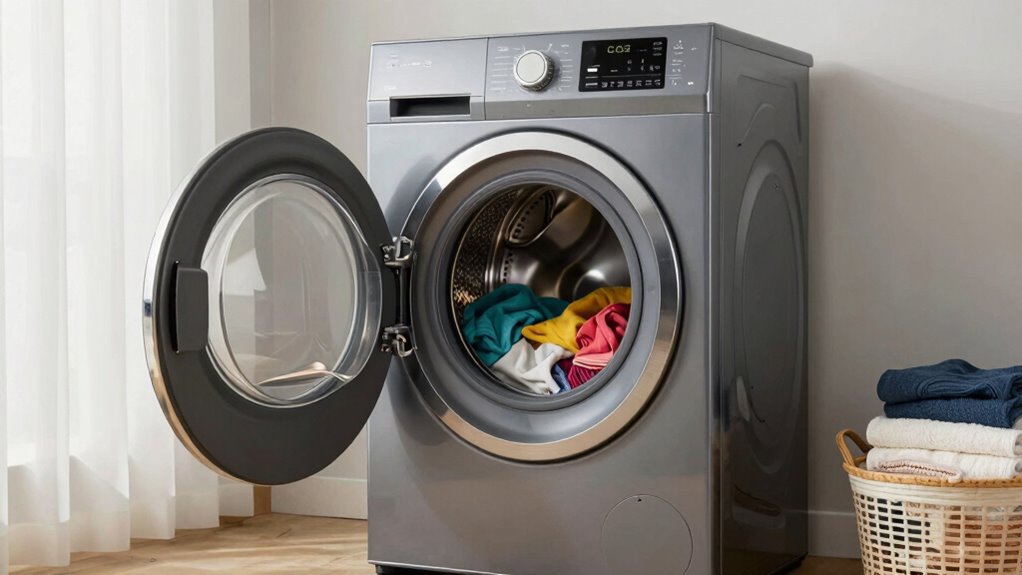
When using a washer-dryer combo, understanding load sizes is key to getting the best results. Overloading can cause malfunctions, reduce cleaning and drying efficiency, and stress the machine, while underloading wastes energy and water. Properly balancing your loads and following manufacturer guidelines helps your appliance run smoothly and last longer. Keep in mind, paying attention to load sizes makes a big difference—stick around, and you’ll discover how to optimize every cycle for savings and performance.
Key Takeaways
- Overloading washer-dryer combos reduces efficiency and can cause malfunctions, so follow manufacturer’s load size guidelines.
- Properly sized loads maximize cleaning and drying performance, preventing energy waste from underloading or overloading.
- Compact units have smaller capacity; exceeding it risks damage and ineffective cycles.
- Smaller, correctly loaded loads can save energy and water, especially when paired with eco-friendly cycle settings.
- Regular maintenance, including cleaning filters and hoses, supports optimal performance and prolongs appliance lifespan.
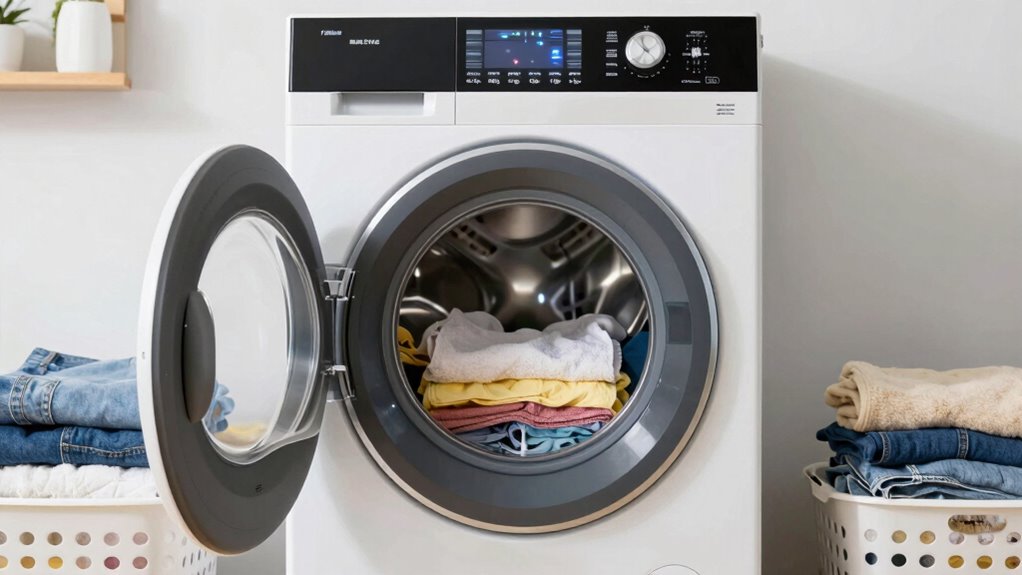
Are you tired of juggling separate laundry appliances and running out of space? If so, a washer-dryer combo might be just what you need. These all-in-one units save space and simplify your laundry routine, but understanding load sizes is essential to get the most out of your machine. One common misconception is that you can load these machines with the same volume as a traditional washer or dryer. In reality, load sizes are often smaller because of the compact design, which means overloading can reduce efficiency and increase the chances of malfunctions. To keep your combo running smoothly, focus on energy efficiency by not overfilling it; this helps the machine work more effectively and conserves electricity and water. When you load the unit, make sure not to pack clothes too tightly, as this can hinder proper washing and drying. Conversely, underloading can waste energy since the machine may use the same cycle for a very small load, leading to inefficiency. Paying attention to load capacity ensures optimal performance and longevity of your appliance.
Maintaining your washer-dryer combo involves regular maintenance tips that extend its lifespan and ensure peak performance. Keep the lint filter clean, especially after drying cycles, to prevent buildup that can impair drying efficiency. Check the hoses periodically for leaks or blockages, and clean the detergent dispenser to avoid residue buildup that can cause odors or clogs. Additionally, run a maintenance cycle or a hot wash with vinegar or a cleaning agent recommended by the manufacturer every few months. This helps remove soap scum and mineral deposits that can accumulate over time, especially if you have hard water. Proper maintenance not only prolongs the life of your appliance but also boosts energy efficiency, saving you money in the long run.
Understanding load sizes for your washer-dryer combo also means paying attention to cycle settings. Smaller loads may require shorter or less intense cycles, which further saves energy. Using the eco-friendly settings when available can reduce your utility bills and lessen your environmental impact. Always follow the manufacturer’s guidelines for load capacity and cycle selection to avoid unnecessary wear and tear on the machine. Remember, the key to maximizing your washer-dryer combo’s performance is balancing proper load sizes with consistent maintenance. By doing so, you’ll ensure your appliance remains energy-efficient and reliable for years to come. With a little attention to these details, you’ll enjoy cleaner clothes, lower utility bills, and a more organized laundry space.
Frequently Asked Questions
Can Washer-Dryer Combos Handle Bulky Bedding Loads Effectively?
Yes, washer-dryer combos can handle bulky bedding loads, but bedding capacity varies by model. You might find it challenging to wash large comforters or mattress toppers in smaller units. For mattress cleaning or bulky bedding, choose a combo with higher bedding capacity to prevent overloading. Always check the manufacturer’s guidelines to guarantee your bedding fits comfortably without compromising wash quality or drying efficiency.
What Is the Typical Cycle Time for a Full Wash and Dry?
A full wash and dry cycle usually takes between 3 to 4 hours. The cycle duration depends on the load size and fabric type, with heavier or bulky items extending drying time. You’ll notice that drying time can add extra 60 to 120 minutes, especially for larger or thicker loads. Keep in mind, patience is key, as combining wash and dry in one cycle naturally takes longer than separate machines.
Do Load Size Recommendations Vary Between Different Brands?
You’ll find load size recommendations do vary between brands due to brand consistency and load capacity variation. For example, a Samsung combo might suggest a smaller load than LG for ideal performance, even if they’re similar models. Always check each brand’s guidelines, as load capacity can differ notably. Ignoring these differences may lead to longer cycle times or machine strain, so following specific instructions guarantees the best results.
How Does Load Size Impact Energy Consumption in Combos?
Load size directly impacts energy efficiency in washer-dryer combos. When you overfill the machine, it works harder, using more energy to clean and dry effectively. Conversely, underloading wastes resources and reduces load optimization. To save energy, always stick to recommended load sizes, ensuring your combo runs efficiently. Proper load management helps you cut costs and extend your appliance’s lifespan, making your laundry routine more eco-friendly and economical.
Are There Specific Load Size Tips for Delicate Fabrics?
If you want delicate fabrics to survive, never overload your washer-dryer combo! For fabric care, keep loads small—just enough to gently swirl without crushing. Distribute clothes evenly to prevent damage and guarantee gentle cleaning. Think of delicate fabrics like fragile treasures—they need extra love and space. By following these tips, you’ll protect your delicate items, keep them looking new, and avoid costly repairs or replacements.
Conclusion
Just like the moon guides the tides, understanding load sizes guides your laundry success. Don’t let oversized loads sink your efficiency or tiny ones leave you stranded. Remember, every cycle is a dance—balance your load and keep the rhythm steady. With a little awareness, your washer-dryer combo becomes your trusted partner, turning chaos into calm. So, embrace the flow, trust the process, and let your laundry day sail smoothly like a ship guided by the stars.