
In just 10 minutes, you can keep your washer and dryer running smoothly by cleaning the lint filter after each load, checking for loose hoses or connections, and balancing the loads properly. Don’t forget to clean your dryer vent to maintain airflow and prevent fires, and wipe down the washer drum and gasket to prevent odors. Staying on top of these simple steps guarantees efficient operation and longer appliance life—keep going for more easy maintenance tips.
Key Takeaways
- Remove lint from dryer filter after each load to maintain efficiency and prevent buildup.
- Check and evenly distribute clothes in washer and dryer to avoid overloading and reduce noise.
- Disconnect and clean dryer vent hose to improve airflow and reduce fire risk.
- Inspect behind appliances for loose hoses or wires and tighten connections for safe operation.
- Wipe the washing machine drum and gasket, and run a hot cycle with vinegar to prevent odors and mold.
Keeping your washer and dryer in top shape guarantees they run efficiently and last longer. Simple maintenance tasks can improve their performance immediately, saving you time and money in the long run. One of the easiest ways to boost your appliances’ efficiency is to keep the lint filters clean. Lint buildup not only reduces energy efficiency but also causes your dryer to work harder, increasing wear and tear. By removing lint after every load, you ensure your dryer operates smoothly, consumes less power, and dries clothes faster. This small habit can considerably cut down energy costs and improve overall performance.
Keep your washer and dryer efficient by regularly cleaning lint filters after every load.
Another quick maintenance step is to check and balance your washer and dryer. An unbalanced load can cause excessive noise, vibrations, and damage over time. When you load your washer, distribute clothes evenly around the agitator, and don’t overload it. For the dryer, avoid overstuffing the drum, which can lead to excessive noise and prolonged drying times. Properly balanced loads minimize noise and vibrations, making your laundry routine quieter and more efficient. This not only keeps your appliances running smoothly but also reduces stress on mechanical parts, extending their lifespan.
Cleaning the dryer vent is equally important and only takes a few minutes. A clogged vent restricts airflow, forcing your dryer to work harder and consume more energy. Over time, this can lead to increased electricity bills and potential fire hazards. Disconnect the vent hose periodically and remove lint accumulation. Using a vent brush or vacuum makes this task quick and easy. Ensuring your vent is clear improves energy efficiency and reduces noise levels caused by the dryer working against airflow resistance.
Inspecting and tightening loose connections is another simple maintenance step that can make a noticeable difference. Loose hoses, electrical connections, or mounting bolts can cause noise and reduce efficiency. Regularly check behind your appliances for any loose fittings or wires. Securing these connections not only minimizes noise but also ensures your appliances operate as intended, preventing costly repairs down the line.
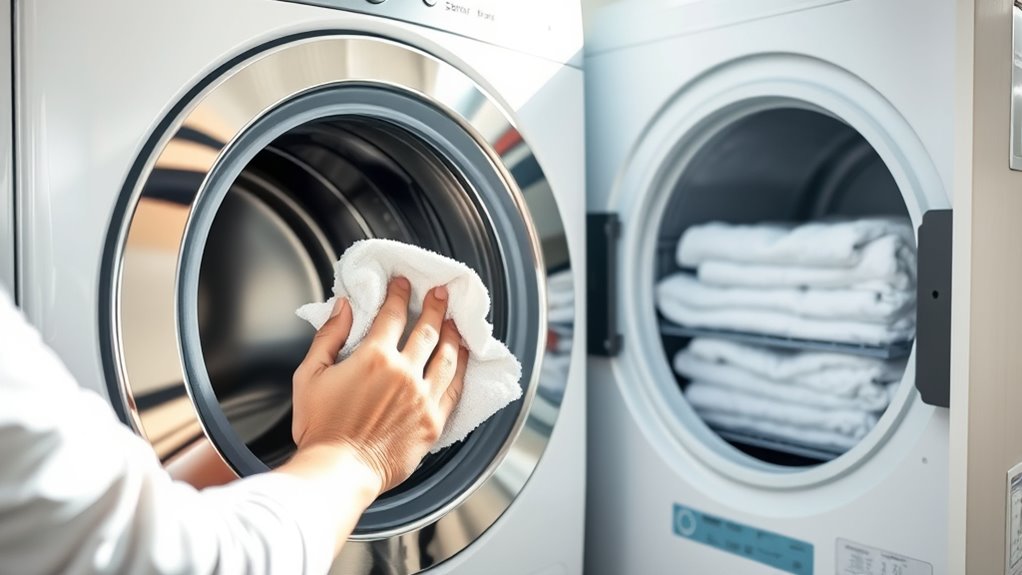
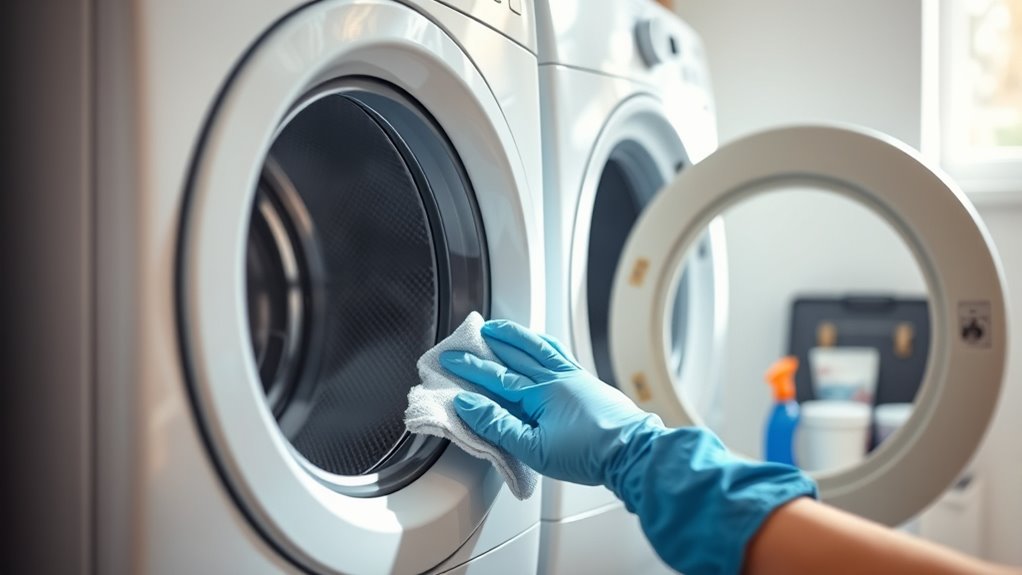
Finally, consider cleaning your washing machine’s drum and gasket periodically. Soap scum and residue can cause unpleasant odors and mold growth, impacting laundry quality. Wiping the drum with a damp cloth and running an empty hot water cycle with vinegar or specialized cleaner keeps the interior fresh, improves cleaning efficiency, and prevents musty odors. These quick steps keep your washer performing ideally, conserving energy, and ensuring quieter operation.
In just a few minutes, these simple maintenance tasks can dramatically improve your washer and dryer’s energy efficiency and noise reduction. Regular upkeep means fewer breakdowns, lower energy bills, and a more peaceful laundry routine.
Frequently Asked Questions
How Often Should I Replace My Washer and Dryer Filters?
You should replace your washer and dryer filters every 3 to 6 months, depending on usage. Regular filter replacement is essential for proper maintenance and to keep your appliances running efficiently. Follow your manufacturer’s maintenance schedule for specific guidance. By sticking to this routine, you prevent buildup and guarantee peak performance. Don’t wait too long—routine filter replacement helps extend the lifespan of your washer and dryer.
Can I Use Regular Cleaning Products on My Appliances?
They say “a little goes a long way,” and that’s true when cleaning your appliances. You can’t just use any chemical cleaners; some might harm your washer and dryer. Instead, try natural solutions like vinegar or baking soda for regular maintenance. These options are gentle yet effective, helping you avoid damage and keep your appliances in top shape without resorting to harsh chemicals.
What Signs Indicate My Washer or Dryer Needs Professional Repair?
If your washer is making loud noise or your dryer overheats, it’s time to call a professional. Unusual washer noise may signal worn-out parts or debris, while dryer overheating could indicate a vent blockage or motor issue. Don’t ignore these signs—continuing to use your appliances can cause further damage or safety hazards. A technician can diagnose and fix the problem quickly, ensuring your appliances run smoothly and safely again.
Is It Safe to Perform Maintenance While Appliances Are Plugged In?
It’s not safe to perform maintenance while appliances are plugged in because of electrical safety risks. Always unplug your washer or dryer before working on them to prevent electric shock. Even if you’re just cleaning or inspecting, disconnecting the appliance guarantees you’re protected. Remember, safety first—taking a few seconds to unplug reduces risks and keeps you safe during maintenance. Never work on appliances with power connected.
How Can I Prevent Mold and Odors in My Washer and Dryer?
Think of your washer and dryer as breathing, and mold and odors as unwanted pests invading their space. To prevent this, guarantee proper ventilation tips like leaving doors and lids open after use, and implement moisture control by wiping dry any residual water. Regularly clean the lint trap and check for standing water. These simple steps keep your appliances fresh, preventing mold growth and lingering smells effectively.
Conclusion
Now that you’ve taken just ten minutes to tidy up your washer and dryer, you might find the laundry day flow feels smoother—almost like the machines are thanking you with quieter hums and fewer hiccups. That quick maintenance could be the reason your clothes come out cleaner and last longer. So next time you reach for the detergent, remember, a little upkeep now can keep your laundry routine running seamlessly—making laundry day a breeze, every time.