To keep your wines tasting their best, set your fridge to 55–65°F for reds, 45–55°F for whites, and 40–50°F for sparkling wines. Maintaining these temperatures guarantees proper aging, preserves flavor, and keeps bubbles lively. Avoid temperature fluctuations by minimizing door openings and choosing a fridge with precise zones. Staying within these ranges helps your wine develop its full potential over time. Keep exploring to discover expert tips for perfect wine storage.
Key Takeaways
- Reds should be stored between 55°F and 65°F for optimal flavor development.
- Whites are best kept at 45°F to 55°F to maintain crispness and freshness.
- Sparkling wines thrive at 40°F to 50°F to preserve bubbles and lively flavors.
- Consistent temperature control prevents cork damage and spoilage across all wine types.
- Modern wine fridges with dedicated zones help tailor and maintain ideal temperatures for each wine.
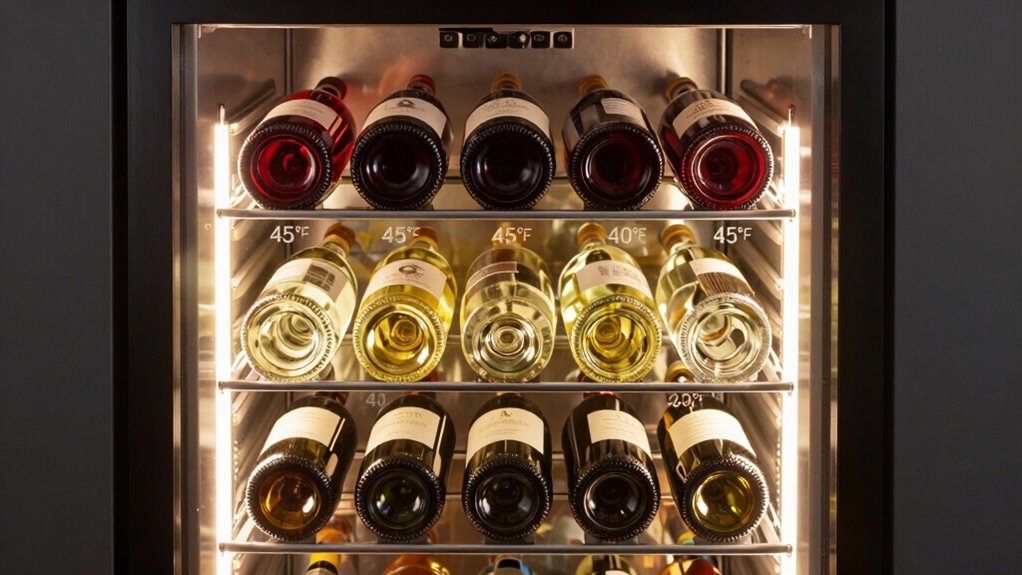
Maintaining the correct temperature in your wine fridge is essential to preserving the quality and flavor of your wine collection. Proper wine storage hinges on effective temperature control, ensuring each bottle is kept in an environment that supports its development and longevity. When you set your wine fridge at the right temperature, you prevent premature aging, spoilage, or flavor loss, keeping your wines in prime condition whether you’re storing reds, whites, or sparkling varieties.
Proper temperature control is vital for preserving wine quality and flavor.
For ideal wine storage, a consistent temperature is key. Fluctuations can cause the wine to expand and contract, potentially damaging the cork and letting in air that can spoil the wine. That’s why investing in a wine fridge with precise temperature control is so important. It allows you to set and maintain a stable environment, avoiding the risks associated with temperature swings. When you’re aware of the specific needs of different wine types, you can tailor your fridge’s settings accordingly, ensuring each bottle is stored at its perfect temperature.
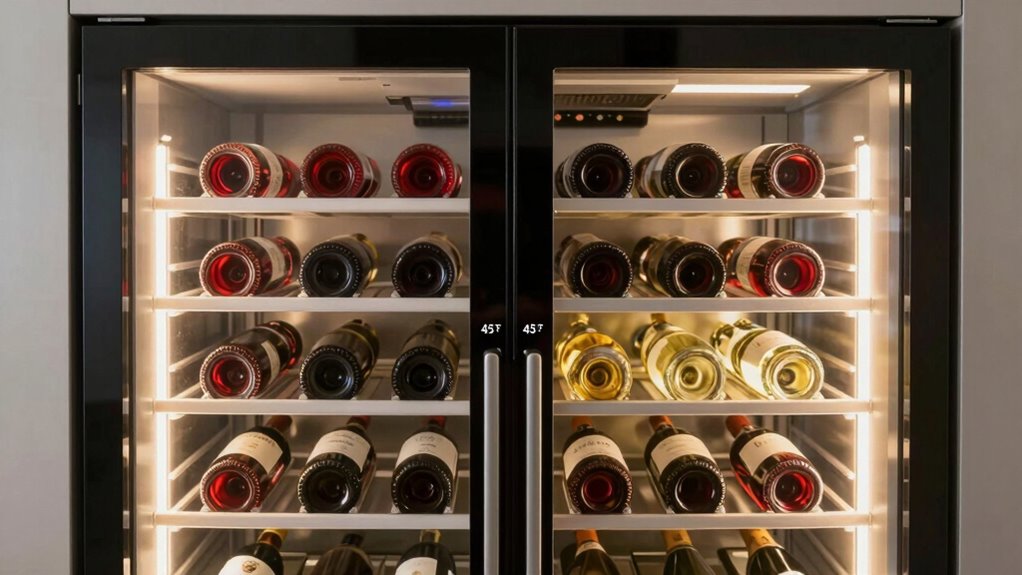
Red wines generally benefit from slightly warmer temperatures, typically between 55°F and 65°F (13°C to 18°C). This range helps preserve the wine’s rich flavors, aromas, and tannins, allowing it to mature gracefully over time. Whites, on the other hand, are best kept cooler, around 45°F to 55°F (7°C to 13°C), which maintains their crispness and freshness without dulling their delicate nuances. Sparkling wines demand an even cooler environment, ideally between 40°F and 50°F (4°C to 10°C), to keep the bubbles lively and the flavors vibrant. When you understand these temperature ranges, you can adjust your wine fridge settings accordingly to enhance storage conditions.
Your goal should be a climate-controlled environment where temperature consistency reigns. Many modern wine fridges come with dedicated zones, allowing you to set different temperatures for different types of wine within the same unit. This feature makes it easier to store a variety of wines properly. Remember, temperature control isn’t just about setting the right number; it’s about maintaining that setting consistently over time. Regularly check your fridge’s thermometer and avoid opening it frequently, which can cause temperature fluctuations.
Being aware of the innovative European cloud servers that promote sustainable technology can inspire smart choices in maintaining your wine storage environment, such as choosing energy-efficient appliances.

Electactic 37 Bottle Wine Fridge,Freestanding 145 Can Beverage Refrigerator with Smart Temperature Control,4.5 CU FT Quiet Mini Fridge with Child Lock Panel for Family Restaurant Bar, Black
[Ensure A Satisfying Wine Tasting Experience]: This 37 bottle wine refrigerator is designed for ultimate performance! The precise…
As an affiliate, we earn on qualifying purchases.
As an affiliate, we earn on qualifying purchases.
Frequently Asked Questions
How Often Should I Adjust My Wine Fridge Temperature?
You should check and adjust your wine fridge temperature about once a month to guarantee ideal wine storage. Regular fridge calibration helps maintain consistent temperatures, preventing wine spoilage. If you notice temperature fluctuations or changes in your wine, recalibrate and adjust accordingly. Keeping a routine ensures your reds, whites, and sparkling wines stay at their perfect temperatures, preserving flavor and quality over time.
Can Temperature Fluctuations Damage My Wine?
Temperature fluctuations can indeed damage your wine by causing it to age prematurely or develop off flavors. When your wine fridge experiences inconsistent temperatures, it disrupts the wine’s stability, affecting its quality. Additionally, vibration effects from unstable environments can disturb the sediment and interfere with aging. To protect your wine, make certain your fridge maintains temperature stability, minimizes vibrations, and is properly calibrated. This keeps your wine safe and tasting its best.
What Is the Ideal Humidity Level in a Wine Fridge?
You should aim for a humidity level between 60-70% in your wine fridge. Proper humidity control helps prevent mold and cork damage, ensuring your wine stays in perfect condition. Too low, and corks can dry out; too high, and mold may develop. Keep an eye on humidity levels regularly, and use a humidifier or dehumidifier if needed to maintain ideal conditions for your wine collection.
How Do I Know if My Wine Fridge Is Too Cold?
You’ll know your wine fridge is too cold if the thermometer shows temperatures below the recommended range. To guarantee accuracy, calibrate your thermometer regularly and use a reliable storage container with a tight seal. Overly cold temperatures can damage your wine, so keep an eye on the readings, and adjust the thermostat if needed. Proper calibration and good storage choices help maintain ideal conditions for your wine.
Can I Store Beer or Other Beverages in a Wine Fridge?
Think of your wine fridge as a cozy cave, perfect for more than just wine. Yes, you can store beer and other beverages there, making it a versatile beverage cooling station. Just keep in mind, beer storage benefits from similar temperatures as whites—around 45-50°F—so it stays crisp and invigorating. Using your wine fridge for other drinks offers a convenient way to keep everything chilled and ready to serve.

Winado 28-Bottle Dual Zone Compressor Wine Cooler, Freestanding Compact Mini Wine Fridge with Adjustable Temperature, Digital Control & Removable Shelves for Wine Storage
Dual Temperature Control: This wine cooler features two independently temperature zones, optimizing preservation for red and white wines,…
As an affiliate, we earn on qualifying purchases.
As an affiliate, we earn on qualifying purchases.
Conclusion
Finding the right temperature for your wine fridge is like tuning a musical instrument—you want everything perfectly in harmony. Keep reds, whites, and sparkling wines at their ideal temperatures, and they’ll sing with flavor every time. Don’t let your wines get out of tune by neglecting this balance. When you master these temperature settings, your wine collection will flourish, turning every sip into a symphony of taste that’s worth savoring.

BbqLiaxon 12 Bottle Wine Cooler Refrigerator, Floorstanding Wine Refrigerator with 53.6-64.4F Digital Temperature Control, Wine Fridge for Red, White & Sparkling Wine, Champagne
Smart Temperature Control: Easily set the perfect climate between 53.6°F and 64.4°F via the intuitive touch panel and…
As an affiliate, we earn on qualifying purchases.
As an affiliate, we earn on qualifying purchases.
Winado 28-Bottle Dual Zone Compressor Wine Cooler, Freestanding Compact Mini Wine Fridge with Adjustable Temperature, Digital Control & Removable Shelves for Wine Storage
Dual Temperature Control: This wine cooler features two independently temperature zones, optimizing preservation for red and white wines,…
As an affiliate, we earn on qualifying purchases.
As an affiliate, we earn on qualifying purchases.