TL;DR

Get the little things that make your day delivered free with Prime
- Fast, free delivery on millions of items
- Prime Video, Amazon Music and more included
- Member-only deals all year
The Good Trade published a 2026 guide selecting 10 wool rugs it describes as soft, durable and made without harsh chemicals. The guide says its editors researched brands and reviewed customer feedback, but the supplied source does not name the individual rugs or provide independent test results for each product.
The Good Trade has published a 2026 list of 10 wool rugs it recommends for people seeking softer floor coverings made with natural materials and fewer chemical treatments. The sustainability-focused publication says its editors researched rug brands and reviewed thousands of customer reviews; the supplied report excerpt does not identify the 10 products or show product-by-product testing results.
The guide presents wool as a soft, durable, naturally water-repellent fiber and says the products on its list avoid harsh chemicals and toxins, including in materials used to make the rugs. It also says the selection prioritizes brands that avoid PFAS and favor natural fibers such as wool, organic cotton and jute. Those are the publication’s descriptions of its selection criteria, not independently documented test findings in the source material provided here.
The Good Trade says it considered sustainability and chemical concerns, ease of cleaning, and range of styles and sizes. It advises shoppers to check whether a rug is made from 100% wool or a natural-fiber blend, rather than synthetic materials such as plastic or polyester. Its buying guidance also points readers toward certifications: OEKO-TEX, which it describes as chemical testing, and Fair Trade certification, which it associates with artisan wages and working conditions.
The publisher discloses that it may earn a commission from purchases made through some links in its product coverage. It says its editors have researched and tested products they recommend, but the excerpt does not specify which rugs were personally tested, how testing was conducted, or which certifications apply to each item.
What Buyers Should Verify
The guide gives shoppers a framework for comparing fiber content, chemical-related claims, construction and care—factors that can matter for households with children or pets, or for anyone trying to limit synthetic materials at home. However, “nontoxic” is not a single certification or a guarantee that a product has zero emissions. Readers should treat broad safety language as a claim to investigate and check the individual product’s materials, finishes and available test documentation.
Comfort and durability can also pull in different directions. The report says softer rugs may suit rooms where people sit or play on the floor, while braided or sturdier weaves may be better for high-traffic areas. Its recommendations therefore do not establish one best choice for every home; room use, texture preference, price and cleaning needs remain part of the decision.
As an affiliate, we earn on qualifying purchases.
The Guide’s Selection Criteria
The Good Trade says its team researched rug brands, examined thousands of customer reviews and updates its list as new favorites emerge. Its stated criteria include avoiding hazardous chemicals and PFAS, using natural or sustainable materials, offering relatively simple cleaning, and providing a range of formats and sizes. The source excerpt does not include the article’s full product entries, prices, dimensions, or links, so those details cannot be compared here.
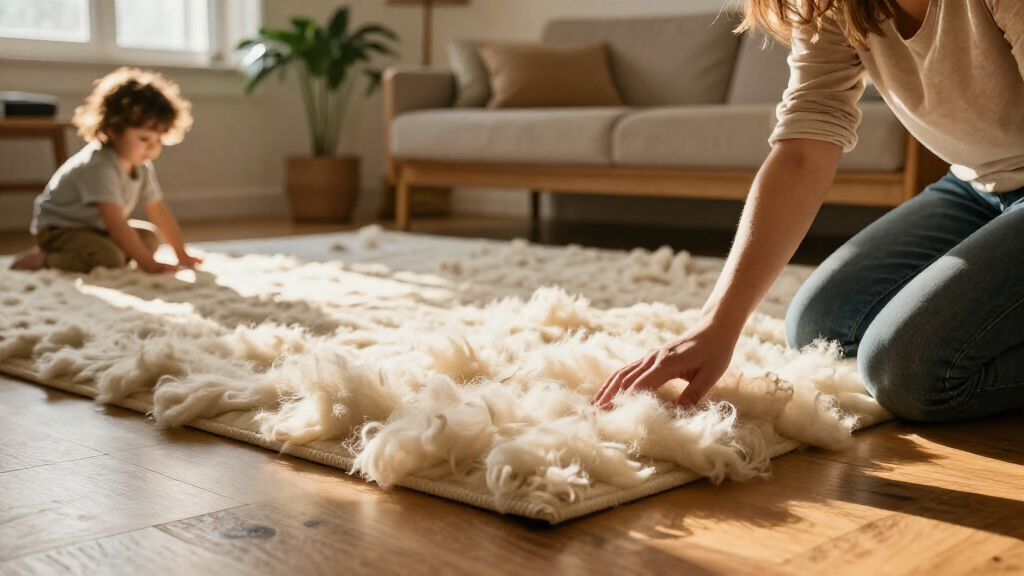
The guide also offers general care advice rather than product-specific instructions: promptly dab spills with warm water, avoid colored soaps that may leave residue, rotate rugs a few times a year, and vacuum at least every other week. It says new wool rugs commonly shed and advises caution about placing one in a nursery or young child’s room until shedding has eased. Manufacturer care labels should take precedence, since dyes, construction and backing can vary.
““We prefer rugs that are made from 100% wool or a blend of natural wool and cotton or jute — something with all natural materials (read without plastic or polyester).””
— The Good Trade
Product-Level Evidence Still Missing
The supplied source material does not provide the names of the 10 rugs, their prices, fiber breakdowns, backing materials or the evidence behind each product’s safety description. It also does not establish whether every rug has OEKO-TEX or Fair Trade certification, or provide laboratory results for VOCs, dyes, adhesives, flame retardants or PFAS. The guide’s overall criteria should not be read as proof that each listed rug holds every certification or has been independently tested for every chemical concern.
The publisher’s affiliate disclosure is confirmed, but the excerpt does not state whether commissions affect product ranking or inclusion. It is also unclear when the guide was last updated, beyond its 2026 framing, and whether all products remain available at the time of reading.
Check Listings Before Buying
Readers considering a rug should consult the full guide and each seller’s current product listing for materials, treatment details, certifications, price and care instructions. Where chemical exposure is a concern, shoppers can ask brands for certification numbers or relevant test documentation rather than relying only on a general “nontoxic” label. Availability and product specifications may change, so current seller information is the next practical check.
The Good Trade says it updates its recommendations regularly, but the supplied material gives no date for its next review. Until the individual entries and supporting documentation are available, the list is best understood as an editorial shopping guide, not a formal safety assessment of all 10 rugs.
Key Questions
What did The Good Trade publish?
It published a 2026 guide to 10 wool rugs it recommends for homes seeking natural materials and reduced chemical treatments. The supplied excerpt does not include the product names.
Does the source prove that every rug is nontoxic?
No. The publisher describes its selection as avoiding harsh chemicals and prioritizing natural materials, but the excerpt provides no product-by-product test results or complete certification details. Check each item’s documentation.
Which certifications does the guide suggest looking for?
The guide points to OEKO-TEX for testing related to harmful chemicals and Fair Trade certification for artisan working conditions and wages. It does not say that all 10 rugs carry these certifications.
How does the guide recommend caring for wool rugs?
It advises promptly dabbing spills with warm water, vacuuming regularly and rotating the rug a few times a year. Follow the manufacturer’s care instructions, since cleaning needs can differ by dye and construction.
Source: rss
Halloween Picks
halloween
As an affiliate, we earn on qualifying purchases.