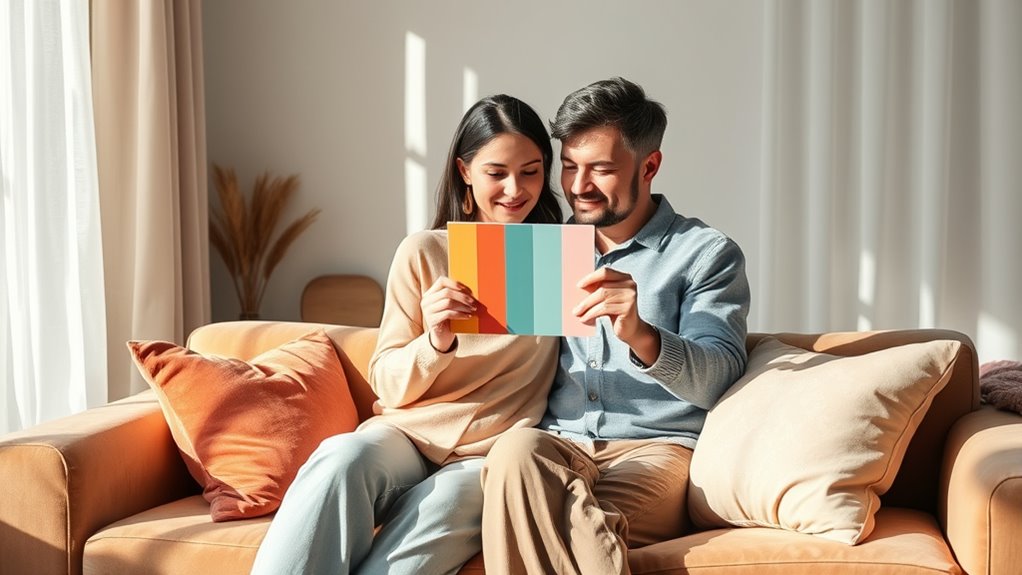

When choosing a color palette with your partner, consider how different shades affect your emotions and interactions. Colors influence mood and can strengthen or challenge your connection depending on personal and shared preferences. Find common ground by blending favorite romantic shades and respecting each other’s choices. Understanding color psychology helps create a harmonious environment that fosters trust and intimacy. Exploring these strategies can make your shared space more emotionally nurturing; keep going to discover more ways to enhance your relationship through color.
Key Takeaways
- Understand each partner’s emotional response to colors to promote mutual respect and harmony.
- Incorporate both preferences through shared spaces, using accents or balanced palettes.
- Communicate openly about the significance of colors to prevent misunderstandings and tension.
- Use color psychology to select shades that foster positive emotions and strengthen the relationship.
- Find a compromise that reflects both partners’ feelings, creating a cohesive and emotionally supportive environment.
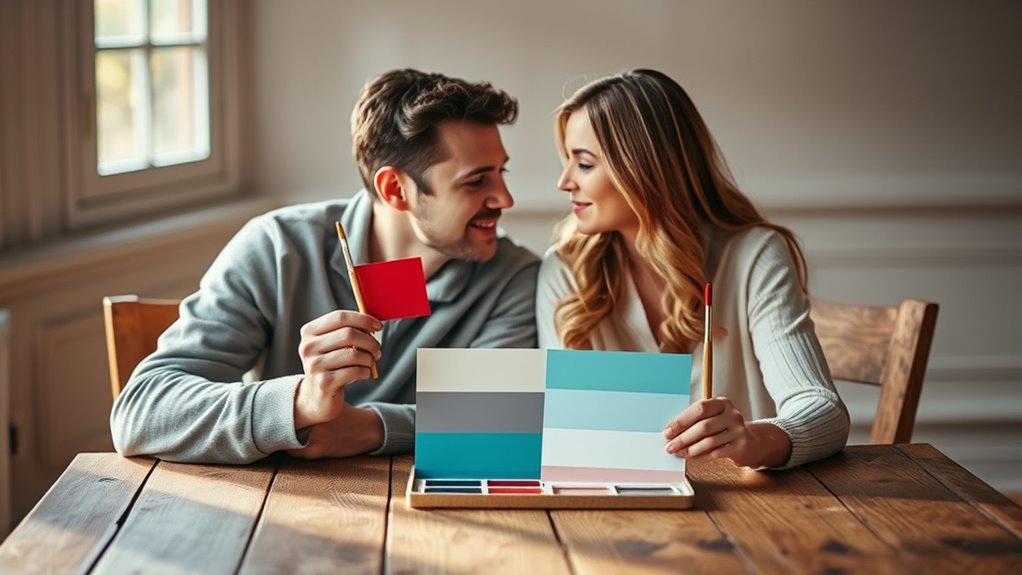
Colors can influence your emotions and interactions more than you might realize, especially in a relationship. When it comes to choosing a shared color palette, your favorite romantic shades can play a big role in creating a harmonious environment. But what happens when your preferences clash? Conflicting color choices are common, and they can subtly affect your mood and connection if not addressed thoughtfully. Recognizing how certain colors impact you individually and as a couple is the first step toward building a space that reflects both of your personalities and feelings.
Your favorite romantic shades might evoke specific memories or feelings that are meaningful to you, like a calming blush or passionate red. However, these preferences don’t always align perfectly with your partner’s choices. Maybe you love soft pastel tones, while your partner prefers bold, vibrant hues. These conflicting color choices can lead to tension if you aren’t aware of their significance or fail to communicate openly. Instead of viewing these differences as obstacles, see them as opportunities to learn about each other’s emotional triggers and unique tastes. Exploring why certain colors resonate with each of you can deepen your understanding and help you find common ground.
Finding a middle ground requires patience and a willingness to compromise. For example, if you love romantic shades like deep reds and purples but your partner is drawn to cooler blues and greens, consider incorporating both into your space or wardrobe in balanced ways. This approach can create a dynamic environment where both of your preferences are honored. Sometimes, blending your favorite romantic shades into accent pieces or accessories allows you to enjoy your personal favorites without overwhelming shared spaces. It’s about creating a visual harmony that respects your individual choices while fostering a unified aesthetic. Additionally, understanding the impact of colors on emotions can help you choose palettes that promote positive interactions and mutual understanding.
romantic color palette wall art
As an affiliate, we earn on qualifying purchases.
As an affiliate, we earn on qualifying purchases.
Frequently Asked Questions
How Do Color Preferences Change Over Time in a Relationship?
Your color preferences evolve over time as your relationship grows, influenced by shared experiences and changing tastes. The evolution of color preferences reflects your journey together, often leading to a more harmonious palette. As you create memories, your favorite shades may shift, impacting how you both perceive and choose colors. This dynamic process helps keep your space vibrant and meaningful, strengthening your bond through visual harmony and personal growth.
Can Color Choices Influence Relationship Harmony or Conflict?
Color choices can profoundly influence your relationship harmony or conflict by tapping into color symbolism and emotional responses. When you pick colors that evoke positive feelings, like calming blues or loving reds, you foster a sense of connection and understanding. Conversely, choosing colors with negative associations might create tension. Being mindful of these emotional responses helps you and your partner create a shared environment that promotes harmony rather than conflict.
Are Certain Colors Better Suited for Specific Room Types in Couples’ Homes?
You’ll find that warm colors like reds and oranges work well in living rooms by promoting energy and conversation. Cool shades such as blues and greens are ideal for bedrooms, encouraging relaxation and sleep. According to studies, color coordination can boost mood enhancement by up to 40%. Choosing specific colors for different rooms helps create the right atmosphere, supporting harmony and comfort in your shared spaces.
How Can Couples Incorporate Individual Color Preferences Without Clashing?
You can incorporate individual color preferences by encouraging personal color expression in different areas, like accent walls or accessories. Try shared color experiments, where both of you select a few shades to test together, fostering collaboration. This way, each person’s taste shines without clashing, creating a balanced space that reflects both personalities while maintaining harmony. Open communication and willingness to compromise make this process enjoyable and successful.
Do Cultural Differences Affect Color Psychology in Relationships?
Did you know that over 80% of people worldwide associate colors with strong cultural symbolism? Cultural differences certainly influence your color perception and how you interpret their meanings in relationships. These cultural nuances shape what colors evoke happiness, trust, or passion for each partner. When choosing a palette, it’s essential to contemplate these differences, fostering mutual understanding and harmony instead of miscommunication rooted in varied cultural symbolism.
color psychology bedroom decor
As an affiliate, we earn on qualifying purchases.
As an affiliate, we earn on qualifying purchases.
Conclusion
As you and your partner choose your colors, remember that sometimes, the right shades find you just when you least expect it. Like a perfect match, colors seem to mirror your connection, subtly strengthening your bond without words. Trust in these small, coincidental moments—they’re a reminder that harmony often unfolds naturally. So, embrace the palette you create together; it’s a beautiful reflection of your unique journey, blending chance and choice into a lasting harmony.
muted pastel accent pillows
As an affiliate, we earn on qualifying purchases.
As an affiliate, we earn on qualifying purchases.
vibrant color accent wall paint
As an affiliate, we earn on qualifying purchases.
As an affiliate, we earn on qualifying purchases.