TL;DR

Get the little things that make your day delivered free — and shop member deals
- Fast, free delivery on millions of items
- Access to Prime Big Deal Days deals on October 6–7
- Prime Video, Amazon Music and more included
Home organization storage solutions work best when you sort belongings before buying containers, measure the space, and place everyday items within easy reach. Use shelves, hooks, under-bed space, and suitable bins to add capacity while leaving room to access and return what you use.
A beautiful row of matching bins can still leave you rummaging for the scissors. Good home organization storage solutions begin with what you own and how you use it, then give each item a practical place.
You’ll learn how to sort before shopping, make overlooked spaces work harder, pick containers that suit their contents, and keep a system going through busy weeks. The aim isn’t a showroom. It’s a home where the spare batteries are easy to find.
Sort belongings before buying storage, and begin with one drawer, shelf, or corner.
Measure width, depth, height, and access before choosing bins, furniture, or shelving.
Keep everyday items at comfortable heights and reserve under-bed or high-shelf spaces for occasional use.
Choose clear containers for visibility, closed storage for a calmer look, and labels when contents are hidden or shared.
Leave spare room and place items where they are easy to return, so your system can keep working as routines change.
Start with One Small Area Before Buying Bins
Home organization storage solutions work better when you sort first and shop second. Choose one small area, group what’s there, and decide what belongs before measuring or buying anything. That way, your storage fits the items instead of forcing your items into whatever container looked appealing online. Sorting first also shows whether the real problem is lack of space, duplicates, or belongings that have no reason to be stored together.
Take a crowded kitchen drawer: you might find three half-used tape rolls, spare batteries, and a tangle of twist ties. Sort items by where you use them and how often they’re needed, then decide which are worth keeping. The scissors and daily utensils deserve a handy home; the spare birthday candles can go elsewhere. Frequency matters because a system that hides everyday tools behind occasional supplies adds small delays every time you cook. Those delays make it less likely that items will be returned to their places.
- Pick one zone: a single drawer, shelf, or corner of a closet. A small boundary makes the task finishable and lets you see what changed before moving to another area.
- Group similar things: keep items together by task or room. This reveals duplicates and helps you judge the space a category actually needs.
- Set aside what you don’t use: recycle, donate, or relocate items as appropriate. Keeping fewer things can free space without requiring new furniture or containers.
- Measure the space: check width, depth, height, and any doors or drawers that need to open. Usable dimensions include the clearance needed to reach and remove what is stored.
- Choose storage that fits: leave room to take things out and put them back. Filling every inch may increase capacity on paper while making the system harder to use.
Home organization storage solutions can also work for sentimental things. Give keepsakes a defined box or shelf, so you can keep them safely and still find them when you want to revisit the memories. A boundary helps protect valued items from getting mixed into everyday clutter, while making clear when the collection has outgrown its allotted space.
Use Walls, Doors, and Under-Bed Space to Gain Room
Home organization storage solutions can add useful capacity without taking up more floor space. Shelves, hooks, over-door racks, cabinet-door organizers, and under-bed containers make overlooked areas useful. In a small apartment, that can mean hanging everyday coats near the entry and sliding spare linens beneath the bed. Each option uses a different kind of space: hooks keep items visible and quick to grab, while closed or hidden storage keeps a room visually quieter but takes an extra step to access.
Think about access as well as capacity. A low, shallow basket for shoes you wear each morning is easier than a deep bin stacked behind a chair. Keep frequent-use items at comfortable heights; save high shelves and under-bed storage for seasonal decorations, spare bedding, or luggage. Deep storage is efficient for bulky items but can conceal what sits at the back, so it works best when the contents are used together or only occasionally. If you need to move several things to reach one item, the setup may hold more while making the room less functional.
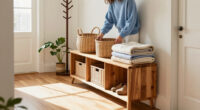
Multifunctional furniture can help when one room serves several purposes. A storage bench can hold hats and gloves beside the door, while a mobile cart can move between a home office and a craft table. Modular shelving and adjustable dividers also make it easier to change the setup when your needs shift. These pieces trade flexibility for some added bulk and cost, so consider whether the storage solves a recurring problem and whether it still leaves enough room to walk, open doors, and use the furniture comfortably.
A shelf only counts as useful storage when you can reach what you need and return it without a wrestling match.
Before adding tall shelves or heavy items overhead, check the product’s weight limits and follow its installation instructions. Secure tall furniture where appropriate, and keep heavy belongings low so you don’t have to lift them down from above your head. The more often you use an item, the more valuable safe, easy access becomes; high or awkward spots are better reserved for things you rarely need.
Choose Clear Bins, Closed Cabinets, or Open Shelves for the Job
Home organization storage solutions should suit both the contents and the way you want a room to feel. Clear containers make it easy to spot what’s inside, while opaque bins and closed cabinets hide visual clutter. Open shelves keep items within view but can look busy if they hold a mix of unrelated objects. The choice affects more than appearance: visible items are easier to identify, while hidden items need stronger cues, such as labels or a consistent location, to avoid being forgotten.
Picture a family’s hallway cupboard. A clear box labeled “school supplies” can make pens and glue sticks quick to find; a closed basket can tuck away gloves and scarves. For a shared home, labels give everyone a simple cue about where things go—even when the person putting them away isn’t the one who took them out. A label is most useful when it describes a category people already understand; overly specific labels can become a chore to maintain as contents change.
| Storage choice | Works well for | Watch for |
|---|---|---|
| Clear bins | Craft supplies, pantry backstock, seasonal items | Visible contents can look cluttered |
| Opaque bins | Items you want tucked out of sight | Use labels to find contents quickly |
| Open shelves | Books, baskets, and frequently used objects | Keep categories simple to avoid a crowded look |
| Drawers or cabinets | Small items and rooms where you prefer a calmer look | Items can be forgotten if everything gets tucked away |
Choose lids carefully if you’ll open a container every day. A lid that stacks neatly may be useful for holiday ornaments; for children’s toys used nightly, an open basket may make cleanup much easier. The tradeoff is between protection and convenience: lids help contain dust and make stacking possible, but each extra motion can discourage frequent use or cleanup. Match the container to the routine rather than choosing the style that looks most uniform.
Keep Your Storage Easy to Maintain on a Busy Week
Home organization storage solutions last longer when putting things away takes little effort. Give each category a consistent place, leave some spare capacity, and make sure the people who use an item can reach its home. A tidy system should still work when you come in carrying groceries or need to clean up before bed. Spare capacity matters because belongings shift and arrive; without it, a small addition can force a full reshuffle, and items begin collecting on nearby surfaces.
Imagine a family that keeps board games on a high shelf above the television. The adults can put them away, but children may leave games on the floor because the shelf is hard to reach. Moving the games into a low basket can turn cleanup from a reminder-heavy chore into one easy motion. This is a useful test for any shared system: if only one person knows where things go or can reach the storage, the system depends on that person’s effort to keep working.
- Keep daily essentials handy: put keys, chargers, and lunch containers where you naturally reach for them. Convenience reduces the chance that they’ll be dropped on the nearest surface instead.
- Group items by task: store wrapping paper and tape together, or keep cleaning supplies near the rooms where you use them. Keeping a complete task group together reduces searching and makes it easier to notice when something is missing.
- Leave breathing room: a shelf that is packed edge to edge makes it harder to put things back. A little open space absorbs small changes and prevents returning an item from becoming a puzzle.
- Review as seasons change: move summer gear and winter accessories into easier reach when the weather turns. Rotating items keeps prime space available for what you need now without requiring you to discard useful seasonal belongings.
The best setup can change with a new job, a growing family, or a move. Check how often items get used and adjust their locations when your routine shifts. Home organization storage solutions should make daily life feel smoother, not preserve a layout that no longer fits. If a category repeatedly spills out or stays unused, treat that as feedback: the assigned space, container, or location may no longer match how the household uses it.
Make a Small Room Work Without Blocking Its Pathways
Home organization storage solutions for a small room should add capacity and keep pathways clear. Look upward, behind doors, and beneath furniture before bringing in a larger cabinet. In a narrow bedroom, wall hooks, a slim bedside shelf, and a low under-bed container may free floor space that a wide dresser would occupy. The benefit is not simply fitting more belongings: a clear path makes it easier to move through the room and use the furniture already there.
Measure the whole setup, not just the box. Check how far a drawer opens, whether a door swings into a rack, and whether a container can pass through the doorway. A storage bench that fits a hallway on paper may still make it awkward to carry laundry past it. Include the space needed for ordinary movement, since a storage solution that blocks access can turn a small room’s saved floor area into a daily obstacle.
If a space stays cramped even after you use its vertical and hidden areas, sort again. Storage can hold belongings, but it cannot create more usable space if every corner is packed. Start with what you reach for, what you genuinely need, and what you’d be glad to stop stepping around. In a small room, choosing what not to store there can be as effective as choosing a more compact container.
Frequently Asked Questions
Where should I start when organizing my home?
Choose one manageable area, such as a single drawer or shelf. Sort its contents into useful groups, decide what belongs there, and measure the space before choosing storage.
Are clear or opaque storage bins better?
Clear bins make contents visible, which can help with supplies you need to find quickly. Opaque bins hide visual clutter and may suit items you store out of sight; labels help with either type.
How do I choose the right size storage containers?
Measure the available space and the items, then check how the container’s lid and handles affect stacking and access. Leave room to take it out easily, and make sure it fits through the doorway or cupboard opening.
How can I organize a small apartment or room?
Use vertical space, hooks, over-door racks, and the area beneath furniture before adding larger pieces. Keep pathways open and everyday items within easy reach so extra storage doesn’t make the room harder to use.
Conclusion
Start with one small area, sort what you actually use, and measure before you buy. When the everyday things have an easy-to-reach home, your shelves stop being a hiding place and start giving you a little breathing room.
NFL season / tailgating Picks
team gear
As an affiliate, we earn on qualifying purchases.