
In red light therapy, ‘dose’ refers to the specific combination of wavelength, intensity, duration, and frequency of light exposure that penetrates your skin and reaches target tissues. It’s not just about how long you sit under the light but also how deeply the wavelengths reach and how often you treat your skin or body. Understanding these factors guarantees you get the most effective results—so if you want to learn more, keep exploring how to optimize your therapy routine.
Key Takeaways
- The “dose” in red light therapy refers to the amount of light energy delivered to tissues, often measured in joules per square centimeter (J/cm²).
- Proper dosing balances light intensity, duration, and wavelength to ensure effective penetration without discomfort or harm.
- An optimal dose stimulates cellular processes like blood flow, collagen production, and tissue repair, depending on treatment goals.
- The dose varies based on skin type, targeted tissue depth, and specific conditions being treated.
- Following manufacturer or professional guidelines helps determine the appropriate dose for safe and effective therapy.
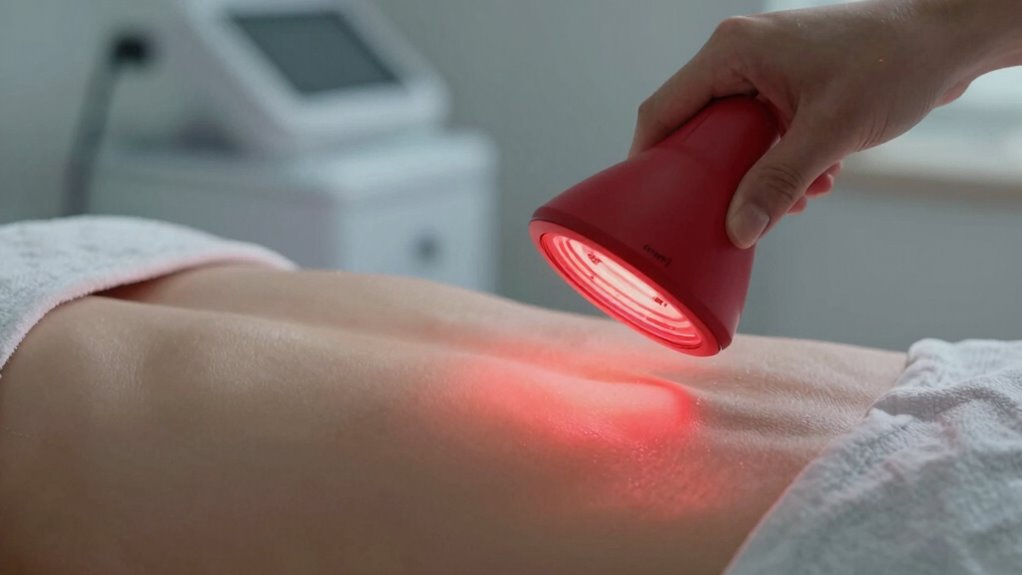
Red Light Therapy (RLT) is a non-invasive treatment that uses specific wavelengths of red and near-infrared light to promote healing and improve skin health. When you use RLT, understanding how light penetrates your skin is key. Light penetration refers to how deeply the light waves reach beneath the surface. Red and near-infrared wavelengths are chosen because they can penetrate tissue more effectively than other wavelengths. This means the light can reach your cells, stimulating processes like increased blood flow, cellular repair, and collagen production. But, the depth of penetration depends on factors like wavelength, intensity, and your skin type. For example, near-infrared light penetrates deeper than visible red light, making it particularly useful for targeting tissues below the skin’s surface. When contemplating the benefits of RLT, you need to think about ideal timing—how long and how often you should be exposed to achieve effective results. Too little exposure might not produce noticeable benefits, while too much could cause unnecessary strain or discomfort. Finding the right balance is essential. Most protocols suggest sessions lasting between 10 to 20 minutes, a duration that allows enough light to reach the tissues without overstimulating your skin or underlying tissues. Consistency is equally important; regular sessions—often 3 to 5 times a week—are more effective than sporadic treatments. It’s also vital to evaluate the optimal timing within your daily routine. For instance, some people prefer using RLT in the morning to boost energy, while others might find evening sessions more relaxing. Regardless of when you choose to do it, sticking to a schedule helps your body adapt and maximize the therapy’s benefits. Remember, the effectiveness of light penetration isn’t just about exposure time but also about aligning your sessions with your skin’s natural rhythms and your specific health goals. If you’re treating skin conditions like scars or wrinkles, shorter, more frequent sessions might be be more effective. For deeper issues like joint pain or inflammation, longer or more frequent treatments could be necessary. Always follow the manufacturer’s guidelines or consult a professional to determine the ideal timing for your needs. Additionally, understanding the science behind light penetration helps you make informed decisions about dosage and treatment plans. Ultimately, understanding the relationship between light penetration and perfect timing helps you get the most out of your RLT sessions, ensuring you’re not wasting time or exposing yourself to unnecessary treatments. When you pay attention to these factors, you set the stage for better healing, healthier skin, and more consistent results.
Frequently Asked Questions
Can Red Light Therapy Help With Hair Growth?
Yes, red light therapy can help with hair growth by stimulating hair follicles and improving scalp circulation. When you use the right dose, it encourages cell activity and boosts blood flow, which supports healthier hair. Consistent treatment targets thinning areas, promoting new growth. Just make certain you’re following recommended guidelines for maximum results, as proper dosing is key for effectively stimulating your scalp and encouraging hair regrowth.
Is Red Light Therapy Safe for All Skin Types?
Red light therapy is generally safe for all skin types when used properly, but skin compatibility varies. You should start with a lower dose to see how your skin reacts and avoid overexposure. If you have sensitive or darker skin, consult a professional to guarantee treatment safety. Overall, with appropriate precautions, red light therapy offers a safe option to improve skin health and promote healing.
How Quickly Will I See Results From Red Light Therapy?
You might see visible improvements within a few sessions, but treatment timelines vary based on your skin type and condition. Some people notice changes after 2–4 weeks, while others may need 6–8 weeks for more significant results. Consistency is key, so stick with your routine. Keep in mind, individual responses differ, but patience often pays off with red light therapy’s gradual, yet effective, benefits.
Are There Any Side Effects of Red Light Therapy?
Red light therapy is generally safe, but you should be aware of safety considerations and potential risks. You might experience mild skin irritation or eye strain if you don’t use protective eyewear. To minimize risks, follow the recommended session durations and avoid overexposure. If you have skin conditions or are pregnant, consult a healthcare professional beforehand. Overall, when used correctly, red light therapy offers minimal side effects.
Can Red Light Therapy Replace Traditional Medical Treatments?
Think of red light therapy as your modern-day quack remedy, but it won’t supplant traditional medical treatments. While it’s gaining popularity as an alternative medicine, it’s best used as a complementary approach, not a substitute. You shouldn’t rely solely on red light therapy for serious conditions. Always compare it to standard treatments and consult your healthcare provider to ensure safe, effective care tailored to your needs.
Conclusion
Remember, understanding what “dose” truly means in red light therapy helps you harness its power wisely. Just as a painter chooses each brushstroke carefully, you can tailor your sessions for real results. Don’t fall for the hype—trust science, not hype. With patience and knowledge, you’ll find your own path to healing, like a traveler discovering a hidden treasure. Embrace the journey, and let the light guide you toward a healthier, brighter tomorrow.