
For most large, persistently damp spaces, the AEOCKY RHEA-001 is the strongest overall pick in this roundup, pairing an 80-pint capacity with an Energy Star Most Efficient 2025 designation. The AEOCKY LEO-Lite stands out for shoppers prioritizing newer energy-efficiency standards, while the DREO adds smart controls for people who want connected operation. The main choice is between a higher-capacity compressor model with continuous drainage and a smaller, simpler unit that takes less space but needs more frequent tank emptying. Rated coverage and pint capacity are useful comparison points, but actual moisture levels, room conditions, and drainage access affect what will work at home. Read on for a comparison of all 15 options and guidance on choosing the right kind of dehumidifier for your needs.

Get the little things that make your day delivered free with Prime
- Fast, free delivery on millions of items
- Prime Video, Amazon Music and more included
- Member-only deals all year
Complete the kit


Key Takeaways
- The AEOCKY RHEA-001 leads the large-room group with an 80-pint rating, broad stated coverage, and an Energy Star Most Efficient 2025 designation; it is best suited to buyers with sustained moisture problems, not small bedrooms.
- The AEOCKY LEO-Lite is a distinct efficiency-minded alternative with Energy Star Version 6.0 positioning, while the RHEA-001 offers a clearly stated 80-pint daily capacity.
- Drainage separates basement-ready machines from tank-first units. Several larger picks include a drain hose, while compact models such as the BEDRED and ToLife emphasize smaller tanks and auto shutoff.
- Smart features are not the same as moisture-removal capacity. The Manastin and DREO add connected controls, but buyers should match their stated pint capacity and tank or hose setup to the space before prioritizing Wi-Fi.
- Coverage claims span dramatically different use cases. Models rated for around 1,000 square feet may suit smaller areas, while options claiming 5,000 to 6,000 square feet target much larger spaces; those figures should be treated as starting points, not guarantees.
| Waykar 80-Pint Dehumidifier for Spaces up to 5,000 Sq. Ft. |  | Best for Wide Humidity Control | Capacity: 80 pints per day at 95°F, 90% RH | Coverage: Up to 5,000 sq. ft. | Humidity range: 30%–80% RH | VIEW ON AMAZON | See Our Full Breakdown |
| Manastin 35-Pint Smart Dehumidifier for Home, with Wi-Fi, Drain Hose, Timer, and Child Lock |  | Best Smart Pick for Mid-Sized Rooms | Capacity: 35 pints per day | Recommended area: Up to 2,500 sq. ft. | Wi-Fi control: Smart Life app; 2.4 GHz Wi-Fi | VIEW ON AMAZON | See Our Full Breakdown |
| AEOCKY RHEA-001 Energy Star Most Efficient 2025 Dehumidifier, 80 Pint/Day, 5500 Sq. Ft. |  | Best for Large-Area Efficiency | Model: RHEA-001 | Capacity: 80 pints/day at 95°F, 95% RH; 56 pints/day at 86°F, 80% RH | Coverage: Up to 5,500 sq. ft. | VIEW ON AMAZON | See Our Full Breakdown |
| DREO Energy Star 2025 Smart Dehumidifier for Basement, 1.85 Gal Water Tank |  | Best Quiet Smart Dehumidifier | Capacity: 73 pints per day | Tank capacity: 7 L (1.85 gallons) | Noise level: 41 dB | VIEW ON AMAZON | See Our Full Breakdown |
| 4500 Sq Ft Energy Star Dehumidifier for Basement with Drain Hose |  | Best for Low-Power Large-Room Use | Floor area: Up to 4,500 sq. ft. | Dehumidification capacity: 45–80 pints/day as listed | Certification: ENERGY STAR certified | VIEW ON AMAZON | See Our Full Breakdown |
| Birtsou 34-Pint Dehumidifier with Drain Hose |  | Best for Flexible Drainage in a Mid-Size Space | Moisture removal: 34 pints per day | Humidity range: 30%–80% | Tank capacity: 0.66 gallons | VIEW ON AMAZON | See Our Full Breakdown |
| AEOCKY LEO-Lite 5,000 Sq. Ft. Energy Star Version 6.0 Dehumidifier |  | Best for Large Spaces with Efficiency in Mind | Coverage area: Up to 5,000 sq. ft. | Energy certification: Energy Star Version 6.0 | Lowest fan-speed noise: 44 dB | VIEW ON AMAZON | See Our Full Breakdown |
| OWAAE Dehumidifier with Auto Shutoff and Sleep Mode, 1,000 Sq Ft |  | Best Compact Pick for Quiet Rooms | Coverage area: 1,000 sq. ft. | Water tank capacity: 95 fl oz | Sleep-mode noise: Under 30 dB | VIEW ON AMAZON | See Our Full Breakdown |
| KNKA Energy Star Dehumidifier for Spaces up to 5,500 Sq. Ft., 80 Pints per Day |  | Best Overall for Large, Damp Areas | Coverage area: Up to 5,500 sq. ft. | Moisture removal: Up to 80 pints/day in humid mid-summer conditions; 56 pints/day in typical basement conditions | Internal tank capacity: 1.45 gal | VIEW ON AMAZON | See Our Full Breakdown |
| 4500 sq ft Dehumidifier for Basement with Drain Hose, Energy Star |  | Best for Quiet, High-Capacity Operation | Coverage area: 4,500 sq. ft. | Dehumidification capacity: Up to 80 pints per day | Tank capacity: 1.72 gallons | VIEW ON AMAZON | See Our Full Breakdown |
| Ludatido 80-Pint Dehumidifier with 1.72-Gallon Tank |  | Best for Large Areas with Flexible Drainage | Dehumidification capacity: Up to 80 pints per day | Advertised coverage: Up to 5,000 sq. ft.; supplied data also lists 0.1 sq. m. | Tank capacity: 1.72 gallons (6.5 liters) | VIEW ON AMAZON | See Our Full Breakdown |
| BEDRED 95 oz Dehumidifier for Home, Up to 1,000 Sq. Ft. | 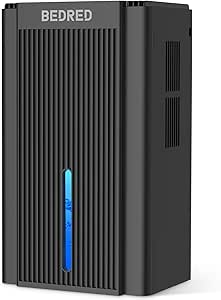 | Best for Compact, Light-Duty Use | Technology: Thermoelectric | Recommended floor area: 1,000 sq. ft. | Tank volume: 95 fl oz | VIEW ON AMAZON | See Our Full Breakdown |
| Bufanli 100-Pint Energy Star Dehumidifier for Up to 6,000 Sq. Ft. |  | Best for Connected Large-Space Control | Coverage area: Up to 6,000 sq. ft. | Capacity at 95°F and 90% RH: Up to 100 pints per day | Capacity at 86°F and 80% RH: 60 pints per day | VIEW ON AMAZON | See Our Full Breakdown |
| ToLife Dehumidifier with 95 oz Tank, Sleep Mode, and Auto Shutoff |  | Best for Quiet Nighttime Use | Coverage: Up to 1,000 sq. ft. | Tank capacity: 95 oz | Technology: Semiconductor condensation | VIEW ON AMAZON | See Our Full Breakdown |
| 21-Pint Dehumidifier for Basement with Drain Hose, 1600 sq ft, White |  | Best for Quiet, Portable Room-to-Room Use | Capacity: 21 pints per day | Coverage area: 1,600 sq. ft. | Tank volume: 0.52 gallons | VIEW ON AMAZON | See Our Full Breakdown |
| dehumidifier | Noise level | Dimensions | Tank capacity |
|---|---|---|---|
| Waykar 80-Pint Dehumidifier fo | Around 42 dB | — | 4.3 L (1.14 gal) |
| Manastin 35-Pint Smart Dehumid | As low as 30 dB | — | 0.8 gallons |
| AEOCKY RHEA-001 Energy Star Mo | 44 dB at lowest setting | 14.45 × 8.66 × 24.09 inches | — |
| DREO Energy Star 2025 Smart De | 41 dB | — | 7 L (1.85 gallons) |
| 4500 Sq Ft Energy Star Dehumid | 40 dB | 8.27 × 14.57 × 23.78 inches | — |
| Birtsou 34-Pint Dehumidifier w | ≤41 dB | 11.81 × 7.87 × 19.09 in | 0.66 gallons |
| AEOCKY LEO-Lite 5,000 Sq. Ft. | — | — | — |
| OWAAE Dehumidifier with Auto S | — | 7.8 × 4.9 × 13.3 in (D × W × H) | — |
| KNKA Energy Star Dehumidifier | 40–45 dB | — | — |
| 4500 sq ft Dehumidifier for Ba | 40 dB | 8.6 × 14.6 × 23.8 in (D × W × H) | 1.72 gallons |
| Ludatido 80-Pint Dehumidifier | As low as 42 dB | 7.87 × 23.62 × 13.77 in (D × W × H) | 1.72 gallons (6.5 liters) |
| BEDRED 95 oz Dehumidifier for | — | 6.7 × 8.7 × 14.6 in | — |
| Bufanli 100-Pint Energy Star D | — | — | 1.45 gallons |
| ToLife Dehumidifier with 95 oz | — | 8.27 × 5.55 × 13.78 in | 95 oz |
| 21-Pint Dehumidifier for Basem | 34 dB | 6.89 × 9.65 × 15.94 in (D × W × H) | — |
More Details on Our Top Picks
Waykar 80-Pint Dehumidifier for Spaces up to 5,000 Sq. Ft.
The Waykar 80-Pint pairs high moisture-removal capacity with an unusually broad 30%–80% humidity setting range, giving buyers more control than the Manastin 35-Pint’s smaller-capacity setup. Its 90-degree auto-swing airflow can help distribute dry air across a larger room, while the 24-hour timer, auto defrost, and overload protection add useful controls for regular operation. Choose between the 4.3 L tank and continuous drainage; the included 3.3 ft hose gives a direct-drain option, though its reach may limit placement. At around 42 dB, it is quieter on paper than many high-capacity units, but not silent. The stated 5,000-square-foot coverage and 80-pint capacity depend on specific test conditions, so I would treat them as guidance rather than a guarantee for every basement or climate.
Pros:- 80-pint daily capacity suits substantial moisture loads.
- 30%–80% humidity range gives more adjustment flexibility than the Manastin’s feature-focused smaller unit.
- Offers both tank collection and continuous drainage.
- Auto defrost, overload protection, and a timer support routine operation.
Cons:- The tank needs manual emptying when continuous drainage is not connected.
- The 3.3 ft drain hose may not reach a convenient drain from every placement.
- Advertised capacity and coverage are tied to specified test conditions.
Best for: Homeowners with a large, persistently damp basement who want high capacity and fine control over target humidity.
Not ideal for: People who need a compact unit for a small room or cannot use a drain and want to avoid regularly emptying a tank.
- Capacity:80 pints per day at 95°F, 90% RH
- Coverage:Up to 5,000 sq. ft.
- Humidity range:30%–80% RH
- Airflow:90° auto swing
- Noise level:Around 42 dB
- Tank capacity:4.3 L (1.14 gal)
- Drain hose:3.3 ft
- Certifications:ENERGY STAR certified; DOE compliant; meets CSA safety requirements and CEC regulations
Our verdict“Choose the Waykar if you need high moisture removal and broad humidity adjustment for a large space, and can accommodate its drainage needs.”
Manastin 35-Pint Smart Dehumidifier for Home, with Wi-Fi, Drain Hose, Timer, and Child Lock
The Manastin 35-Pint puts app control ahead of raw capacity: its Smart Life connection lets owners adjust settings remotely, while Auto, Manual, and Drying modes make it more flexible for everyday rooms than a basic single-mode unit. Compared with the Waykar 80-Pint, it removes less moisture per day, so I’d reserve it for a mid-sized area rather than a demanding, very damp basement. Its 30 dB minimum noise claim and compact footprint are appealing for rooms where sound and placement matter, though the listing does not specify the conditions for that noise figure. The 0.8-gallon tank is small for ongoing moisture removal; continuous drainage avoids frequent trips to empty it, provided the 39-inch hose can reach a drain. Wi-Fi control also depends on a 2.4 GHz network, not 5 GHz.
Pros:- Smart Life app control supports remote adjustments over 2.4 GHz Wi-Fi.
- Three modes offer more task-specific operation than a basic single-mode setup.
- Tank and continuous-drain options provide flexibility.
- Includes a child lock, timer, auto defrost, and automatic shutoff.
Cons:- 35-pint capacity is lower than the 73- and 80-pint large-space options in this lineup.
- The 0.8-gallon tank may require frequent emptying during extended operation.
- App features require a 2.4 GHz Wi-Fi network; 5 GHz is not supported.
Best for: People managing humidity in a bedroom, home office, or moderate-size living area who want app control and multiple modes.
Not ideal for: Owners of large, heavily damp basements who need the higher extraction capacity of the Waykar or AEOCKY.
- Capacity:35 pints per day
- Recommended area:Up to 2,500 sq. ft.
- Wi-Fi control:Smart Life app; 2.4 GHz Wi-Fi
- Operating modes:Auto, Manual, Drying
- Humidity range:30%–80% RH
- Tank capacity:0.8 gallons
- Drain hose:39 inches
- Noise level:As low as 30 dB
- Dimensions and weight:9.21 × 12.18 × 20.21 inches; 22.4 lb
Our verdict“Pick the Manastin for app-managed humidity in a moderate-size room, but choose a higher-capacity model for a persistently damp basement.”
AEOCKY RHEA-001 Energy Star Most Efficient 2025 Dehumidifier, 80 Pint/Day, 5500 Sq. Ft.
For buyers who need substantial extraction but care about energy performance, the AEOCKY RHEA-001 is the strongest efficiency-focused choice here: it carries the ENERGY STAR Most Efficient 2025 designation and lists capacity up to 80 pints per day. Its stated 5,500-square-foot coverage is the largest among these five, edging past the Waykar’s 5,000-square-foot figure, though capacity changes with temperature and humidity: the listing gives 56 pints per day at 86°F and 80% RH. That qualification matters when comparing headline numbers. At 44 dB on its lowest setting, it is not as quiet on paper as the DREO’s 41 dB, but it brings a different priority: efficiency and a copper-pipe coil construction. At 31 pounds, it is not an easy unit to carry between floors, and the supplied details do not specify tank or drainage arrangements.
Pros:- ENERGY STAR Most Efficient 2025 designation distinguishes its efficiency focus.
- Up to 80-pint daily capacity and stated coverage up to 5,500 sq. ft.
- Capacity is provided for more than one test condition, clarifying how output can vary.
- Copper-pipe coil construction is a specified durability feature.
Cons:- At 31 lb, it may be cumbersome to move between rooms or floors.
- Its 44 dB lowest-setting figure is higher than the DREO’s stated 41 dB.
- Tank size and drainage details are not included in the supplied product data.
Best for: Owners of large homes or basements who want high extraction capacity paired with a strong energy-efficiency designation.
Not ideal for: Buyers who need a lightweight room-to-room unit, or who want clearly specified tank and hose details before choosing.
- Model:RHEA-001
- Capacity:80 pints/day at 95°F, 95% RH; 56 pints/day at 86°F, 80% RH
- Coverage:Up to 5,500 sq. ft.
- Certification:ENERGY STAR Most Efficient 2025
- Dimensions:14.45 × 8.66 × 24.09 inches
- Weight:31 lb
- Noise level:44 dB at lowest setting
- Compressor:High-Efficiency Rotor Compressor Pro+
- Coil material:Pure copper pipes
Our verdict“Choose the AEOCKY when large-area moisture removal and the stated efficiency certification matter more than portability or clearly listed drainage details.”
DREO Energy Star 2025 Smart Dehumidifier for Basement, 1.85 Gal Water Tank
The DREO 73-Pint combines substantial moisture removal with a quieter stated operating level than the Waykar and AEOCKY: its listing gives 41 dB, alongside ENERGY STAR 2025 certification and app-based controls. That mix makes it a compelling fit for a basement near living spaces, where noise and energy use can matter as much as capacity. The 7 L (1.85-gallon) tank is larger than the Manastin’s 0.8-gallon reservoir, so it should need less frequent emptying, although continuous drainage remains the better choice for ongoing heavy moisture. App connectivity adds remote control and energy monitoring, but the supplied information does not specify Wi-Fi requirements or hose length. At 73 pints per day, it falls short of the Waykar and AEOCKY’s 80-pint figures; buyers prioritizing maximum listed extraction may prefer either of those.
Pros:- 73-pint daily capacity suits large rooms and basement use.
- 41 dB noise figure is lower than the Waykar’s and AEOCKY’s listed levels.
- ENERGY STAR 2025 certification supports an efficiency-focused choice.
- App provides remote control and energy monitoring; tank and continuous drainage are supported.
Cons:- Its 73-pint capacity is below the 80-pint Waykar and AEOCKY models.
- Full smart functionality depends on Wi-Fi connectivity.
- The product data does not state the included drainage hose length.
Best for: Households with a damp basement beside bedrooms or living areas that want high capacity, quieter operation, and app monitoring.
Not ideal for: Buyers who want the highest stated capacity in this group, or who prefer a dehumidifier with no dependence on Wi-Fi features.
- Capacity:73 pints per day
- Tank capacity:7 L (1.85 gallons)
- Noise level:41 dB
- Energy certification:ENERGY STAR 2025
- Connectivity:Wi-Fi through the DREO App
- Drainage:Tank collection and continuous drainage
- Controls and safety:Auto shutoff, child lock, and timer
- Energy monitoring:Available through the app
Our verdict“Choose the DREO for a large, occupied space where quieter operation and app-based energy monitoring matter more than maximum capacity.”
4500 Sq Ft Energy Star Dehumidifier for Basement with Drain Hose
This ENERGY STAR-certified 4,500-square-foot model is the lower-wattage option in this group, listed at 200 W, and its 40 dB noise figure is also slightly below the Waykar’s stated 42 dB. The product data gives a broad 45–80-pint daily removal range, rather than one capacity tied to a stated test condition, so I would compare that claim cautiously with the Waykar’s specified 80-pint conditions or the AEOCKY’s figures for two humidity levels. Two speeds and Auto mode keep operation straightforward, while the 1.72-gallon tank and dual drainage offer a choice between manual collection and a hose. Continuous drainage is likely preferable during sustained basement use, since the tank still needs emptying. Its listed 14.72 kg weight and nearly 24-inch height also make it less suited to tight rooms than the compact Manastin.
Pros:- ENERGY STAR certification and 200 W listed power suit buyers attentive to energy use.
- 40 dB listed noise level is lower than the Waykar’s stated level.
- Dual drainage lets owners use the tank or connect a drain hose.
- Auto mode, two speeds, child lock, and shutoff cover useful day-to-day functions.
Cons:- The 1.72-gallon tank may need regular emptying without continuous drainage.
- The 45–80-pint capacity range lacks test-condition details in the supplied data.
- Its height and 14.72 kg weight may make placement in small rooms difficult.
Best for: Basement owners seeking an ENERGY STAR-certified unit with low listed wattage, dual drainage, and simple automatic operation.
Not ideal for: People with limited floor space or buyers who want a single capacity figure with clearly stated test conditions.
- Floor area:Up to 4,500 sq. ft.
- Dehumidification capacity:45–80 pints/day as listed
- Certification:ENERGY STAR certified
- Tank volume:1.72 gallons
- Power:200 W
- Noise level:40 dB
- Speeds and mode:Two speeds; Auto mode
- Dimensions:8.27 × 14.57 × 23.78 inches
- Weight:14.72 kg
Our verdict“Pick this model for a large basement if low listed wattage and flexible drainage appeal, but compare its broad capacity claim carefully against condition-specific figures.”
Birtsou 34-Pint Dehumidifier with Drain Hose
The Birtsou 34-Pint suits buyers who want adjustable humidity control without stepping up to a large-capacity basement machine. Its included 6.56-foot drain hose can reduce the chore of emptying the small 0.66-gallon tank, while automatic restart helps it resume after a tank-emptying interruption. A child lock and rolling casters add practical flexibility for household use. Compared with the KNKA 80-Pint, this model has much lower stated moisture-removal capacity, so it is better matched to a more contained space than a persistently damp large basement. The listing also gives conflicting coverage figures—350 square feet in the specifications and up to 2,000 in the description—so I would not choose it based on the larger claim. Without a hose, expect frequent tank checks.
Pros:- Included drain hose supports continuous drainage.
- Adjustable humidity control and a 24-hour timer allow scheduled operation.
- Automatic restart can resume operation after the tank is emptied.
- Rolling casters and a child lock support convenient household use.
Cons:- The 0.66-gallon tank can require frequent emptying if continuous drainage is unavailable.
- Coverage claims conflict between 350 and up to 2,000 square feet.
- Its 34-pint capacity is below the 80-pint KNKA and other large-space options.
Best for: Households managing moisture in a mid-size room that can place the included hose near a suitable drain.
Not ideal for: Owners of large, heavily damp basements, or anyone who needs a dependable coverage-area figure before buying.
- Moisture removal:34 pints per day
- Humidity range:30%–80%
- Tank capacity:0.66 gallons
- Drain hose length:6.56 ft
- Noise level:≤41 dB
- Power:230 watts
- Dimensions:11.81 × 7.87 × 19.09 in
- Weight:10.94 kg
Our verdict“Choose the Birtsou for a contained space with access to a drain, but skip it if you need clearly documented coverage or high-capacity moisture removal.”
AEOCKY LEO-Lite 5,000 Sq. Ft. Energy Star Version 6.0 Dehumidifier
The AEOCKY LEO-Lite is the pick in this group for buyers whose priority is broad stated coverage paired with a recent efficiency certification. Its claimed reach of up to 5,000 square feet makes it relevant to open, connected areas, while automatic defrost is useful where cooler conditions can affect operation. The rotary compressor and 44 dB lowest fan-speed rating offer a concrete noise reference, though the provided details do not give its sound level at higher settings. Unlike the KNKA 80-Pint, this listing does not provide a daily moisture-removal figure, tank capacity, or drainage details. That makes it harder to judge against the actual dampness of a space or plan maintenance. I would favor it for efficiency and coverage claims, but not when capacity and drainage specifics are decisive.
Pros:- Designed for spaces up to 5,000 square feet.
- Energy Star Version 6.0 certification signals an efficiency-focused design.
- Automatic defrost supports use in cooler environments.
- Lowest fan speed is specified at 44 dB.
Cons:- No daily moisture-removal capacity is provided in the supplied product details.
- Tank capacity and drainage options are not specified.
- The highest-setting noise level and claimed annual energy savings are not substantiated in the provided information.
Best for: Owners of large connected spaces who prioritize Energy Star Version 6.0 certification and automatic defrost.
Not ideal for: Buyers comparing dehumidifiers by daily pint capacity, tank size, or drainage setup, since those details are not provided here.
- Coverage area:Up to 5,000 sq. ft.
- Energy certification:Energy Star Version 6.0
- Lowest fan-speed noise:44 dB
- Defrost:Automatic
- Compressor:Rotary
- Tubing:7 mm internal-thread pure copper tubes
Our verdict“Consider the LEO-Lite if its coverage and efficiency claims fit your priorities, but choose a model such as the KNKA if you need stated capacity and drainage details.”
OWAAE Dehumidifier with Auto Shutoff and Sleep Mode, 1,000 Sq Ft
The compact OWAAE is aimed at bedrooms, closets, bathrooms, and RVs where a large compressor-style unit would be awkward or intrusive. Its standout is sleep-mode noise below 30 dB, paired with automatic shutoff if the tank fills or is positioned incorrectly. The 95-fluid-ounce tank and built-in handle make it easier to place and manage than a large-room unit such as the 4500 sq ft Basement Dehumidifier, but the smaller format also means more frequent emptying and a less suitable match for serious moisture problems. The stated coverage reaches 1,000 square feet, though the product description frames its use around everyday spaces with moderate-to-high humidity rather than giving a daily pint-removal rate. The seven-color lighting adds an option to the design, but it does not replace capacity information when choosing for a damp basement.
Pros:- Sleep mode is rated below 30 dB.
- Automatic shutoff responds to a full or incorrectly positioned tank.
- Compact dimensions and a built-in handle support easy placement.
- Seven-color LED lighting provides an optional ambient-light feature.
Cons:- The 95-fluid-ounce tank may need regular emptying.
- No daily pint-removal capacity is provided in the supplied specifications.
- Its described use is better suited to everyday enclosed spaces than demanding moisture-control jobs.
Best for: Light sleepers and RV owners seeking a compact unit for a bedroom, closet, or other enclosed everyday space.
Not ideal for: People tackling persistent basement dampness or who want a stated daily moisture-removal capacity and less frequent tank emptying.
- Coverage area:1,000 sq. ft.
- Water tank capacity:95 fl oz
- Sleep-mode noise:Under 30 dB
- Dimensions:7.8 × 4.9 × 13.3 in (D × W × H)
- Operation mode:Automatic
- Special features:Sleep mode, auto shutoff, 7-color LED lighting
- Model:TZ-C4S
Our verdict“Pick the OWAAE for quiet, compact use in a bedroom or RV, not as a substitute for a high-capacity basement dehumidifier.”
KNKA Energy Star Dehumidifier for Spaces up to 5,500 Sq. Ft., 80 Pints per Day
The KNKA 80-Pint earns the broadest recommendation here because it pairs substantial moisture removal with details that help buyers plan daily use. It is rated for up to 80 pints per day in humid mid-summer conditions, with a separate 56-pint figure for typical basement conditions—a useful distinction when comparing capacity claims. Energy Star certification, three operating modes, adjustable humidity settings, and real-time monitoring make it more versatile than the Birtsou 34-Pint for a large, persistently damp area. Continuous hose drainage can also reduce tank maintenance, though the included internal tank holds only 1.45 gallons and may need frequent emptying without a drain. The optional 2.64-gallon external tank is sold separately, and its humidity readings may differ slightly from an external hygrometer. Noise is specified at 40–45 dB, not as a fixed level.
Pros:- Provides separate capacity figures for humid mid-summer and typical basement conditions.
- Energy Star certified and supports adjustable humidity settings.
- Offers internal-tank collection or continuous hose drainage.
- Includes three modes, real-time humidity monitoring, a washable filter, and caster wheels.
Cons:- The 1.45-gallon internal tank may need frequent emptying without continuous drainage.
- The optional 2.64-gallon external tank is sold separately.
- Humidity readings may differ slightly from an external hygrometer.
Best for: Homeowners managing a large basement or connected space who want high stated capacity, adjustable control, and hose drainage.
Not ideal for: Buyers who cannot use continuous drainage and do not want to monitor a 1.45-gallon tank, or who require the optional external tank included.
- Coverage area:Up to 5,500 sq. ft.
- Moisture removal:Up to 80 pints/day in humid mid-summer conditions; 56 pints/day in typical basement conditions
- Internal tank capacity:1.45 gal
- Drain hose length:6.56 ft (2 m)
- Noise level:40–45 dB
- Humidity setting range:30%–80% RH
- Operating modes:AUTO, DRY, SETTING
- Certification:Energy Star
Our verdict“Choose the KNKA for a large, damp area when high capacity and flexible drainage matter more than avoiding tank checks or buying an optional tank.”
4500 sq ft Dehumidifier for Basement with Drain Hose, Energy Star
This 80-pint dehumidifier combines large-space capacity with a specified 40 dB operating noise and sleep mode, making it a strong fit when a basement or gym needs steady moisture control without a louder presence. Its 1.72-gallon tank is larger than the KNKA’s 1.45-gallon internal tank, though both support hose drainage and neither removes tank maintenance if a drain is unavailable. The 90° adjustable air outlet gives buyers more control over where air is directed, while automatic defrost and overload protection add operating safeguards. Compared with the KNKA, this model has a smaller stated coverage area—4,500 rather than 5,500 square feet—and provides no comparable breakdown of moisture removal under typical basement conditions. Its 14.6-inch width and 23.8-inch height may also make tight doorways a challenge despite the wheels.
Pros:- Rated to remove up to 80 pints per day across a stated 4,500-square-foot coverage area.
- Specified 40 dB operation and a sleep mode suit quieter household settings.
- Provides both a 1.72-gallon tank and continuous hose drainage.
- A 90° adjustable outlet, automatic defrost, and overload protection add useful control.
Cons:- The unit may be difficult to maneuver through tight doorways.
- Its stated coverage is lower than the KNKA’s 5,500-square-foot figure.
- No built-in Wi-Fi or smart-home integration is listed.
Best for: Basement, garage, or gym owners who need high capacity, quiet operation, and the option of continuous hose drainage.
Not ideal for: People with narrow doorways or those who need the KNKA’s larger stated coverage area and condition-specific capacity figures.
- Coverage area:4,500 sq. ft.
- Dehumidification capacity:Up to 80 pints per day
- Tank capacity:1.72 gallons
- Dimensions:8.6 × 14.6 × 23.8 in (D × W × H)
- Adjustable air outlet:90°
- Noise level:40 dB
- Operation mode:Automatic dehumidification
- Energy feature:Energy Star efficiency
Our verdict“Choose this model for quiet, high-capacity basement use with a larger built-in tank, but favor the KNKA if wider stated coverage is your priority.”
Ludatido 80-Pint Dehumidifier with 1.72-Gallon Tank
The Ludatido’s main advantage is its stated 80-pint daily capacity and advertised coverage of up to 5,000 square feet, making it a more ambitious choice for broad, persistently damp areas than the compact BEDRED or ToLife models. A continuous-drain option can reduce tank-emptying trips, though you’ll need to supply the hose. Its 1.72-gallon tank is comparatively generous, but still modest beside the moisture-removal claim if you rely on manual emptying. Sleep, fan, and automatic modes give it more flexibility than a basic small-room unit, while the stated 42 dB minimum may suit spaces where some operating sound is acceptable. I’d treat the coverage figure cautiously: the supplied data also lists a conflicting 0.1-square-meter floor area, so verify the actual usable area before choosing it for a whole-home job.
Pros:- High stated removal capacity of up to 80 pints per day
- Continuous-drain option can reduce manual tank emptying
- Sleep, fan, and automatic modes offer flexibility
- Includes humidity control, child lock, and automatic shutoff
Cons:- Drain hose is not included
- Coverage information conflicts with a listed 0.1-square-meter floor area
- The 1.72-gallon tank may need frequent emptying when used without a drain
Best for: Buyers seeking a high-capacity unit for a large damp area who can use a drain hose and verify the coverage information before buying.
Not ideal for: Anyone who needs a clearly documented coverage rating or wants continuous drainage without sourcing a hose separately.
- Dehumidification capacity:Up to 80 pints per day
- Advertised coverage:Up to 5,000 sq. ft.; supplied data also lists 0.1 sq. m.
- Tank capacity:1.72 gallons (6.5 liters)
- Noise level:As low as 42 dB
- Operating modes:Dry, Sleep, Fan, Automatic Dehumidification
- Drainage:Continuous drain; hose not included
- Dimensions:7.87 × 23.62 × 13.77 in (D × W × H)
- Additional features:24-hour timer, adjustable humidity control, automatic defrost, washable filter, child lock, overheat protection
Our verdict“Choose the Ludatido for its stated large-area capacity and drain option, but confirm its coverage details and plan to provide your own hose.”
BEDRED 95 oz Dehumidifier for Home, Up to 1,000 Sq. Ft.
The BEDRED is the light-duty choice in this group: its thermoelectric design and 95-ounce tank make it a compact alternative to compressor models such as the 21-pint unit, but its stated capacity data does not establish comparable moisture removal. The listed 1,000-square-foot recommendation should not be read as proof that it can handle a persistently damp basement; its intermittent operation and tank-based collection are better suited to modest moisture loads. For bedroom use, Sleep Mode turns off the ambient lights and reduces noise, avoiding the distraction of its seven-color lighting feature. Automatic shutoff helps prevent overflow, although it does not eliminate the need to empty the tank. I’d favor the ToLife if quiet sleep operation is the priority, since its listed sleep noise is below 30 dB; the BEDRED’s clearer differentiator is its compact, configurable lighting.
Pros:- Compact thermoelectric design for modest residential use
- Automatic shutoff when the tank is full
- Sleep Mode reduces noise and turns off ambient lighting
- Seven selectable ambient-light colors
Cons:- Intermittent operation may not suit ongoing moisture problems
- The 95-ounce tank needs manual emptying
- No pint-per-day removal rate is provided for comparison with compressor units
Best for: People seeking a compact thermoelectric unit for a lightly damp bedroom or small residential area who value sleep mode and optional ambient lighting.
Not ideal for: Basement owners or anyone dealing with substantial, continuous moisture who needs a stated pint-per-day removal rate or compressor-level capacity.
- Technology:Thermoelectric
- Recommended floor area:1,000 sq. ft.
- Tank volume:95 fl oz
- Listed capacity:5.9 lbs
- Power:85 W
- Voltage:220 V
- Dimensions:6.7 × 8.7 × 14.6 in
- Special features:Seven-color ambient light, automatic shutoff, Sleep Mode
Our verdict“Pick the BEDRED for compact, light-duty use with optional lighting, not for serious basement dampness or continuous moisture removal.”
Bufanli 100-Pint Energy Star Dehumidifier for Up to 6,000 Sq. Ft.
The Bufanli leads this group on stated capacity, with up to 100 pints per day and coverage listed at 6,000 square feet. That makes it a more heavy-duty candidate than the Ludatido, though the Bufanli’s own rating falls to 60 pints per day under its stated 86°F and 80% RH conditions. That test-condition difference matters when comparing capacity claims: the 100-pint figure applies to hotter, more humid air, not every room. Its Wi-Fi and voice controls add convenience for remote adjustments, while three drainage choices—including a garden connection—give it more setup flexibility than the Ludatido, whose hose is not included. A 1.45-gallon tank still calls for regular emptying if you don’t use a drain. I’d choose it for large spaces where remote control matters, but skip the connectivity if straightforward controls are all you need.
Pros:- High stated capacity for large areas, with test conditions disclosed
- Wi-Fi app control and Alexa and Google Assistant voice control
- Three drainage options: tank, hose, or garden connection
- Includes automatic restart, child lock, auto defrost, and sleep mode
Cons:- The 100-pint figure applies to very warm, humid conditions; capacity is listed as 60 pints at a different test condition
- The 1.45-gallon tank can require frequent emptying without a drain
- Some operating details are unavailable in the supplied product description
Best for: Owners of large, damp homes or basements who want app or voice control and can use one of the continuous-drain setups.
Not ideal for: Buyers in cooler or less humid conditions who expect 100 pints per day, or anyone who prefers a simple unit without connected features.
- Coverage area:Up to 6,000 sq. ft.
- Capacity at 95°F and 90% RH:Up to 100 pints per day
- Capacity at 86°F and 80% RH:60 pints per day
- Tank capacity:1.45 gallons
- Drainage options:Manual tank, continuous drain hose, or garden drainage connection
- Connectivity:Wi-Fi app control; Alexa and Google Assistant voice control
- Sleep mode noise:36 dB
- Controls and protections:24-hour timer, automatic shutoff, auto restart, overload protection, child lock, humidity indicator, auto defrost
Our verdict“Choose the Bufanli for large-area moisture control with app access and flexible drainage, while matching its capacity claims to your room conditions.”
ToLife Dehumidifier with 95 oz Tank, Sleep Mode, and Auto Shutoff
The ToLife’s strongest case is nighttime use: its low-speed Sleep Mode is rated below 30 dB, quieter on paper than the BEDRED’s unspecified noise level and the 21-pint compressor model’s 34 dB rating. Its semiconductor condensation system and 95-ounce tank place it closer to the BEDRED than to compressor units designed for heavier moisture loads. The claimed coverage reaches 1,000 square feet, but no moisture-removal rate or tank runtime is provided, so I wouldn’t use that area figure alone to judge performance in a damp room. Automatic shutoff when full or when the tank is misplaced adds a useful safeguard, and the compact body with handles helps when moving it between rooms. The tradeoff is limited evidence for matching capacity to need; the BEDRED, at least, lists a capacity figure, though not a pint-per-day rate.
Pros:- Sleep mode is rated below 30 dB
- Shuts off when the tank is full or misplaced
- Compact design with handles for moving between rooms
- Seven selectable ambient-light colors
Cons:- No moisture-removal rate is specified
- Tank runtime is not stated, making emptying frequency hard to judge
- Semiconductor condensation is a less suitable fit for heavy moisture loads than compressor options
Best for: Light sleepers seeking a compact unit for a bedroom or other modestly damp space, with quiet operation and a full-tank shutoff.
Not ideal for: People tackling a damp basement or needing predictable daily moisture removal, since no removal rate or tank runtime is listed.
- Coverage:Up to 1,000 sq. ft.
- Tank capacity:95 oz
- Technology:Semiconductor condensation
- Modes:Powerful mode and low-speed sleep mode
- Sleep mode noise:Below 30 dB
- Lighting:Seven selectable colors
- Automatic shutoff:Shuts off when tank is full or misplaced
- Dimensions:8.27 × 5.55 × 13.78 in
Our verdict“Choose the ToLife for a quiet, portable bedroom unit, but look to a compressor model for substantial or ongoing dampness.”
21-Pint Dehumidifier for Basement with Drain Hose, 1600 sq ft, White
This 21-pint compressor model sits between the small thermoelectric BEDRED and the large-capacity Ludatido: it offers a stated 21-pint daily capacity for areas up to 1,600 square feet, without aiming at whole-house scale. Its standout advantage is practical nighttime use, with a listed 34 dB noise level, plus wheels and lift-up handles for moving it between a bedroom, RV, and basement. Three modes cover everyday humidity control, laundry drying, and continuous operation. Unlike the Ludatido, it includes a drain hose, so continuous drainage is ready without an extra hose purchase. The tradeoff is its small 0.52-gallon tank: without the hose, expect more frequent emptying than with the larger Ludatido tank. Its humidity reading is taken at the inlet, so I wouldn’t treat it as a room-wide measurement.
Pros:- Compressor design with a stated 21-pint daily capacity
- Listed 34 dB operation suits noise-sensitive rooms
- Includes a continuous drain hose and a removable tank with auto shutoff
- Wheels and lift-up handles support room-to-room portability
Cons:- Small 0.52-gallon tank may need frequent emptying without the hose
- Capacity and coverage are below the larger Ludatido and Bufanli models
- Humidity reading is taken at the air inlet and may differ from external meters
Best for: People who need a movable compressor dehumidifier for a bedroom, RV, laundry area, or modest basement and want a supplied drain hose.
Not ideal for: Owners of large, persistently damp spaces who need high daily extraction capacity or plan to rely on the small tank instead of continuous drainage.
- Capacity:21 pints per day
- Coverage area:1,600 sq. ft.
- Tank volume:0.52 gallons
- Noise level:34 dB
- Power:120 W
- Dimensions:6.89 × 9.65 × 15.94 in (D × W × H)
- Weight:15.3 lb
- Modes and features:Dehumidify, Dry, Continuous; auto defrost, auto shutoff, timer, child lock, 360° wheels
Our verdict“Pick this model for quieter, portable dehumidifying in moderate-size spaces, especially if you can use its included drain hose.”

How We Picked
I organized the comparison around the decisions that shape day-to-day usefulness: stated moisture-removal capacity, claimed coverage, drainage options, tank size, energy-efficiency information, and controls. I also looked at how clearly each product’s listed features fit a particular job, such as continuous basement operation, smart home control, or occasional moisture reduction in a smaller room. A drain hose can matter more than a larger tank for a unit expected to run often, while auto shutoff and sleep mode are more relevant when convenience or bedroom use leads the decision.
The ranking favors products whose listed capacity and features make their role easy to understand, then separates alternatives by the needs they serve. The AEOCKY RHEA-001 ranks first as a high-capacity, efficiency-designated pick; the LEO-Lite and DREO stand out for different priorities rather than simply repeating that role. Models with similar coverage claims are distinguished by their stated capacity, controls, and drainage details. Product names and supplied specifications do not establish independent performance results, so I treat advertised coverage as a guide and avoid claiming that any unit will deliver the same results in every home.
Factors to Consider When Choosing Dehumidifiers
Before choosing among these dehumidifiers, decide how much water you need removed, where that water will go, and how the unit will fit into your home. Those choices usually matter more than a long feature list. I would use the following checks to narrow the field before comparing convenience extras.
Match Capacity to the Moisture Problem, Not Just Room Size
A manufacturer’s square-foot figure is a starting estimate, not a promise that one unit will control every space of that size. A cool basement with persistent dampness can place different demands on a dehumidifier than a warmer, lightly humid living area with the same floor space. Check the stated pint capacity alongside the coverage claim, and think about how damp the area is and whether moisture is seasonal or constant. If the problem is concentrated in one enclosed room, a very large unit may take up space and run beyond what you need. For multiple connected rooms or a persistently wet basement, a small-room model may fall behind even if its coverage figure looks close. When conditions are uncertain, prioritize a clear return policy and a model whose capacity fits the likely severity rather than shopping by square footage alone.
Choose a Drainage Plan Before You Buy
Tank size determines how often you may need to empty a unit, while a drain hose can route collected water away during longer runs. A larger tank reduces interruptions but does not make the machine maintenance-free; it still needs monitoring and cleaning. Gravity drainage usually requires the drain outlet to sit above the destination, so check the hose route and floor layout before assuming continuous drainage will work. If your basement has a floor drain, the hose connection may be a practical advantage over repeatedly carrying a full tank upstairs. If the unit will run only occasionally, a removable tank and auto shutoff may be enough. Avoid choosing a model by tank capacity alone: a small reservoir can fill quickly when humidity is high.
Treat Energy Labels and Capacity as Separate Clues
Energy-efficiency designations can help distinguish models, but they do not replace checking whether a unit has enough capacity for the job. A more efficient machine that is undersized may need to run for longer, while a high-capacity model may be excessive in a small, mildly damp room. Compare the exact certification or version stated for each product rather than assuming that similar names mean identical efficiency credentials. Also check the product documentation for operating conditions and energy-use details, which can clarify how a rating applies to your home. If the dehumidifier will run for many hours each day, efficiency deserves more weight in the decision. For intermittent use, capacity, drainage convenience, and noise may matter more.
Decide Whether Smart Controls Solve a Real Problem
Wi-Fi and app controls are most useful when you want to change settings without walking to the unit, check status remotely, or fit operation into a routine. They add less value if the dehumidifier will stay in an accessible utility room and use a simple fixed setting. Check which functions are controlled in the app and whether core operation still works at the unit if the network goes down. A timer or child lock may be more useful than connectivity for households that want straightforward scheduling or safer control access. Smart features do not make a lower-capacity machine suitable for a larger damp area. Compare the controls only after the unit’s capacity, drainage arrangement, and intended location make sense.
Plan for Noise, Clearance, and Routine Care
A dehumidifier needs room for airflow and a stable place to sit, so measure the intended spot and check the manual’s clearance guidance before buying. A model placed in a bedroom or near a living area may need quieter operating modes, but a sleep setting does not necessarily mean silent operation. Filters and water tanks need regular attention; neglect can reduce airflow, contribute to odors, or interrupt operation when a tank fills. Think about whether you can reach the filter and lift the reservoir comfortably, especially if the unit will be used by someone with limited mobility. Wheels or handles can help when a heavier unit needs to move between rooms, but they do not replace checking its size and weight. The best location is often near the damp area and a suitable drain, not wherever the unit is easiest to hide.
Frequently Asked Questions
Should I choose a dehumidifier by its square-foot rating or its pint capacity?
Use both figures, but do not treat either as a guarantee. Square-foot claims give a rough sense of the intended area, while pint capacity indicates the stated amount of moisture the unit can remove under specified conditions. The same room size can call for different capacity depending on dampness, temperature, airflow, and whether adjoining rooms are open to it. For a persistently damp basement, capacity and drainage deserve extra attention; for a mildly humid, enclosed room, a smaller unit may be easier to live with. Check the manufacturer’s operating details if your space sits at the edge of its coverage claim.
Is a drain hose better than a large water tank?
A hose is usually more convenient for long or frequent runs if you have a suitable drain and can route water there correctly. A large tank can be a better fit when the unit runs occasionally, no drain is nearby, or you need to move the dehumidifier between rooms. Hose drainage may rely on gravity, so the outlet often needs to sit higher than the drain point; confirm the manual’s requirements first. A tank still needs regular emptying, and an auto-shutoff feature can prevent operation from continuing after it fills. Choose based on the room’s layout and your willingness to monitor the reservoir, not on the hose feature alone.
Can a dehumidifier rated for 5,000 square feet handle my whole basement?
Possibly, but the coverage number alone cannot tell you how well it will work in your basement. Open floor plans, closed rooms, low temperatures, leaks, and the amount of moisture entering the space all affect performance. A single unit may have trouble reaching separate rooms if walls and doors limit air circulation. For a divided basement, placement near the dampest area and keeping interior doors open when practical can help air move, though it may not solve a severe moisture source. Address leaks or water intrusion directly; a dehumidifier manages indoor humidity but does not repair the cause.
Is a smart dehumidifier worth choosing over a simpler model?
It is worth paying attention to smart controls if you expect to change settings remotely or want the convenience of app access. For a unit that will sit in a utility area and run with a drain hose, basic controls may do the job just as well. Check whether the app provides useful functions beyond switching the machine on and off, and confirm that the unit remains usable through its physical controls. Connectivity does not improve moisture-removal capacity, so compare the pint rating and drainage setup first. If those basics are a close fit, smart features can be a helpful tie-breaker.
When does it make sense to choose a compact dehumidifier instead of a high-capacity model?
A compact unit can make sense in a smaller enclosed area with a modest moisture problem, or when limited floor space and easy placement matter most. It may also suit occasional use where a large compressor model would be more machine than the room needs. The tradeoff is that a smaller reservoir can require more frequent emptying, and lower-capacity units may struggle with a large or persistently damp space. Before choosing one, check whether its capacity and stated coverage fit the room’s conditions rather than relying only on a compact design. If moisture is widespread, recurring, or tied to a basement, a higher-capacity unit with a practical drainage route is usually the stronger starting point.
Conclusion
For most buyers with a large damp area, I recommend the AEOCKY RHEA-001 as the best overall because its stated 80-pint capacity and Energy Star Most Efficient 2025 designation give it a clear role. The AEOCKY LEO-Lite is my efficiency-focused alternative, while the DREO is the better match for shoppers who want smart controls. For best value, I would shortlist the 21-pint basement model or the Birtsou 34-pint option when their capacity and drainage details fit the space; neither should be treated as a substitute for a high-capacity machine in a very damp, large basement. Beginners may prefer a simpler unit with auto shutoff and straightforward tank operation, such as the OWAAE, while accepting that a smaller-capacity model is meant for more limited spaces. For specific needs, choose a hose-equipped high-capacity model for sustained basement use, a compact BEDRED or ToLife for smaller rooms, and the Manastin if Wi-Fi and child lock are priorities. My final check would be to match capacity to the actual moisture problem and confirm that the tank or hose arrangement works where the unit will sit.