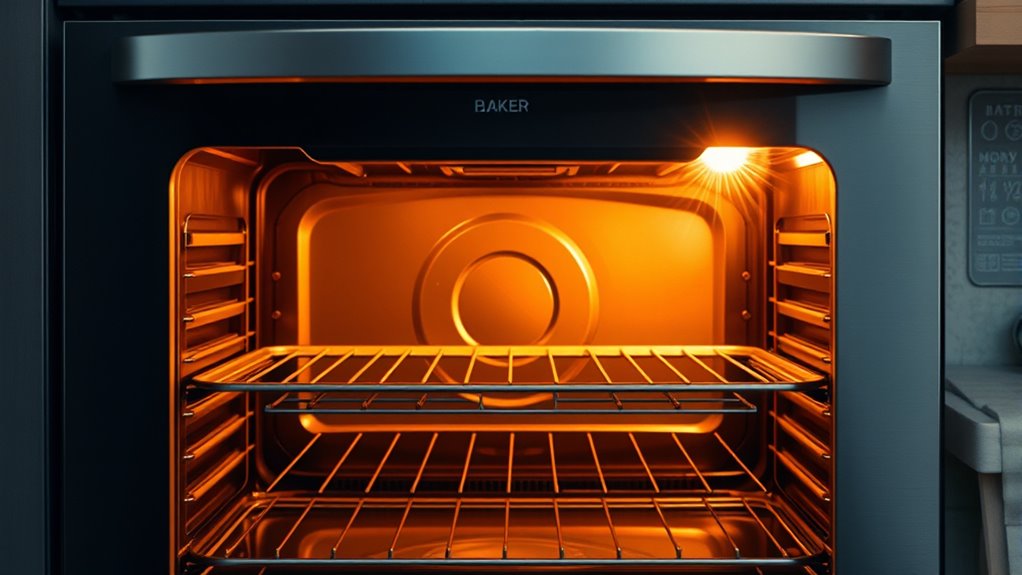
Understanding your oven’s modes helps you cook better. Use bake mode for even, gentle heat perfect for cakes, cookies, and bread. Turn on convection when you want faster, more uniform cooking, especially for roasts or multiple racks. Broil is best for finishing dishes, melting cheese, or adding a crispy top. Choosing the right mode based on your dish guarantees great results every time—stay with us, and you’ll discover how to maximize each mode’s potential.
Key Takeaways
- Bake mode provides gentle, even heat ideal for baked goods like cakes, bread, and casseroles.
- Convection uses a fan to circulate hot air, speeding up cooking and promoting even browning on multiple racks.
- Broil employs high heat from the top element, perfect for finishing dishes, melting cheese, or crisping surfaces.
- Choose bake for tender, uniform cooking; convection for faster, evenly browned results; broil for quick, high-heat finishing.
- Properly selecting the oven mode enhances dish quality, cooking efficiency, and achieving desired textures and finishes.
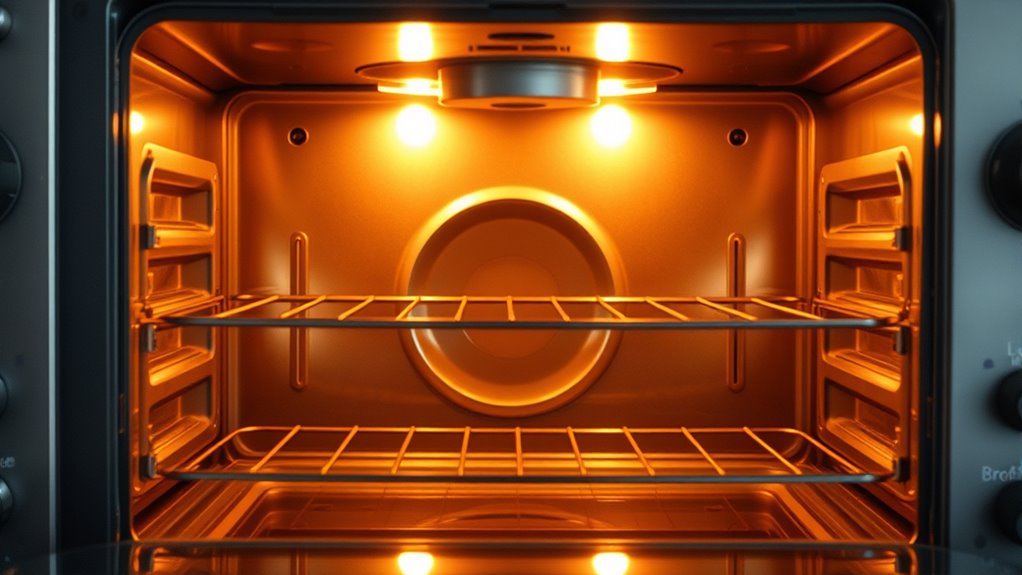
Understanding the different oven modes can considerably improve your cooking results, whether you’re baking, roasting, or broiling. Knowing how to navigate oven modes explained helps you select the right setting for each dish, guaranteeing ideal texture, flavor, and doneness. When you’re choosing the right setting, it’s essential to take into account what you’re preparing. Each mode serves a specific purpose and produces a distinct heat environment, so understanding their differences makes your cooking more efficient and consistent.
The most common oven mode is the bake setting. When you bake, heat radiates from either the bottom or the top, depending on your oven, creating an even, gentle heat perfect for cakes, cookies, bread, and casseroles. Baking produces a dry, uniform heat that allows ingredients to cook through evenly without excessive browning, which is why it’s ideal for baked goods. If you’re preparing dishes that require thorough cooking with a tender interior, this is your go-to setting. Selecting the right baking temperature and time ensures your baked goods turn out just right.
Convection mode, often called fan-bake or fan-assisted baking, is another popular oven mode explained. It works by circulating hot air around the food with a built-in fan and exhaust system. This results in faster, more even cooking, which is especially useful when you need to cook multiple racks of cookies or roast large cuts of meat. When choosing the right setting, keep in mind that convection can sometimes cause delicate baked items to brown too quickly or dry out, so you may want to lower the temperature slightly or watch your cooking time more closely.
Broil mode is different from bake and convection because it uses intense heat from the top element only. This setting is perfect for finishing dishes, melting cheese, toasting bread, or creating a crispy crust on meats. When you’re selecting the right setting for broiling, remember it’s best for short, high-heat tasks. Keep a close eye on your food, as broiling can quickly burn or overcook without careful monitoring. It’s especially handy for adding a golden-brown finish or crispiness that baking alone can’t achieve.
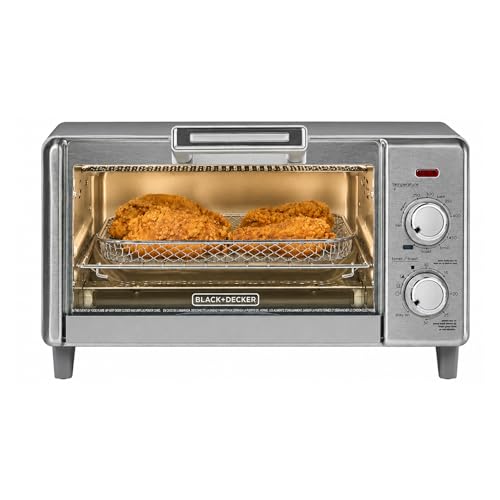
BLACK+DECKER Crisp 'N Bake Air Fry Countertop Convection Toaster Oven, Medium Capacity, 4-Slice, 5-in-1, Fits 9” Pizza, 30-Min Timer, Bake, Broil, Air Fry, Toast, Keep Warm, Stainless Steel
5-IN–1 MULTIFUNCTIONAL COOKING- Enjoy versatile cooking with Air Fry, Bake, Broil, Toast, and Keep Warm settings. Perfect for…
As an affiliate, we earn on qualifying purchases.
As an affiliate, we earn on qualifying purchases.
Frequently Asked Questions
Can Oven Modes Be Used Simultaneously?
You can’t typically use oven modes simultaneously on a standard oven, but a multifunction oven often offers mode combinations for versatility. These ovens allow you to blend features like bake and convection, which can enhance cooking results. Check your oven’s settings, as some models enable you to select multiple modes at once for specific recipes. Always follow the manufacturer’s instructions to guarantee safe and effective use of these mode combinations.
Do Different Brands Have Unique Oven Modes?
Yes, different brands often have unique oven modes and brand-specific features that set their appliances apart. While basic modes like bake or broil are common, many brands offer mode customization options, allowing you to tailor settings to your needs. This means you can enjoy specialized functions that might not be available on other brands, giving you more control and flexibility in your cooking experience.
How Do Oven Modes Affect Energy Consumption?
Oven modes directly impact your energy efficiency by dictating how the heat is distributed and used. For example, convection mode with a fan uses less energy by cooking faster and at lower temperatures. Mode customization allows you to select the most efficient setting for your dish, saving energy and reducing costs. Choosing the right mode optimizes performance and minimizes energy consumption, helping you cook smarter and more sustainably.
Are There Safety Concerns With Certain Modes?
If you ignore oven safety, you risk serious mode hazards like burns or fires. Certain modes, like broiling, can produce intense heat that might cause burns if you’re not careful. Always stay vigilant and follow safety guidelines to avoid accidents. Using the oven properly guarantees you prevent safety concerns, protects your home, and keeps your cooking experience safe and enjoyable. Don’t underestimate the importance of understanding oven safety in every mode.
Can Oven Modes Impact Cooking Times?
Yes, oven modes can impact cooking times because mode customization influences temperature effects and heat distribution. For example, convection mode usually reduces cooking time since it circulates hot air more efficiently, while broiling might cook food faster on the surface. Bake mode provides consistent heat for even cooking, often taking longer. Adjusting modes based on your recipe can help you optimize cooking times and achieve better results.

AMI PARTS DG31-00005A Motor Convection Replacement Part – Convection Fan Motor Replaces AP4338602 2087455 PS4240735 EAP4240735
PARTS NUMBER:DG31-00005A Motor Convection.Specs: 120V, 60Hz,This motor has left hand threads on the motor shaft. The motor number…
As an affiliate, we earn on qualifying purchases.
As an affiliate, we earn on qualifying purchases.
Conclusion
Understanding oven modes helps you cook smarter and more delicious meals. Did you know that using convection can reduce cooking time by up to 25%? That means you’ll get dinner on the table faster, with perfectly even results. Next time you’re in the kitchen, choose the right mode for your dish, and enjoy the confidence that comes with mastering your oven. With these tips, you’ll turn everyday cooking into a confident culinary adventure.
BLACK+DECKER Crisp 'N Bake Air Fry Countertop Convection Toaster Oven, Medium Capacity, 4-Slice, 5-in-1, Fits 9” Pizza, 30-Min Timer, Bake, Broil, Air Fry, Toast, Keep Warm, Stainless Steel
5-IN–1 MULTIFUNCTIONAL COOKING- Enjoy versatile cooking with Air Fry, Bake, Broil, Toast, and Keep Warm settings. Perfect for…
As an affiliate, we earn on qualifying purchases.
As an affiliate, we earn on qualifying purchases.
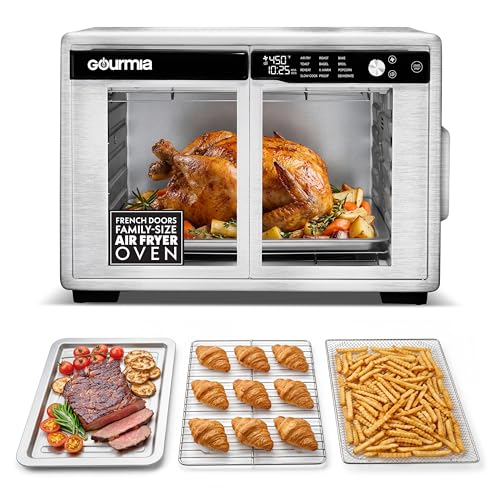
Gourmia French Door Air Fryer Oven – 37 Qt Large Capacity Convection Toaster Oven, FryForce 360°, Digital Display, 12 Cooking Presets, Dehydrate, Fits 13” Pizza, Dishwasher-Safe, Stainless Steel
12 Preset Cooking Functions for Total Versatility – Air fry, bake, roast, toast, broil, reheat, dehydrate, proof, slow…
As an affiliate, we earn on qualifying purchases.
As an affiliate, we earn on qualifying purchases.