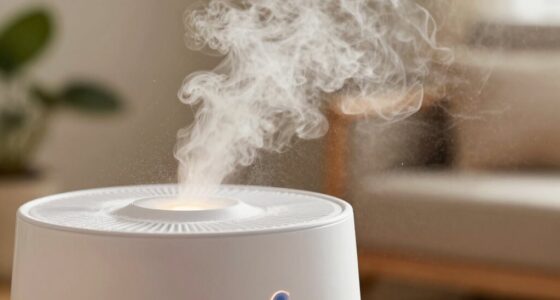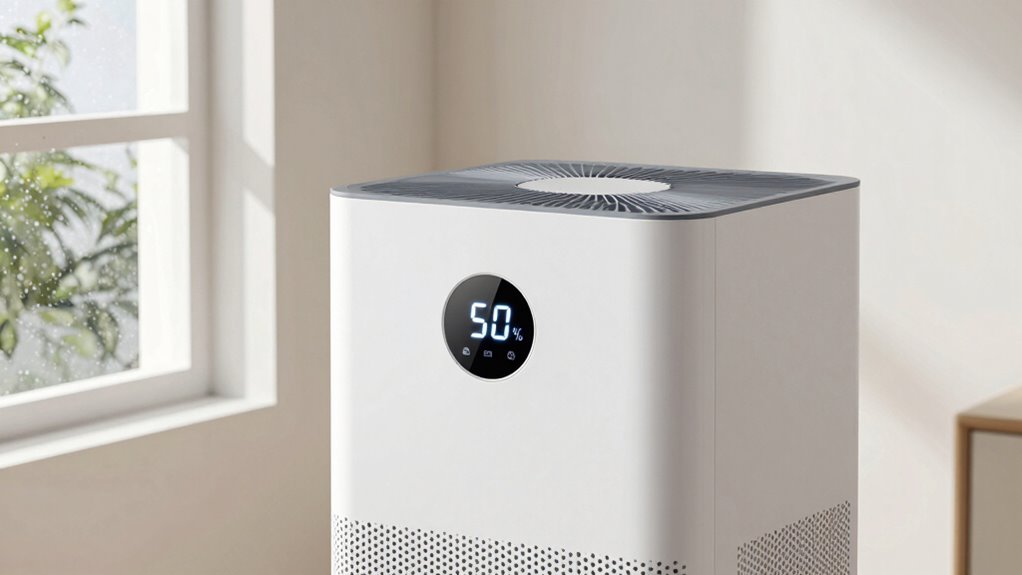
To stop mold growth, set your dehumidifier to a humidity level around 40%. This target prevents excess moisture that fosters mold while keeping the air comfortable. Regularly monitor and adjust the settings based on your environment, especially in damp or humid seasons. Maintaining this balance improves indoor air quality and protects your home. If you want to discover more tips on optimizing your dehumidifier, stay tuned for helpful insights.
Key Takeaways
- Set the dehumidifier to around 40% humidity to prevent mold growth effectively.
- Maintaining humidity between 30% and 50% creates an environment inhospitable to mold.
- Regularly monitor and adjust settings based on room moisture levels and seasonal changes.
- Proper humidity control reduces dampness, minimizing mold risk and promoting healthier indoor air.
- Consistent dehumidifier use at the right setting protects home structure and furnishings from mold damage.
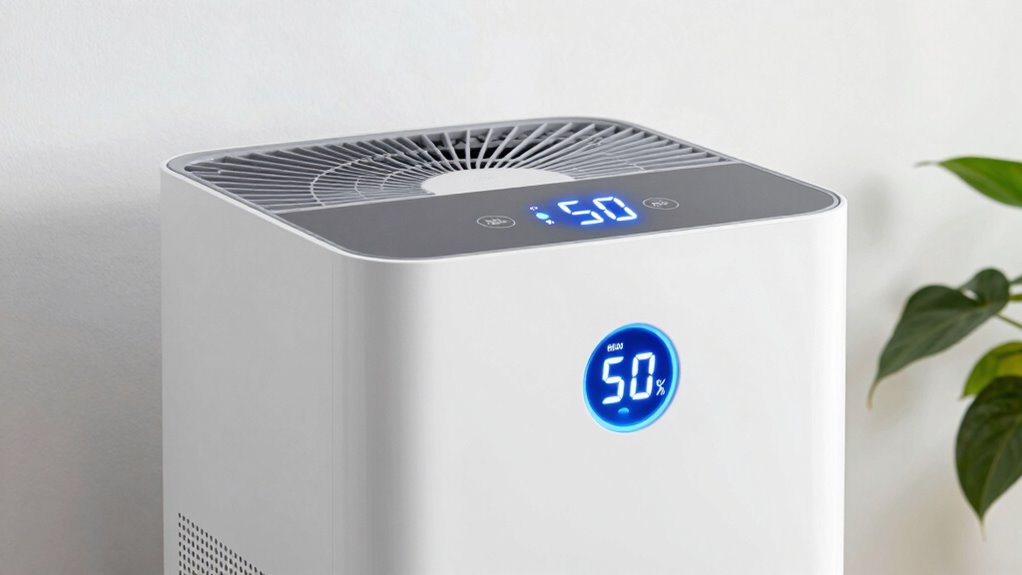
Have you ever wondered how to fine-tune your dehumidifier’s settings for the best air quality? If you’re using portable units, this becomes especially important since they’re often designed for flexibility and ease of use. Setting your dehumidifier correctly not only improves indoor air but also helps you save energy, which is essential if you want to keep utility bills low. The key is finding the right humidity level that prevents mold growth without wasting power.
Most portable units have a humidity control feature that allows you to set your desired moisture level. Experts generally recommend keeping indoor humidity between 30% and 50%. For preventing mold, aim for the lower end of that range, around 40%. When your dehumidifier is set to this level, it will run more efficiently, cycling on and off as needed, which promotes energy efficiency. This way, your unit isn’t working overtime, reducing power consumption without sacrificing air quality.
Set your dehumidifier to around 40% for efficient operation and mold prevention.
Adjusting the settings might seem simple, but it’s essential to monitor the room’s conditions, especially in humid environments or during rainy seasons. If you notice persistent dampness or mold, lowering the humidity target to around 40% can help. Conversely, if the air feels too dry or you notice static electricity, raising the target slightly can improve comfort. Remember that portable units are typically designed for convenience, so familiarizing yourself with their controls ensures you’re using them effectively. Understanding dehumidifier operation can help you optimize its performance and longevity. Additionally, choosing the right humidity level can contribute to a healthier indoor environment. Proper humidity control is also crucial for maintaining the integrity of your home’s structure and furnishings.
Maintaining proper humidity levels also contributes to a comfortable and healthy living environment, particularly for vulnerable populations such as the elderly or those with respiratory issues. Proper indoor air quality is essential for overall well-being and home safety.
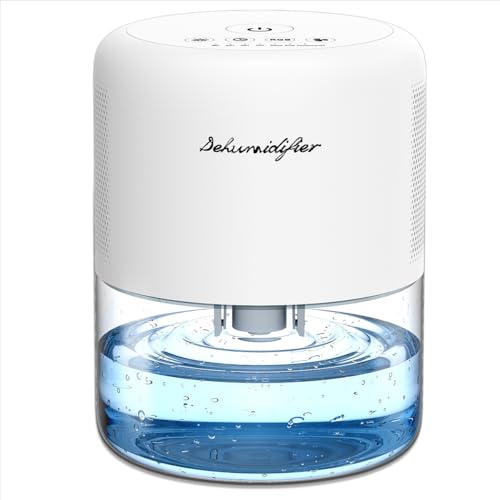
NeedDuck Dehumidifier for Home Small Quiet Dehumidifiers for 44OZ Water Tank Auto Defrost and Shutoff 10 Colors Light 4 Timer Options 3 Modes Portable Dehumidifiers for Bedroom Bathroom Closet RV
- Gentle, Low-Energy Dehumidification: Reduces humidity gradually and quietly
- Compact and Portable Design: Lightweight, small size for tight spaces
- Auto Defrost and Shutoff: Prevents frost buildup and overflow
As an affiliate, we earn on qualifying purchases.
As an affiliate, we earn on qualifying purchases.
Frequently Asked Questions
How Often Should I Empty the Dehumidifier’s Water Tank?
You should empty your dehumidifier’s water tank daily or when it’s full, depending on its capacity and how humid your space is. Regular water tank maintenance guarantees it runs efficiently and prevents overflow. Check the tank often, especially during high humidity months, to avoid mold or water damage. Always follow your dehumidifier’s instructions for peak performance based on its capacity and the moisture levels in your environment.
Can Dehumidifiers Operate Effectively in Low Temperatures?
Like a hardy explorer, your dehumidifier can operate effectively in low temperatures, but with limits. Low temperature operation may reduce dehumidifier efficiency, especially if it’s not designed for cold environments. To keep it working well, choose a model with a built-in defrost feature or low-temperature settings. Proper maintenance and placement help guarantee your dehumidifier continues to fight mold and moisture, even when temperatures dip.
Are There Specific Settings for Sensitive Environments Like Labs?
Yes, sensitive environments like labs require specific humidity control settings. You should use dehumidifiers with precise, adjustable humidity targets to prevent mold, bacteria, and equipment damage. Set the humidity levels lower than normal, typically around 40-50%, to maintain ideal conditions. Make certain your dehumidifier has filters and features suitable for sensitive environments, and regularly monitor and calibrate the settings to guarantee consistent, safe humidity levels.
How Long Does It Take for a Dehumidifier to Reduce Humidity?
It typically takes a dehumidifier anywhere from a few hours to a day to substantially lower humidity levels, depending on the room size and initial moisture. You’ll notice moisture control improving gradually as the device works. For rapid results, make sure your dehumidifier is appropriately sized for the space and keep doors and windows closed. Regularly monitor humidity levels to maintain a healthy environment and prevent mold growth.
Can Dehumidifiers Help With Indoor Dust and Allergens?
Surprisingly, your dehumidifier isn’t just for mold; it helps with airborne allergens and dust control too. By removing excess moisture, it makes dust particles and allergens settle faster, reducing their presence in the air. So, while you might think it’s only about humidity levels, your dehumidifier is secretly working to keep your indoor air cleaner and allergy-friendly, making your home a healthier place to breathe.
Conclusion
To keep mold at bay, set your dehumidifier to around 50% humidity. This target isn’t just a random number; it’s backed by science that shows mold struggles to grow below this level. Think of it as a shield, creating an environment where mold can’t thrive. By maintaining this setting, you actively protect your space, ensuring a healthier, mold-free home. Trust the science, and let your dehumidifier do the work.