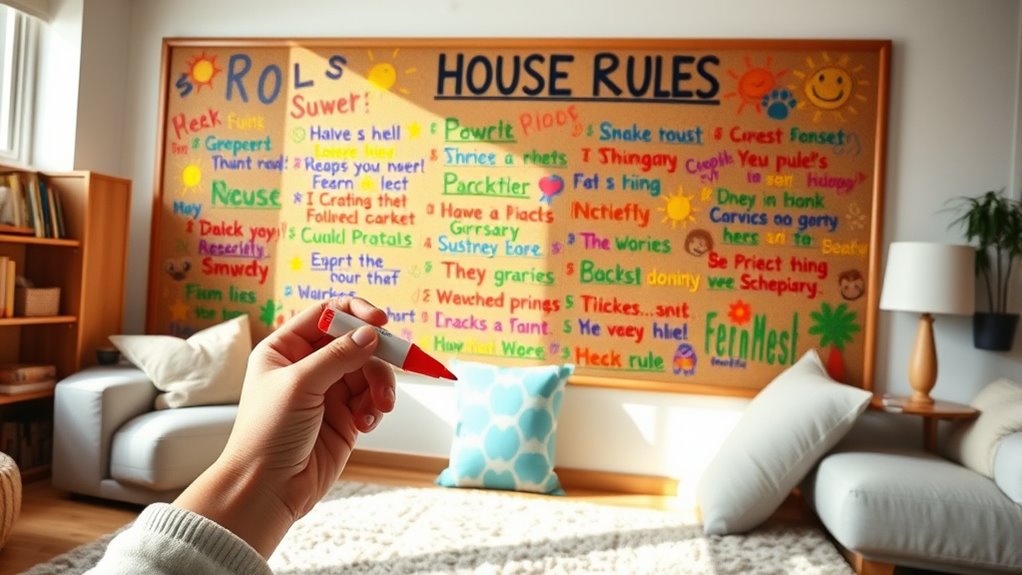

When you involve kids in writing house rules, they feel more responsible and willing to follow them. Encourage their input to set fair boundaries, and explain the reasons behind each rule to build understanding. Use open communication and positive reinforcement to support their cooperation. As your child grows, gradually include them in more detailed decisions to strengthen their sense of agency. Keep exploring ways to foster trust and accountability—there’s plenty more to discover!
Key Takeaways
- Involve children in discussing and setting house rules to foster ownership and responsibility.
- Use open, age-appropriate communication to explain rules and listen to kids’ opinions.
- Collaborate on boundaries like screen time to ensure fairness and mutual understanding.
- Reinforce rules with positive praise and consistent follow-through for better adherence.
- Gradually increase children’s participation as they mature to promote ongoing cooperation and accountability.

Have you ever wondered how kids can be more involved in setting household boundaries? “House Rules Kids Help Write” is a creative approach that encourages children to participate in shaping the rules they live by. When kids are actively involved in creating the rules, they’re more likely to follow them because they feel a sense of ownership. This process hinges on effective parental involvement and strong communication strategies. As a parent, your role isn’t just to impose rules but to guide your children through understanding why those rules matter.
To begin, you need to foster open lines of communication. Sit down with your kids and ask for their input on what they believe are fair boundaries. Use clear, age-appropriate language to explain why rules exist and how they help everyone live harmoniously. Listening carefully to their opinions shows respect and makes them feel valued. When children voice their ideas, acknowledge their feelings and provide gentle guidance to shape those ideas into reasonable boundaries. This collaborative approach builds trust and encourages ongoing dialogue, which is essential for effective communication strategies.
Foster open communication by listening to your child’s input and guiding them to understand household boundaries.
Parental involvement doesn’t mean dictating every detail, but rather guiding children toward understanding the purpose behind rules. For instance, if your child suggests a longer screen time, discuss the importance of balance and set limits together. This negotiation process not only teaches decision-making but also demonstrates that their opinions matter. When children see that their input influences household rules, they develop a sense of responsibility and respect for the boundaries set.
Consistency is vital. Regularly revisit the rules you’ve co-created to ensure they’re still relevant and fair. Use positive reinforcement—praising good behavior and adherence to rules—to motivate your child. If disagreements arise, stay calm and use communication strategies like active listening and empathetic responses to clarify misunderstandings. Explaining the reasons behind rules helps children internalize them, making compliance easier and more natural.
Additionally, understanding how children respond to positive reinforcement can strengthen adherence to household rules and promote cooperation. Furthermore, involve your children in the rule-writing process gradually, especially as they grow older. As they mature, their ability to understand complex concepts improves, allowing for more nuanced rules. This ongoing participation reinforces their sense of agency and encourages them to take responsibility for their actions.
Frequently Asked Questions
How Do I Ensure All Kids Feel Heard During Rule Creation?
You make sure all kids feel heard during rule creation by encouraging family participation and practicing effective communication. Sit down together and listen actively to each child’s ideas, showing genuine interest. Ask questions to clarify their thoughts and validate their feelings. Make sure everyone has equal opportunity to share, and incorporate their suggestions into the rules. This way, your kids feel respected, valued, and more committed to following the agreed-upon rules.
What if Siblings Disagree on Certain House Rules?
When siblings disagree on house rules, you can encourage them to practice conflict resolution by promoting open communication. Guide them to find common ground through siblings’ compromise, where each shares their perspective and works together to create a fair solution. Remind them that respecting each other’s opinions helps build trust and understanding, making it easier to agree on rules they all feel comfortable following.
How Often Should We Revisit and Revise the House Rules?
Think of your house rules as a garden needing seasonal care. You should revisit and revise them every few months, much like tending to your plants, to keep rule consistency and address growth. Your parental involvement is key—by involving your kids in these updates, you ensure the rules stay relevant. Regular check-ins help everyone stay on the same page, making the household a thriving, respectful space for all.
How Can I Encourage Responsible Rule Enforcement Among Kids?
You can encourage responsible rule enforcement by involving your kids in setting clear expectations and emphasizing family involvement. When they help create the rules, they’re more likely to follow them. Consistent consequences reinforce accountability, so consistently apply fair, predefined responses when rules are broken. Praise responsible behavior to motivate them. This approach fosters a sense of ownership and understanding, making rule enforcement a shared family effort.
What Are Some Age-Appropriate Rules for Younger Children?
For younger children, set clear, age-appropriate boundaries like consistent toddler routines, such as regular meal times and nap schedules. Keep rules simple and easy to understand, like “share toys” or “use kind words.” Use positive reinforcement to encourage good behavior. When boundaries are consistent, kids feel secure and know what to expect, making it easier for them to follow rules and develop responsible habits.
Conclusion
So, there you have it—house rules written by the real experts: your kids. Who knew that letting them help shape the rules would turn chaos into harmony? Now, instead of nagging about chores, you get to enjoy the sweet satisfaction of following the “kid-approved” rules you all happily created. Just remember, if the rules get broken, it’s all part of the plan—after all, what’s family life without a little playful rebellion?