To stop mold growth, you should set your dehumidifier to maintain indoor humidity between 40% and 50%. Keeping humidity within this range reduces moisture that mold needs to thrive. Regularly monitor the levels with a hygrometer, especially during seasonal changes, and adjust the settings as needed. Using automatic controls can help maintain these ideal conditions effortlessly. Want to learn more about perfect settings for your space? Keep exploring!

Get the little things that make your day delivered free with Prime
- Fast, free delivery on millions of items
- Prime Video, Amazon Music and more included
- Member-only deals all year
Key Takeaways
- Maintain indoor humidity between 40% and 50% to inhibit mold growth effectively.
- Use a hygrometer to regularly monitor and adjust dehumidifier settings accordingly.
- Set the dehumidifier to automatically maintain optimal humidity levels for mold prevention.
- Avoid setting humidity below 40%, which can cause dry skin and respiratory issues.
- Properly size and configure your dehumidifier to ensure consistent moisture control and mold prevention.

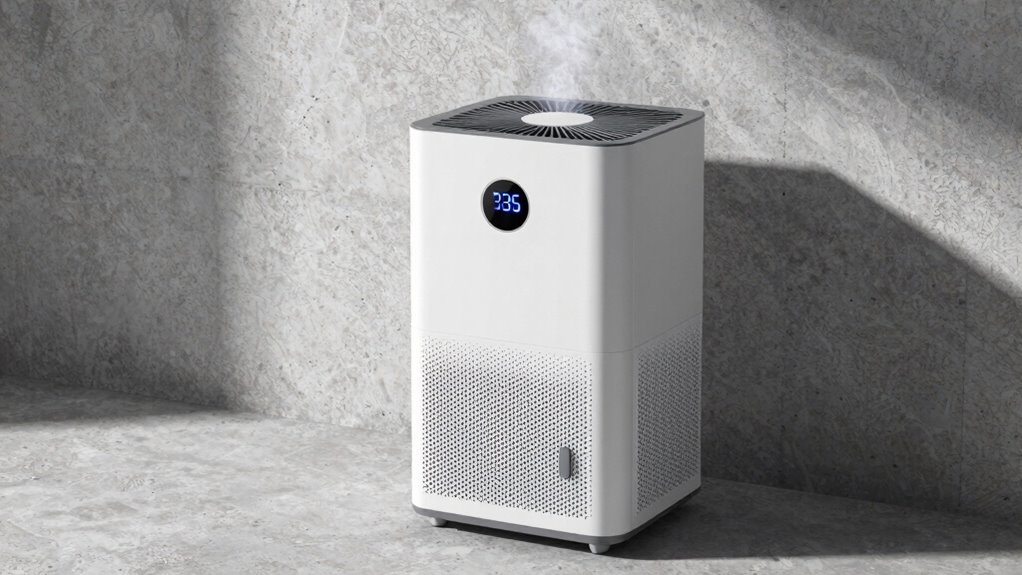
Choosing the right dehumidifier settings is essential for maintaining a comfortable and healthy indoor environment. When you set your dehumidifier correctly, you improve air quality, reduce moisture, and prevent mold growth. Proper humidity control not only keeps your space pleasant but also safeguards your health by limiting mold spores and dust mites. Additionally, setting your dehumidifier efficiently helps you conserve energy, cutting down on electricity bills while ensuring it runs only when needed. Monitoring humidity levels regularly helps you avoid over-drying or under-controlling moisture. You should aim to keep your indoor humidity between 40% and 50%. This range strikes a balance between comfort and preventing mold. If you set the dehumidifier too low, below 40%, you might over-dry the air, which can cause dry skin, respiratory issues, and discomfort. On the other hand, if you set it too high, above 50%, moisture may still linger, encouraging mold growth and worsening air quality. Regularly monitoring your indoor humidity with a hygrometer helps you fine-tune the dehumidifier’s settings, ensuring optimal performance. Proper humidity levels also support healthy child development, particularly in preventing mold-related health issues. Most dehumidifiers come with an automatic humidity control feature. When you activate it, the unit automatically adjusts its operation to maintain your preferred humidity level. This feature maximizes energy efficiency because the dehumidifier runs only as long as needed, avoiding unnecessary energy use. If your model lacks this feature, you should manually set the target humidity level and periodically check it, especially during seasonal changes when moisture levels fluctuate. Using a timer or scheduling function, if available, can further enhance energy savings by turning the unit on and off at specific times. Ensuring your dehumidifier capacity matches the size of your space also plays a key role in maintaining optimal humidity and air quality. Additionally, choosing a dehumidifier with energy-saving features can help reduce overall power consumption while maintaining ideal humidity levels. Being aware of humidity fluctuations caused by seasonal or weather changes can help you adjust settings proactively for consistent comfort.
dehumidifier with automatic humidity control
As an affiliate, we earn on qualifying purchases.
As an affiliate, we earn on qualifying purchases.
Frequently Asked Questions
How Often Should I Adjust My Dehumidifier Settings?
You should adjust your dehumidifier settings whenever you notice changes in humidity levels or air circulation. Use humidity sensors to monitor moisture consistently, aiming for 30-50% for mold prevention. If air circulation improves or worsens, tweak the settings accordingly. Regularly check and adjust to maintain ideal humidity, preventing mold growth. This proactive approach ensures your dehumidifier effectively manages moisture without overworking, keeping your environment healthy.
Can Dehumidifier Settings Vary by Room Type?
Ever wondered if your dehumidifier settings should differ by room type? Absolutely. Different rooms require tailored humidity levels for best dehumidifier efficiency and to maintain room-specific humidity. For example, basements might need lower humidity settings due to higher moisture levels, while bedrooms can be set slightly higher for comfort. Adjusting settings accordingly ensures better mold prevention and overall air quality in each space.
What Is the Ideal Humidity Level to Prevent Mold?
You should aim for a humidity level between 30-50% for effective mold prevention. Maintaining this range helps with humidity control, reducing excess moisture that mold needs to thrive. Keep your dehumidifier set within this range to actively prevent mold growth, especially in high-risk areas like basements and bathrooms. Consistent humidity control is key to keeping your home dry, healthy, and mold-free.
Do Different Dehumidifier Brands Have Different Recommended Settings?
Ever wondered if different dehumidifier brands recommend varying settings? Yes, they often do, because brand comparison shows each model has unique features and user preferences. Some brands might suggest a lower humidity level for mold prevention, while others offer customizable settings for comfort. You should always check the manufacturer’s instructions for your specific device to guarantee maximum performance and mold prevention. Adjusting settings based on your space’s needs is key!
How Do I Know if My Dehumidifier Is Working Properly?
You can tell your dehumidifier works properly if it effectively reduces humidity levels and prevents mold growth. Check the air filter regularly and keep it clean, ensuring peak air flow and efficiency. Monitor energy consumption comparison to see if it’s running efficiently without excessive power use. Additionally, observe if the unit operates quietly and maintains consistent humidity levels, indicating it’s functioning correctly and helping to prevent mold.
Conclusion
Think of your dehumidifier as a vigilant guard, constantly patrolling your home’s air. When you set it just right—around 50-60% humidity—it’s like giving that guard a clear line of sight, preventing mold from sneaking in. I once kept my basement at 55%, and the musty smell vanished. Keep an eye on those settings, and you’ll create a fortress against mold, turning your home into a fresh, healthy haven—just like a well-trained guard protects its territory.
Fall Picks
fall essentials
As an affiliate, we earn on qualifying purchases.