
For sparkling results every time, load your dishwasher carefully: place pots and pans on the bottom rack without blocking spray arms, and face dirty sides of plates toward the center with space between items. Position glasses upside down at an angle on the top rack, and arrange silverware with handles down in the basket to prevent nesting. Proper spacing and organization maximize water flow and detergent contact, leading to streak-free, spotless dishes. Keep exploring to learn more tips for perfect loading.
Key Takeaways
- Load large pots and pans on the bottom rack, ensuring they do not block spray arms for optimal cleaning.
- Face dirty sides of plates and bowls toward the center, spacing items to allow water flow and prevent overcrowding.
- Place silverware handles downward in designated baskets, mixing utensils to avoid nesting and improve water contact.
- Position glasses and cups upside down at an angle on the top rack, maintaining proper spacing for thorough rinsing.
- Avoid overfilling and organize items to promote even water flow and detergent distribution for sparkling results.
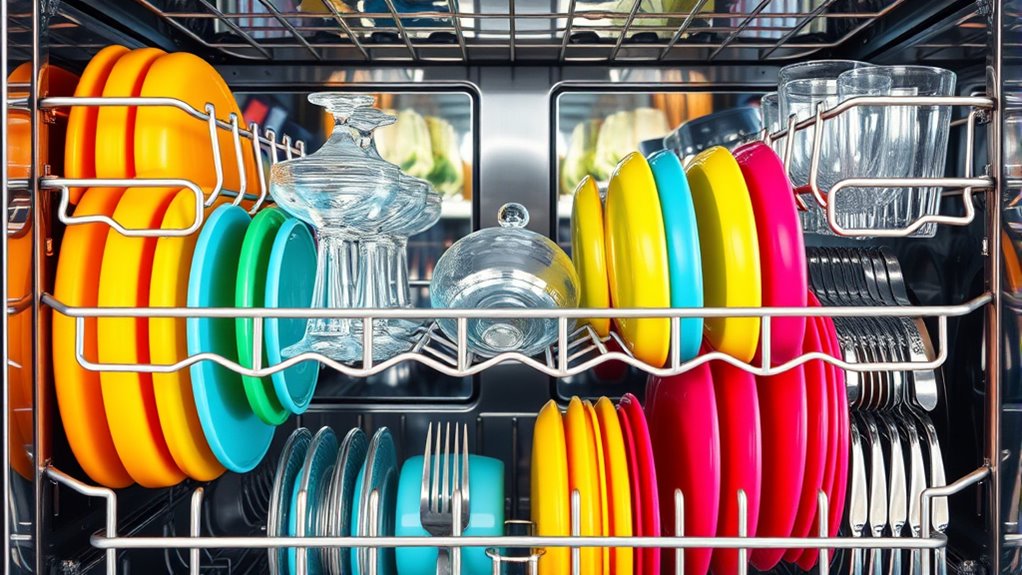
Loading a dishwasher efficiently can make a big difference in how well your dishes come out, and a well-designed dishwasher loading map simplifies the process. When you understand how to position your items properly, you maximize both detergent efficiency and rack organization, guaranteeing every cycle delivers sparkling results. The key is to load your dishwasher in a way that allows water and detergent to reach every surface without obstruction.
Start by placing larger items, like pots and pans, on the bottom rack. Make sure they don’t block the spray arms; this guarantees the water jets can reach all areas. When loading plates and bowls, face the dirty sides toward the center, where the water spray is most concentrated. Keep them spaced apart — overcrowding prevents water from reaching every surface, which can leave spots or residue. With proper rack organization, you create open pathways that promote even cleaning and help your dishes dry faster.
For silverware and small utensils, use the designated basket. Mix up the placement so that utensils don’t nest together, which inhibits water flow and detergent contact. Pointing handles downward generally helps with thorough cleaning and easier unloading. When it comes to glasses and cups on the top rack, place them upside down at an angle. This position allows water to drain freely and avoids trapping water inside, preventing spots and streaks. Ensuring that delicate items are properly spaced and secured prevents breakage and guarantees thorough cleaning.
A vital aspect of efficient dishwasher loading is understanding how rack organization impacts detergent efficiency. When you load with the goal of maximizing water flow, you also ensure that detergent distributes evenly. Avoid overfilling, which can cause detergent to linger in some areas and reduce cleaning effectiveness. Use the right amount of detergent—more isn’t always better—and consider your water hardness and soil level. When dishes are loaded correctly with ample space, the detergent can work at its best, dissolving fully and reaching every dish surface for a streak-free shine.

HOOBRO Shoe Storage Bench with Cushion, 39.4" L Entryway Bench with 12 Cubbies, Entryway Hall Tree with Storage, Shoe Cabinet with Coat Rack for Bedroom, Hallway, Holds up to 330 lb, BF112HX01G1
Multifunctional Shoe Cubby Bench: Are your shoes are piled up all over your entryway? This entryway cabinet will...
As an affiliate, we earn on qualifying purchases.
Frequently Asked Questions
Can I Load Plastic Utensils in the Dishwasher?
Yes, you can load plastic utensils in the dishwasher, but make sure they’re dishwasher-safe for plastic safety. Place plastic utensils on the top rack to avoid high heat that can cause warping or melting. Confirm they are securely positioned to prevent movement during washing. Proper utensil placement and using dishwasher-safe plastics help keep your utensils safe and your dishes sparkling every time.
How Often Should I Clean My Dishwasher Filter?
You should clean your dishwasher filter once a month to maintain ideal performance. Regular dishwasher maintenance prevents buildup of debris and ensures your dishes come out spotless. Create a cleaning schedule that aligns with your usage; if you run it daily, consider cleaning it every two weeks. Remove the filter, rinse it thoroughly, and scrub away any stubborn residue. Keeping up with this routine helps your dishwasher work efficiently and extend its lifespan.
Is It Safe to Overload the Dishwasher?
They say too many cooks spoil the broth, and the same applies to dishwashers. Overloading can hinder proper cleaning and may damage your appliance. Use smart loading techniques and good dishwasher organization by avoiding cramming dishes tightly together. Place items correctly and leave space for water and detergent to circulate. This guarantees sparkling results every time and keeps your dishwasher running smoothly without risking damage or poor cleaning.
What’s the Best Way to Remove Hard Water Stains?
To remove hard water stains, start by running your dishwasher with a cup of white vinegar on the top rack. For stubborn stains, use a commercial hard water removal agent or a baking soda paste. To prevent future stains, regularly clean your dishwasher, check the water softener if you have one, and avoid overloading. Consistent maintenance keeps your dishes spotless and protects against hard water buildup.
Do Different Detergents Impact Cleaning Results?
Did you know that using the right detergent can boost cleaning effectiveness by up to 30%? Different detergents definitely impact your cleaning results; some are more effective at cutting grease and removing stains. Eco-friendly options are now just as powerful, offering effective detergent efficiency without harmful chemicals. So, choosing the right detergent, especially eco-friendly ones, ensures your dishes come out spotless every time, saving you time and protecting the environment.

Sweetcrispy 3-Tier Shoe Rack Bench, Bamboo Entryway Storage Organizer, Shoes Stand for FrontDoor Entrance, Bedroom, Living Room, 286lb Capacity, 11.3 x 27.6 x 17.8 Inches, Chestnut
【Premium 100% Natural Material】Crafted from high-quality natural material, this shoe bench is sturdy and long-lasting. The waterproof finish...
As an affiliate, we earn on qualifying purchases.
Conclusion
Now that you have the dishwasher loading map, your dishes will shine brighter than ever. Think of it as a secret recipe for sparkling results—every time you load, you’re crafting perfection. Follow these simple steps, and watch your dishwasher work its magic. Remember, a well-loaded dishwasher is like a well-told story: it flows smoothly and ends beautifully. So go ahead, load with confidence, and let your sparkling dishes tell the tale!

HOMSHO 2-Tier Storage Bench, 39.4" Wide Shoe Bench with Padded Seat Cushion, Entryway Bench with 2 Barn Doors and Adjustable Shelf, White
More Comfortable Shoe Change Cabinet: With a 25 mm sponge cushion on the bench top, you can change...
As an affiliate, we earn on qualifying purchases.

Homleke Shoe Rack Bench with Flip-Top Storage, Solid Wood Entryway Bench with Cushion, Adjustable Shelf, for Hallway, Mudroom, Closet – Walnut, 39.4"
Ample Storage Space: Features 3 tiers to store up to 9-10 pairs of shoes, keeping your entryway tidy...
As an affiliate, we earn on qualifying purchases.