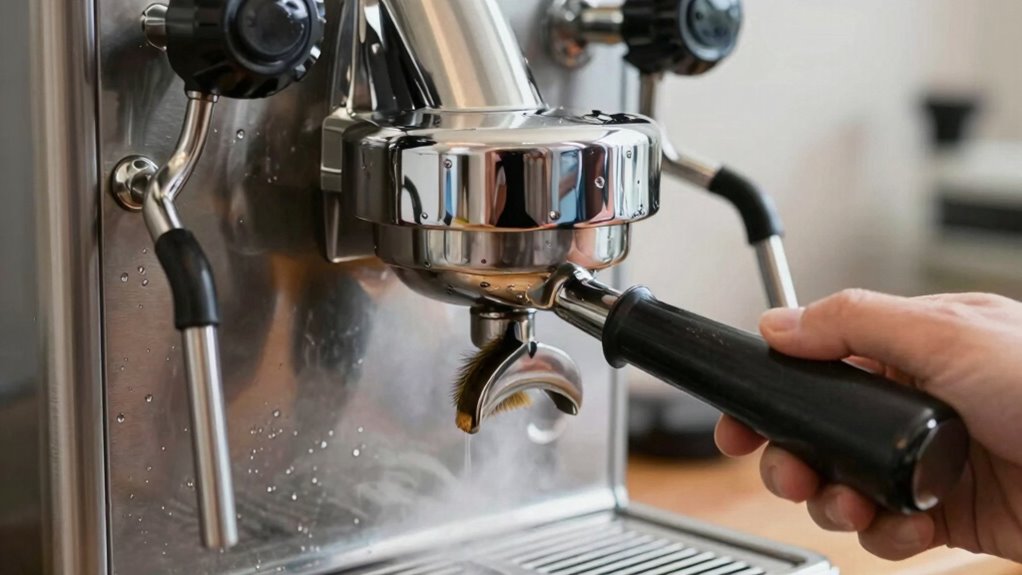

To save repairs, establish a backflush schedule based on your machine’s usage and water quality. Usually, aim to backflush with cleaning tablets weekly if you use the machine daily and biweekly if less often. Use a blind filter to thoroughly remove oils and residue that can cause clogs. Regular cleaning not only prevents costly repairs but also keeps your coffee tasting fresh. Keep going for tips on how to optimize your cleaning routine even further.

Get the little things that make your day delivered free with Prime
- Fast, free delivery on millions of items
- Prime Video, Amazon Music and more included
- Member-only deals all year
Key Takeaways
- Establish a regular backflushing schedule, typically after every 100-200 shots or daily for heavy use.
- Use appropriate cleaning tablets and a blind filter to effectively remove oils and residue.
- Perform a thorough backflush weekly or biweekly, depending on water hardness and machine usage.
- Incorporate routine cleaning of removable parts like portafilters and group heads to prevent buildup.
- Monitor machine performance and water quality to adjust cleaning frequency and prevent costly repairs.
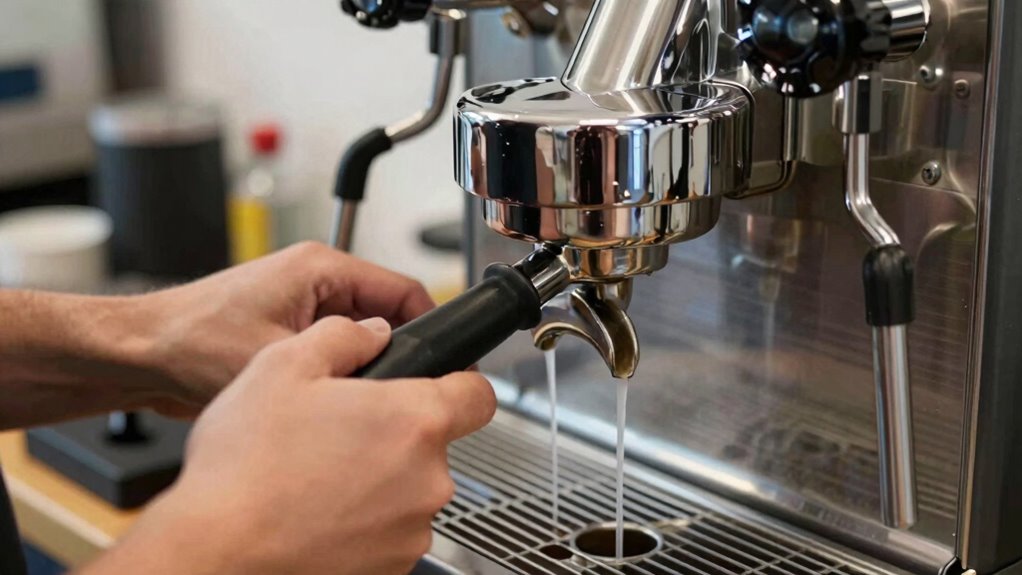
Regularly cleaning your espresso machine is essential to guarantee it continues brewing delicious coffee and functions properly. One of the key steps in maintaining your machine’s performance is understanding the importance of a consistent backflush schedule. This process involves cleaning the internal parts by forcing cleaning solution or water backward through the brew group, helping remove coffee oils, residue, and mineral buildup. A well-planned backflush routine prevents clogs and minimizes the risk of costly repairs down the line. To execute this effectively, you’ll need the right cleaning accessories, such as a blind filter, espresso machine cleaning tablets or powder, and a brush for scrubbing removable components. These accessories are designed to fit your machine and make the backflushing process straightforward and thorough. Proper maintenance also includes monitoring your water quality, as using hard water can accelerate mineral buildup and complicate cleaning efforts.
Regular cleaning and backflushing keep your espresso machine running smoothly and your coffee tasting its best.
The descaling process is another essential component of regular maintenance, especially if you live in an area with hard water. Hard water contains minerals that build up inside your machine’s boiler and water lines, which can impair its function and reduce the lifespan of its components. Descaling involves using a specialized solution to dissolve these mineral deposits, and it should be done periodically based on your water hardness and usage. Many espresso machines come with specific descaling instructions, so it’s crucial to follow the manufacturer’s recommendations and use appropriate descaling agents. Incorporating a descaling routine into your cleaning schedule not only prolongs your machine’s life but also ensures every cup of coffee tastes fresh and consistent.
When it comes to the actual cleaning accessories, you want to choose products that are compatible with your espresso machine. A blind filter, for example, allows you to backflush without coffee grounds, making it easier to clean the brew group thoroughly. Cleaning tablets or powders are formulated to break down stubborn coffee oils and residues, ensuring your machine stays spotless. Additionally, brushes and cloths designed for espresso machines help you clean removable parts like portafilters and drip trays efficiently, preventing buildup that can affect flavor and machine operation. Regular use of these accessories during your backflush and cleaning routines ensures that no residue remains, keeping your machine in pristine condition.
Establishing a consistent cleaning and backflush schedule is simple but fundamental. It helps you catch potential issues early, avoiding expensive repairs and ensuring each shot of espresso is as good as the first. Remember, the key is to stay disciplined—use your cleaning accessories properly, follow the descaling process as recommended, and stick to a routine that suits your water quality and usage. In doing so, you’ll enjoy years of trouble-free brewing and consistently excellent coffee.
espresso machine cleaning tablets
As an affiliate, we earn on qualifying purchases.
As an affiliate, we earn on qualifying purchases.
Frequently Asked Questions
How Often Should I Backflush My Espresso Machine?
You should backflush your espresso machine at least once a week if you use it daily, and more often if you notice a decline in performance. Follow a regular cleaning schedule to keep your machine in top shape. Incorporate maintenance tips like using the right cleaning agents and checking for buildup. This routine helps prevent costly repairs and guarantees your espresso always tastes fresh and flavorful.
What Cleaning Products Are Safe for My Machine?
Think of cleaning agents like a trusted shield for your espresso machine. You should use approved cleaning products and descaling solutions specifically designed for espresso machines. Avoid harsh chemicals that can damage internal parts. I once used a household cleaner, which caused a costly repair. Stick to manufacturer-recommended cleaning agents, and your machine will stay in top shape longer, preventing unnecessary repairs and ensuring perfect espresso every time.
Can Improper Cleaning Damage My Espresso Machine?
Yes, improper cleaning can damage your espresso machine. Neglecting regular backflushing and using unsuitable cleaning products can cause buildup, clogging, or corrosion. Poor water quality and stale coffee beans exacerbate these issues, leading to mineral deposits and flavor degradation. To avoid costly repairs, follow a proper cleaning schedule, use recommended products, and guarantee your water is clean and fresh, keeping your machine in ideal condition.
How Do I Troubleshoot Common Backflush Issues?
To troubleshoot common backflush issues, start by checking for clogs or blockages in the brew pathway. Make sure you’re following proper descaling procedures, as mineral buildup can cause problems. Consider water quality, since hard water can lead to scale. If your machine isn’t backflushing properly, clean the shower screen and group head thoroughly, and verify the gasket isn’t damaged. Regular maintenance helps prevent recurring issues and prolongs your espresso machine’s lifespan.
Is Professional Servicing Required for Deep Cleaning?
They say “prevention is better than cure,” and that’s true for your espresso machine too. Professional servicing isn’t always necessary for deep cleaning, but it’s highly recommended for thorough maintenance. Experts can reach hidden areas and guarantee your machine stays in top shape, preventing costly repairs. If you notice persistent issues or want peace of mind, investing in professional servicing for deep cleaning keeps your machine running smoothly and tasting great.
Conclusion
Think of your espresso machine as a trusty steed; regular backflushing is its daily grooming, keeping it swift and strong. Skipping this step is like neglecting your horse’s hooves—eventually, trouble will slow you down. By sticking to a cleaning schedule, you’re giving your machine the care it needs to perform at its best. Keep it well-maintained, and your mornings will always start with that perfect shot—smooth, reliable, and ready to ride.
NFL season / tailgating Picks
team gear
As an affiliate, we earn on qualifying purchases.