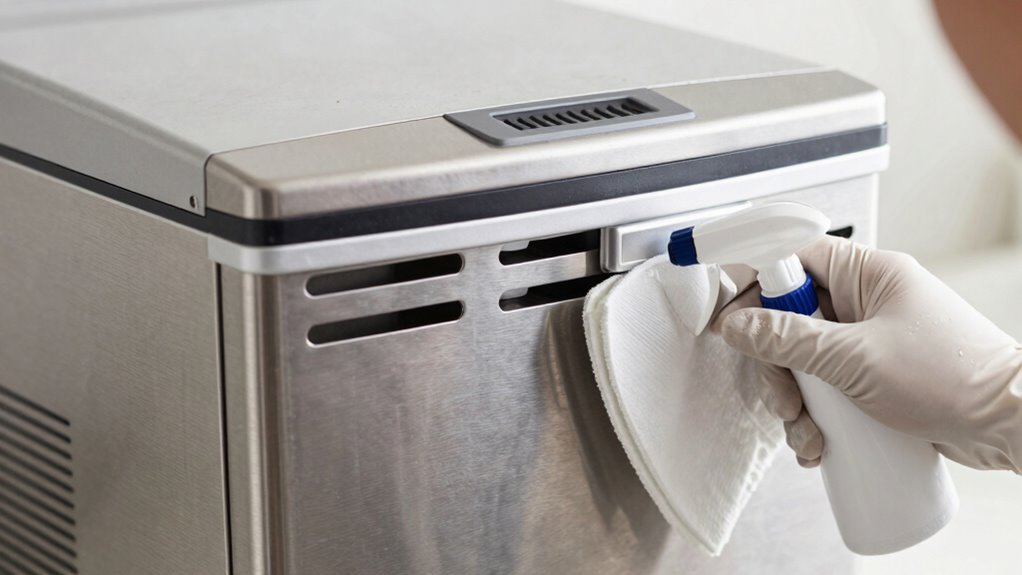

To clean your undercounter ice maker without damaging parts, unplug it first and remove ice and water from the reservoir. Use a soft cloth or sponge with a mild, non-abrasive cleaner, avoiding harsh chemicals. Focus on cleaning the ice bin, reservoir, and accessible parts carefully, following the manufacturer’s instructions. Regularly inspect and clean the water filter and drainage system to prevent buildup. For detailed tips and techniques, explore the next steps to keep your machine running smoothly.

Get the little things that make your day delivered free with Prime
- Fast, free delivery on millions of items
- Prime Video, Amazon Music and more included
- Member-only deals all year
Key Takeaways
- Unplug the unit before cleaning to prevent electrical damage and ensure safety.
- Use a soft cloth and mild cleaner, avoiding harsh chemicals that can harm internal components.
- Regularly inspect and clean the water filter and drainage system to prevent buildup and blockages.
- Follow manufacturer guidelines for cleaning internal parts to avoid damaging delicate mechanisms.
- Maintain a consistent cleaning schedule to extend the ice maker’s lifespan and ensure optimal performance.
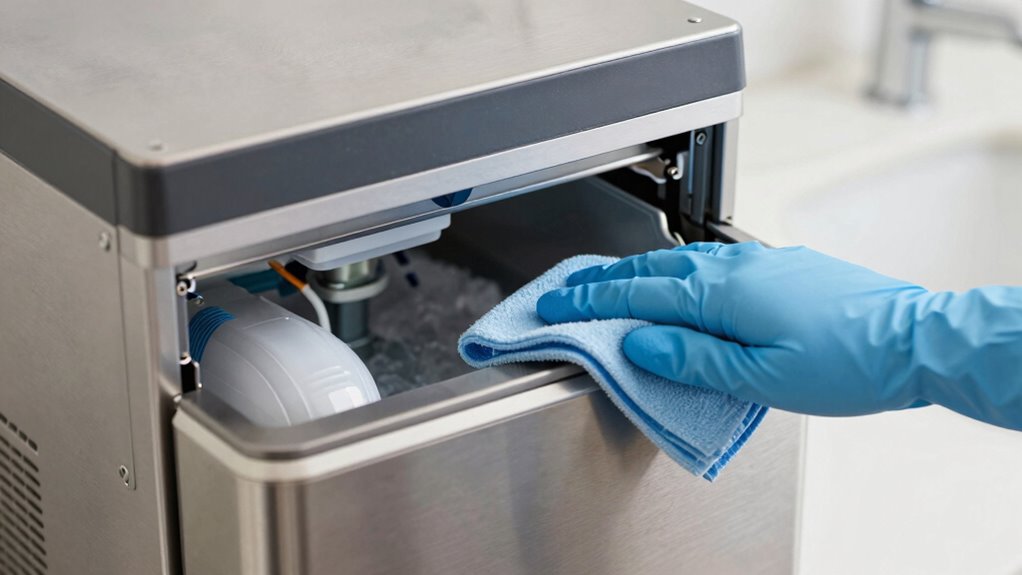
Cleaning your ice maker regularly is another vital aspect of ice machine maintenance. Instead of risking damage to sensitive parts, you want to approach cleaning with care. Start by unplugging the unit and removing any ice or water from the reservoir. Use a mild, non-abrasive cleaner designed for appliances, and avoid harsh chemicals that could damage internal components. Focus on cleaning the ice bin, water reservoir, and any accessible parts, taking care not to dislodge or damage delicate mechanisms. A gentle scrub with a soft cloth or sponge will do the trick for most surfaces. This routine helps prevent mold, bacteria buildup, and mineral deposits, all of which can compromise ice quality. Additionally, inspecting and cleaning the water filter ensures optimal water flow and ice clarity. Regularly checking the internal components can help identify potential issues before they become costly repairs. Proper cleaning techniques are essential to avoid damaging sensitive parts and maintaining the machine’s longevity. When it comes to cleaning, never forget to check the manufacturer’s instructions. Many ice makers have specific guidelines for cleaning and maintenance, including how to handle internal parts safely. Keeping the machine dry and free of debris is also key to preventing malfunctions. If your model has a drainage system, ensure it’s clear of obstructions to avoid water backup during cleaning. Implementing a proper cleaning schedule based on the manufacturer’s recommendations can extend the lifespan of your ice maker and ensure consistent performance.
undercounter ice maker cleaning kit
As an affiliate, we earn on qualifying purchases.
As an affiliate, we earn on qualifying purchases.
Frequently Asked Questions
How Often Should I Clean My Undercounter Ice Maker?
You should clean your undercounter ice maker every 3 to 6 months to guarantee ideal ice quality. Regular ice machine maintenance helps prevent mineral buildup and bacteria growth. Focus on water quality management by changing filters regularly and using clean water. Avoid harsh cleaners that might damage parts. Consistent cleaning keeps your ice maker running efficiently, extends its lifespan, and maintains the safety and clarity of your ice.
Can I Use Vinegar to Clean the Ice Maker?
Yes, you can use vinegar to clean your ice maker, but do so carefully to avoid damaging the ice mold and water filter. Mix equal parts vinegar and water, then run this solution through the system to remove mineral buildup. Afterward, flush with clean water to ensure no vinegar residue remains. Regular cleaning helps maintain clear ice, and replacing your water filter as recommended keeps the water quality ideal.
What Cleaning Products Are Safe for My Ice Maker?
You might worry about damaging your ice maker with harsh chemicals, but safe cleaning agents and sanitizing solutions are readily available. Use mild, non-abrasive cleaning products specifically designed for appliances, and avoid harsh chemicals like bleach or ammonia. Look for products labeled safe for ice machines. These guarantee thorough cleaning while protecting sensitive parts, helping your ice maker stay in top shape without risking damage or residual tastes.
How Do I Prevent Mineral Buildup in My Ice Maker?
To prevent mineral buildup in your ice maker, you should use water filtration to reduce minerals entering the machine. Regularly descaling your ice maker with a manufacturer-approved descaling solution helps remove existing deposits. Combine these techniques by maintaining clean filters and scheduling routine descaling. This approach keeps your ice maker running efficiently, prolongs its lifespan, and guarantees the ice remains clear and delicious.
Is It Necessary to Turn off the Unit Before Cleaning?
Think of your ice maker as a busy garden needing tender care; turning it off before cleaning is crucial. You prevent damage and guarantee safety, like shielding delicate plants from harsh winds. Follow your maintenance checklist and stick to the recommended cleaning frequency to keep everything running smoothly. Always power down the unit first—it’s the golden rule that keeps your ice maker healthy and your ice crystal clear.
Conclusion
Don’t let worries about damaging your undercounter ice maker prevent you from keeping it clean. With the right gentle cleaning methods, you can maintain its performance without risking costly repairs. Regular upkeep ensures fresh, crisp ice and extends your unit’s lifespan. So, even if you’re concerned about harming parts, remember that careful, proper cleaning is the key to enjoying reliable, hassle-free ice whenever you need it—without the stress of potential damage.
Halloween Picks
halloween
As an affiliate, we earn on qualifying purchases.