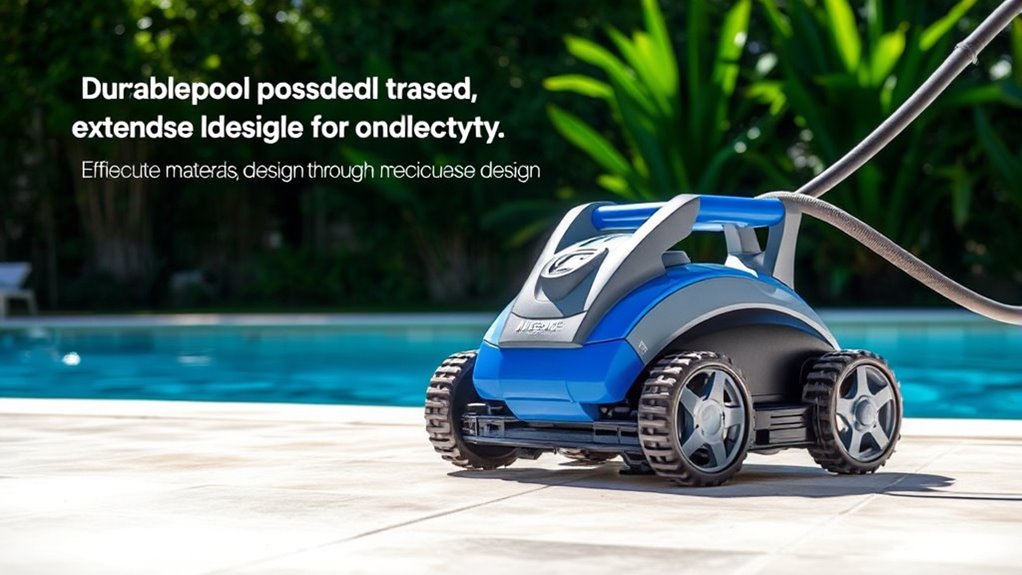

To extend the lifespan of your pressure pool cleaner, regularly inspect and maintain its parts, such as hoses, nozzles, and filters. Store it properly in a cool, dry place, avoiding harsh weather. Rinse it thoroughly before storing to prevent damage from chlorine or dirt. Stay aware of signs of wear and replace worn components promptly. Proper care and storage can save you money and keep your cleaner working smoothly for years—keep exploring for more expert tips.
Key Takeaways
- Regularly inspect and replace worn hoses, nozzles, and filters to prevent damage and maintain optimal performance.
- Store the cleaner indoors in a cool, dry environment, and rinse thoroughly before storage to avoid corrosion.
- Coil hoses loosely and store the unit upright to prevent kinks and reduce strain on components.
- Monitor pressure levels and clean nozzles regularly to prevent clogs and overworking the motor.
- Follow manufacturer maintenance guidelines and perform preventative care to extend the cleaner’s lifespan.

Pressure pool cleaners are crucial for keeping your pool spotless, but without proper care, their lifespan can be surprisingly short. To get the most out of your investment, you need to prioritize regular maintenance. This means inspecting hoses and connections regularly for leaks or cracks, and cleaning or replacing filters as needed. Small issues, like clogged nozzles or debris buildup, can reduce your cleaner’s efficiency and lead to premature wear. By staying on top of these tasks, you prevent minor problems from escalating into costly repairs or replacements. It’s also a good idea to check the pressure levels and ensure they’re within the recommended range, as operating outside these parameters can strain the motor and other components. Regular maintenance helps you identify potential problems early, saving you money and extending your pressure cleaner’s lifespan. Additionally, staying informed about pressure levels and how they impact your cleaner can help you optimize performance and prevent damage.
Proper storage plays an equally crucial role in maintaining your pressure pool cleaner. When you’re done using it, never leave the device lying in direct sunlight or exposed to harsh weather conditions. Excessive heat, rain, or snow can deteriorate seals, hoses, and electronic parts over time. Instead, store your cleaner in a cool, dry place, ideally indoors in a dedicated storage area or shed. Before storing, give your cleaner a thorough rinse with fresh water to remove chlorine, salt, or dirt that could cause corrosion or clogging. Coil the hoses loosely to prevent kinks or damage, and store the unit upright if possible to avoid unnecessary strain on hoses and connectors. Proper storage not only protects your cleaner from environmental damage but also keeps it in good condition, ready for use whenever you need it. Additionally, considering the sound science behind proper maintenance can help optimize the longevity and performance of your equipment. Regularly inspecting wear and tear on parts like hoses, nozzles, and brushes, and replacing them as needed, can prevent overworking the motor and extend the life of your cleaner. A little preventative care goes a long way in extending the lifespan of your pressure pool cleaner. Remember, your cleaner is an investment that deserves care and attention. By consistently maintaining it and storing it properly, you’ll enjoy a cleaner pool for years to come, saving money and avoiding the inconvenience of early replacements.
pressure pool cleaner hoses replacement
As an affiliate, we earn on qualifying purchases.
As an affiliate, we earn on qualifying purchases.
Frequently Asked Questions
Can Pressure Pool Cleaners Be Used in Saltwater Pools?
You might wonder if pressure pool cleaners work in saltwater pools. Yes, many models are saltwater compatible, but you should check for corrosion resistance features. Using a cleaner designed for saltwater guarantees it withstands the harsh environment, preventing damage. Look for models with corrosion-resistant materials to extend their lifespan. Proper maintenance and choosing the right cleaner will keep your pool clean and your equipment functioning well longer.
Do Pressure Pool Cleaners Require Special Storage Conditions?
You should pay attention to storage conditions and winterization for your pressure pool cleaner. After each use, rinse it thoroughly and store it in a cool, dry place, away from direct sunlight. Before winter, make certain you winterize your cleaner by draining any water to prevent freezing damage. Proper storage conditions help maintain its functionality and extend its lifespan, making sure it’s ready to go when you need it again.
How Often Should I Replace Parts of My Pressure Cleaner?
Your pressure pool cleaner works harder than a superhero, so knowing when to replace parts is key. Follow a regular replacement schedule for filters, brushes, and hoses—usually every 6 to 12 months. Maintenance tips like cleaning filters often and inspecting for wear can prevent major breakdowns. Staying on top of these replacements keeps your cleaner running smoothly longer, saving you money and hassle down the line.
Are There Eco-Friendly Maintenance Options for Pressure Pool Cleaners?
You can use eco-friendly maintenance options like biodegradable detergents to clean your pressure pool cleaner without harming the environment. Additionally, consider switching to solar-powered devices for some parts of your pool maintenance routine, reducing energy consumption. Regularly checking and maintaining your cleaner with these eco-friendly choices helps extend its lifespan while keeping your pool eco-conscious. These options make it easier to care for your equipment sustainably.
Can Pressure Pool Cleaners Operate Effectively in Outdoor Debris-Heavy Pools?
You might wonder if pressure pool cleaners can handle outdoor pools full of debris. The truth is, they excel at cleaning various pool surfaces, but heavy debris can challenge their efficiency. Regular debris removal before use helps prevent clogging and guarantees ideal operation. With proper maintenance and prompt debris clearing, your pressure cleaner can effectively keep your outdoor pool clean, even in debris-heavy environments, saving you time and effort.
pressure pool cleaner filters
As an affiliate, we earn on qualifying purchases.
As an affiliate, we earn on qualifying purchases.
Conclusion
By regularly inspecting and cleaning your pressure pool cleaner, you prevent buildup and wear. Using quality replacement parts and following manufacturer guidelines extends its life. Think of it like giving your cleaner a routine check-up — it keeps everything running smoothly. When you treat your cleaner well, it’s like investing in a trusty tool that’ll serve you longer and better, making pool maintenance easier and more effective in the long run.
pressure pool cleaner nozzle replacement
As an affiliate, we earn on qualifying purchases.
As an affiliate, we earn on qualifying purchases.
pool cleaner storage cover
As an affiliate, we earn on qualifying purchases.
As an affiliate, we earn on qualifying purchases.