To avoid etching concrete with a pressure washer, start with a lower pressure setting, ideally around 2,500 psi, and use a wider spray nozzle like 15 or 25 degrees for safety. Keep the nozzle moving in steady, sweeping motions and hold it 12–18 inches from the surface. Gradually increase pressure if needed, but never force the water onto one spot. Mastering nozzle choices and proper technique helps protect your surface—learn more to prevent damage.

Get the little things that make your day delivered free — and shop member deals
- Fast, free delivery on millions of items
- Access to Prime Big Deal Days deals on October 6–7
- Prime Video, Amazon Music and more included
Key Takeaways
- Use a pressure between 2,500–3,000 psi for concrete to prevent surface etching.
- Select wider spray nozzles (15°/25°) for safer, broader coverage.
- Keep the nozzle moving steadily and maintain 12–18 inches distance from the surface.
- Start with low pressure and increase gradually, avoiding high pressure in a single pass.
- Regularly adjust pressure settings based on surface response to ensure safety.
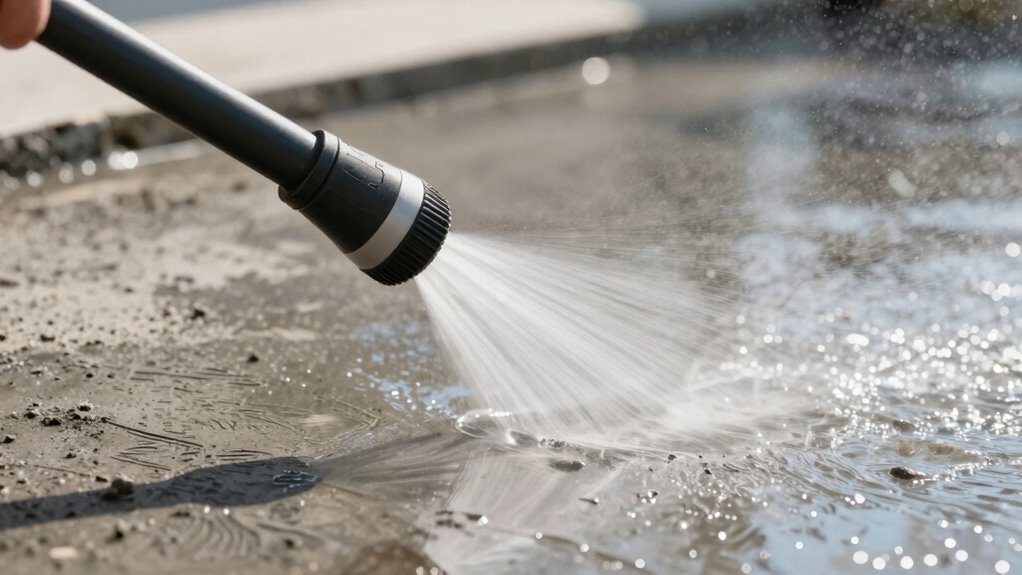
Have you ever wondered how a pressure washer can make cleaning outdoor surfaces so much easier? It’s all about the right balance of water pressure and nozzle types. When used properly, a pressure washer can blast away dirt, grime, and moss without damaging the surface. But if you’re not careful, it can also cause etching on concrete, leaving permanent marks. That’s why understanding how water pressure and nozzle types work together is key to avoiding damage.
Water pressure is the force at which water is expelled from the nozzle, measured in pounds per square inch (psi). Higher psi means more force, which can be effective for tough stains but risky for delicate surfaces. For concrete, you want enough pressure to clean effectively but not so much that it etches or damages the surface. Typically, a range of 2,500 to 3,000 psi is suitable for cleaning concrete without causing harm. Anything above that increases the risk of damaging the surface or creating unwanted etching.
Nozzle types play an essential role in controlling the water pressure and spray pattern. Different nozzles are designed for specific cleaning tasks, and choosing the right one helps prevent surface damage. A 0-degree nozzle produces a very concentrated, powerful stream ideal for stubborn stains but can easily etch concrete if used improperly. A 15-degree or 25-degree nozzle spreads the water more broadly, reducing the risk of damage while still providing enough force for cleaning. For general concrete cleaning, a wide-angle nozzle is usually the safest choice. Proper nozzle selection is crucial for achieving effective cleaning without harming your surfaces. Additionally, understanding pressure regulation can help you adjust the settings to suit different cleaning needs safely.
When you’re working with a pressure washer, start with a lower pressure setting and a broad nozzle to see how the surface responds. Gradually increase the pressure if needed, but always stay within the recommended psi range for concrete. Keep the nozzle moving in a steady, sweeping motion to avoid focusing too much force on one spot. Maintain a safe distance—generally 12 to 18 inches from the surface—to prevent concentrated pressure that could cause etching. Remember, it’s better to go over an area multiple times gently than to use excessive force once. Additionally, understanding surface pressure limits can help prevent accidental damage and ensure safe operation.
pressure washer for concrete cleaning
As an affiliate, we earn on qualifying purchases.
As an affiliate, we earn on qualifying purchases.
Frequently Asked Questions
Can Pressure Washers Damage Painted Surfaces?
Yes, pressure washers can damage painted surfaces if you’re not careful. The high pressure might strip paint, causing paint removal, or create surface etching, which damages the finish. To prevent this, keep the nozzle at a safe distance and use lower pressure settings. Test on a small, hidden area first, and avoid spraying directly at painted surfaces for an even clean without harming the paint.
What Safety Gear Should I Wear When Pressure Washing?
You should wear protective clothing and eye protection when pressure washing. Imagine the splash of debris or high-pressure spray hitting your skin—that’s a risk you avoid with sturdy gloves and long sleeves. Eye protection, like goggles or safety glasses, shields you from flying particles that could cause serious injury. Safety gear keeps you safe from unexpected hazards, ensuring your cleaning task is effective without risking your well-being.
How Often Should I Service My Pressure Washer?
You should service your pressure washer every three to six months, depending on usage frequency. Follow a regular maintenance schedule that includes checking hoses, replacing oil, and inspecting nozzles. Troubleshooting tips, like cleaning filters and examining for leaks, help guarantee peak performance. Regular servicing prevents damage, extends the machine’s lifespan, and keeps it functioning safely and efficiently for your cleaning tasks.
Can Pressure Washers Be Used on Delicate Materials?
Yes, you can use pressure washers on delicate materials, but you need to be careful. Use gentle cleaning by choosing lower pressure settings and a wider spray nozzle. Always check surface compatibility before cleaning, especially on fragile surfaces like wood, painted surfaces, or siding. Test a small, inconspicuous area first to prevent damage. Proper technique and settings help you clean effectively without risking etching or surface damage.
What Water Temperature Is Safest for Pressure Washing?
Using cold water is safest for pressure washing because it minimizes the risk of damaging delicate surfaces like painted or stained concrete. For example, a homeowner used hot water on their patio and caused etching, but switching to cold water enhanced cleaning efficiency without harming the surface. Generally, maintaining water temperature at cold or room temperature ensures effective cleaning while protecting your concrete from etching or damage.
Conclusion
To prevent etching your concrete, remember to adjust your pressure washer properly, use the right nozzle, and keep the spray moving smoothly. Each step safeguards your surface, each adjustment guarantees better results, and each motion protects your concrete from damage. By staying attentive, using the appropriate techniques, and maintaining your equipment, you’ll not only clean efficiently but also preserve the integrity of your concrete. Ultimately, careful preparation and mindful operation keep your concrete looking new and damage-free.
Fall Picks
fall essentials
As an affiliate, we earn on qualifying purchases.