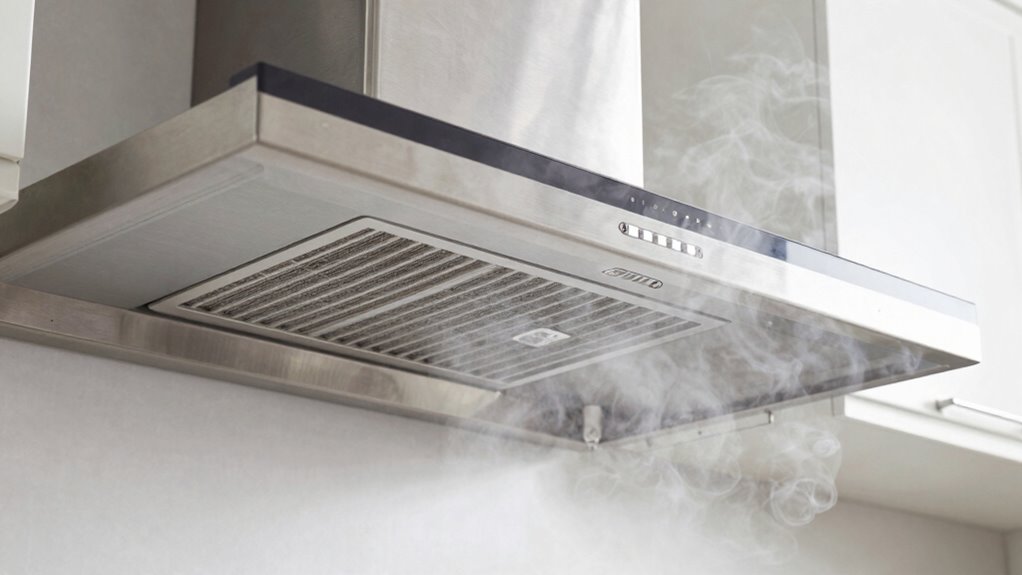

Recirculating range hoods often feel weak because their internal filters limit airflow, making it harder to remove smoke, steam, and odors effectively. As filters clog over time, airflow decreases further, reducing performance. Since these units don’t exhaust air outside, they rely solely on internal fans, which have inherent limits. Proper installation and regular maintenance can help, but understanding these constraints will reveal why upgrading or switching to ducted systems might be a better solution.

Get the little things that make your day delivered free with Prime
- Fast, free delivery on millions of items
- Prime Video, Amazon Music and more included
- Member-only deals all year
Key Takeaways
- Recirculating hoods rely on internal filters, which limit airflow strength and reduce effectiveness over time.
- Filter clogging decreases airflow, causing lingering odors, smoke, and steam.
- Poor installation, such as long or narrow duct paths, restricts airflow and diminishes performance.
- Recirculating systems depend on filters instead of physically exhausting air, making them inherently less powerful.
- Upgrading to ducted systems or improving installation can significantly boost venting strength.
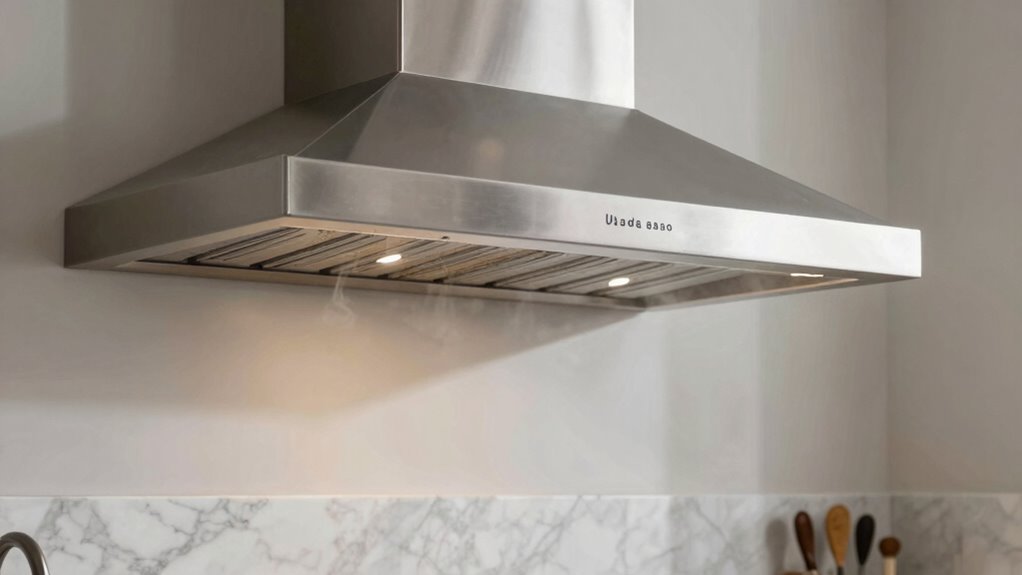
Have you ever wondered how to effectively vent your range hood? The key lies in understanding airflow performance and the challenges that come with proper installation. When your range hood feels weak or ineffective, it’s often because the airflow isn’t optimized. Venting options like recirculating systems, which filter air and then release it back into the kitchen, tend to seem less powerful than ducted setups. That’s because recirculating hoods rely solely on internal filters, which can’t move air as forcefully or efficiently as direct venting. As a result, you might notice lingering smells, smoke, or steam, making your cooking environment less comfortable.
One major reason for this perceived weakness is that recirculating hoods don’t have the same airflow performance as ducted systems. Ducted vents physically exhaust air outside, creating a stronger pull and faster removal of airborne contaminants. Recirculating hoods, on the other hand, depend on filters to trap grease and odors, which can clog over time and reduce airflow. This not only diminishes their effectiveness but also makes it feel like the vent isn’t doing its job. You might find yourself turning up the fan speed, only to see minimal improvement. This is a clear sign that the limitations of the design affect overall airflow and performance. Proper installation techniques are essential to maximize the airflow and efficiency of your vent system, and understanding airflow performance can help you troubleshoot issues more effectively. Moreover, choosing the right venting system suited to your kitchen layout can significantly improve overall kitchen air quality. Additionally, regular maintenance of filters and ductwork can prevent airflow restrictions and maintain optimal performance.
Recognizing these factors can also help you identify when your system may need upgrades or repairs, ensuring you maintain effective ventilation. Installation challenges also play a significant role in why recirculating vents often seem weak. Installing a ducted system properly requires routing ducts through walls or ceilings, which can be complicated and expensive. Many homeowners opt for recirculating models because they’re easier to install, especially in kitchens where running ducts isn’t feasible. However, improper installation—like short or poorly designed duct runs—can severely limit airflow. If the ductwork is too narrow, has sharp bends, or is excessively long, airflow gets restricted, making the vent appear underpowered. Even the placement of the vent can influence performance; if it’s positioned too far from the cooking surface or obstructed by cabinetry, airflow efficiency drops. For optimal performance, it’s important to consider the kitchen layout and how the vent’s placement affects airflow.
In essence, if your recirculating range hood feels weak, it’s often a combination of limited airflow performance and the installation challenges that come with non-ducted systems. To improve the situation, you might consider upgrading to a higher-capacity model, ensuring proper maintenance of filters, or exploring ducted options that can deliver stronger, more consistent airflow. Recognizing these factors helps you make smarter choices for a cleaner, more effective venting system in your kitchen.
As an affiliate, we earn on qualifying purchases.
Frequently Asked Questions
How Often Should I Replace My Range Hood Filter?
You should replace your range hood filter every 3 to 6 months for effective filter maintenance and odor elimination. Regularly check for grease buildup and odors to decide if it needs changing sooner. A clean filter guarantees your venting system works efficiently, reducing odors and airborne particles. If you notice decreased airflow or persistent smells, it’s time to replace the filter to keep your kitchen environment fresh and healthy.
Can Recirculating Hoods Improve With Better Filters?
Yes, upgrading to a better filter can improve recirculating hoods by increasing filter efficiency, which helps trap more grease and odors. While it won’t match the performance of vented hoods, a high-quality filter enhances air quality inside your kitchen. Regularly replacing filters guarantees peak efficiency, so you get better airflow and cleaner air. Keep an eye on filter condition to maintain the best possible performance from your recirculating range hood.
Are There Noise Differences Between Vented and Recirculating Hoods?
Sure, vented hoods generally hum louder, but at least they don’t sound like a hairdryer on steroids. Recirculating hoods often boast quieter noise levels, but their sound quality can feel tinny or cheap, making you wish for a jet engine instead. If you crave peace and quiet, a vented hood might be your best bet, even if it comes with a bit more noise.
Is Duct Size Important for Optimal Venting Performance?
Yes, duct size is vital for ideal venting performance because it directly affects airflow efficiency. If your duct is too small, it restricts airflow, making your range hood less effective at removing smoke and odors. Conversely, a properly sized duct allows for smooth, efficient airflow, enhancing venting performance. Ensuring your duct size matches the manufacturer’s recommendations helps your range hood operate at its best, keeping your kitchen cleaner and safer.
Can I Upgrade My Recirculating Hood to Vented?
You can upgrade your recirculating hood to vented, but it’s not always straightforward. Coincidentally, doing so improves filter maintenance and air quality, making your kitchen safer and cleaner. You’ll need to install ductwork and guarantee proper venting. Remember, vented systems are more effective at removing odors and smoke, but they require professional installation and regular maintenance to keep filters clean and airflow ideal.
Conclusion
If you’re relying on recirculating range hoods, you might notice they don’t clear smoke or odors as effectively as vented models. Surprisingly, studies show vented hoods can remove up to 90% of airborne grease and odors, while recirculating types often remove less than 50%. Upgrading to a vented system not only boosts your kitchen’s air quality but also makes cooking a more comfortable experience. Don’t settle for weak airflow—your kitchen deserves better ventilation.
NFL season / tailgating Picks
team gear
As an affiliate, we earn on qualifying purchases.