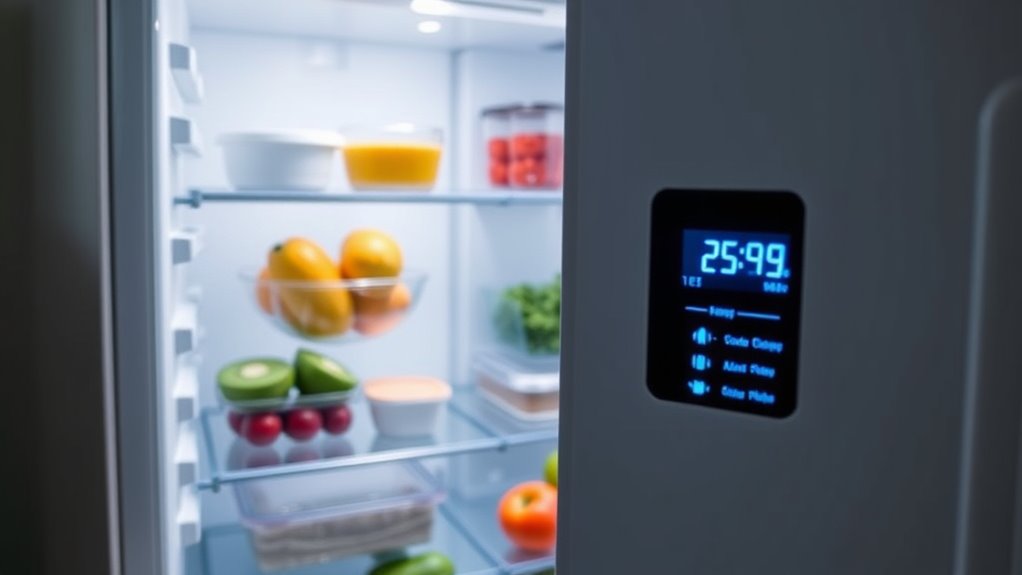

To stop spoilage and keep your food safe, set your refrigerator temperature around 37°F (3°C) and the freezer at 0°F (-18°C). Using a thermometer inside helps you monitor and maintain these temperatures, preventing bacteria growth and spoilage. Proper airflow, door management, and avoiding overloads support consistent cooling. Keeping these factors in check guarantees your fridge stays at the ideal level. Continue to explore how fine-tuning your settings can enhance food safety and efficiency.

Get the little things that make your day delivered free — and shop member deals
- Fast, free delivery on millions of items
- Access to Prime Big Deal Days deals on October 6–7
- Prime Video, Amazon Music and more included
Key Takeaways
- Maintain the refrigerator temperature around 37°F (3°C) to prevent bacterial growth and spoilage.
- Use a thermometer to monitor and ensure consistent temperature, especially near the middle of the fridge.
- Avoid frequent door openings and overloading to promote proper air circulation and even cooling.
- Keep door seals tight and clean to prevent cool air leaks that can raise temperatures.
- Regularly check and adjust settings to stay within the safe range, preventing spoilage and ensuring food safety.
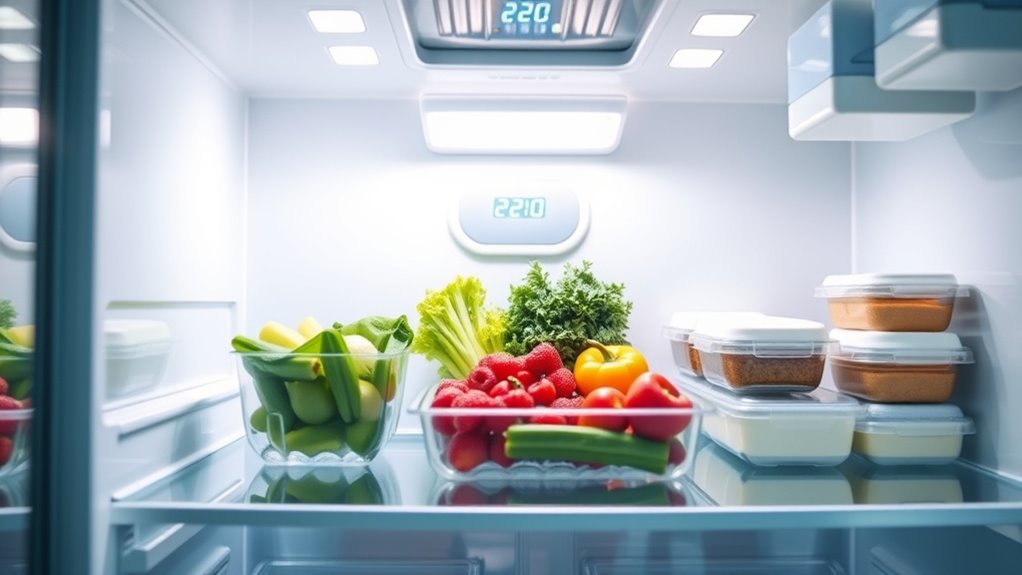
Maintaining the right refrigerator temperature is essential to keeping your food fresh and safe. When your fridge operates at the correct setting, you reduce the risk of bacteria growth and spoilage, making sure every item stays as fresh as possible. The recommended temperature for most refrigerators is around 37°F (3°C), with the freezer ideally set at 0°F (-18°C). Staying within these ranges ensures your food remains safe to consume while also supporting energy efficiency. When your fridge is too cold, you might be wasting energy and risking freezer burn on perishables. Conversely, if it’s too warm, bacteria can multiply quickly, leading to foodborne illnesses and waste. Proper temperature regulation not only safeguards food safety but also helps cut down on energy costs. When your refrigerator is set too cold, it has to work harder to maintain that temperature, which increases energy consumption and raises your utility bills. On the other hand, setting it too warm can cause your appliance to run excessively as it struggles to keep everything cool, also wasting energy. Finding that perfect balance allows your fridge to operate efficiently without overworking, saving you money and reducing your carbon footprint. You can easily check your refrigerator’s temperature with a simple thermometer placed inside, ideally near the middle of the main compartment. Regularly monitoring it ensures you catch any fluctuations early and adjust the settings accordingly. Additionally, understanding the importance of proper airflow within the fridge can help prevent uneven cooling and spoilage, which is why air circulation is a key factor in maintaining optimal temperatures. Another key to maintaining proper temperature is avoiding frequent door openings and keeping the door seal tight. Every time you open the fridge, warm air enters, which can temporarily raise the temperature inside. If your door seal isn’t airtight, cool air escapes, forcing the compressor to work harder. This not only impacts food safety but also decreases energy efficiency. Keep an eye on the door gasket and clean it periodically to prevent leaks. Additionally, avoid overloading your fridge, as overcrowding prevents proper air circulation, leading to uneven temperatures and potential spoilage.
digital refrigerator thermometer
As an affiliate, we earn on qualifying purchases.
As an affiliate, we earn on qualifying purchases.
Frequently Asked Questions
How Often Should I Check My Refrigerator’s Temperature?
You should check your refrigerator’s temperature at least once a week. Place your thermometer in the middle of the fridge for accurate readings and guarantee it’s positioned away from the door or vents. Regularly calibrate your thermometer if you notice inconsistent readings. This helps maintain a consistent temperature, preventing spoilage and keeping your food fresh. Consistent checks make it easier to adjust and keep your fridge functioning at its best.
What Are Signs My Refrigerator Is Too Cold?
Think of your fridge like a delicate garden; if it’s too cold, it’s like frostbite for your produce. Signs your fridge is too cold include dairy spoilage faster than usual and fruit freezing or developing ice crystals. You might notice slimy or spoiled dairy or frozen fruit that loses flavor and texture. Keep the temperature just right to preserve freshness and prevent spoilage.
Can Improper Temperature Cause Foodborne Illnesses?
Yes, improper temperature control can cause foodborne illnesses. When your fridge is too warm, bacteria grow rapidly, increasing health risks. Conversely, if it’s too cold, food can freeze prematurely, affecting quality. For food safety, keep your refrigerator at the ideal temperature—around 37-40°F (3-4°C)—to prevent harmful bacteria from thriving. Consistent temperature control is key to ensuring your food stays safe and fresh.
How Does Door Opening Affect Refrigerator Temperature?
It’s a common belief that opening your fridge too often raises its temperature, and research supports this. When you open the door, warm air enters, disrupting the door seal and increasing interior humidity. This forces the fridge to work harder to maintain a safe temperature, risking spoilage. To keep your fridge cool, minimize door openings, ensure the door seal is tight, and avoid frequent temperature fluctuations.
Are There Different Recommended Temperatures for Specific Foods?
You should consider different recommended temperatures for specific foods to optimize food storage. For example, keep fresh produce in higher humidity zones, meats in colder areas, and dairy at consistent fridge temperatures. Temperature zones within your refrigerator help prevent spoilage and extend freshness. Adjust your settings accordingly, ensuring each food type stays within its ideal temperature range. This personalized approach keeps your food safer and fresher longer.
Conclusion
Think of your refrigerator as a treasure chest, where the right temperature keeps your food fresh and valuable. When you set it too cold or too warm, you’re risking spoilage like a ship sailing off course. Find that perfect sweet spot—around 37°F (3°C)—and keep your food safe and delicious. By fine-tuning the temperature, you’re steering your kitchen’s ship smoothly through the sea of freshness, avoiding the storm of waste and spoilage.
NFL season / tailgating Picks
team gear
As an affiliate, we earn on qualifying purchases.