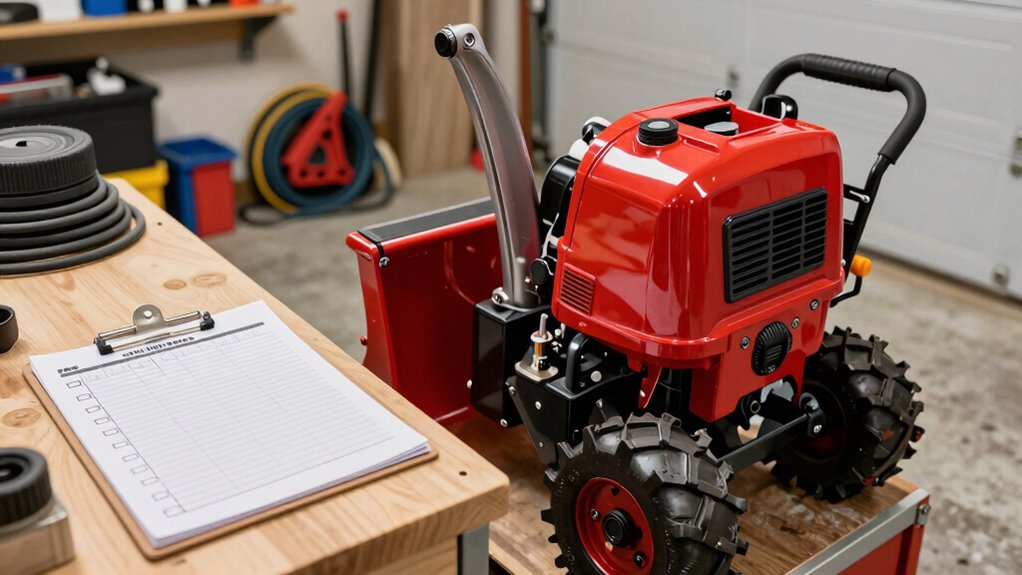

Before the first storm hits, thoroughly inspect your snow blower. Drain old fuel and refill with fresh gasoline mixed with stabilizer, check and top off oil, and change it if dirty. Clean and sharpen blades, lubricate moving parts, and inspect belts and safety features. Also, test the electric start and make certain tires or tracks are properly inflated. Taking these steps now helps prevent breakdowns and guarantees your snow blower’s ready to perform reliably when the snow falls—keep going to discover more tips.

Get the little things that make your day delivered free with Prime
- Fast, free delivery on millions of items
- Prime Video, Amazon Music and more included
- Member-only deals all year
Key Takeaways
- Drain old fuel and refill with fresh gasoline mixed with fuel stabilizer to prevent engine problems.
- Inspect and sharpen blades, clean debris, and lubricate moving parts for optimal performance.
- Check tires or tracks for proper inflation, test electric start, and review safety features.
- Consult the manufacturer’s manual for model-specific maintenance and follow preventive measures.
- Perform a test run in a controlled area to identify any irregularities before the first snowfall.
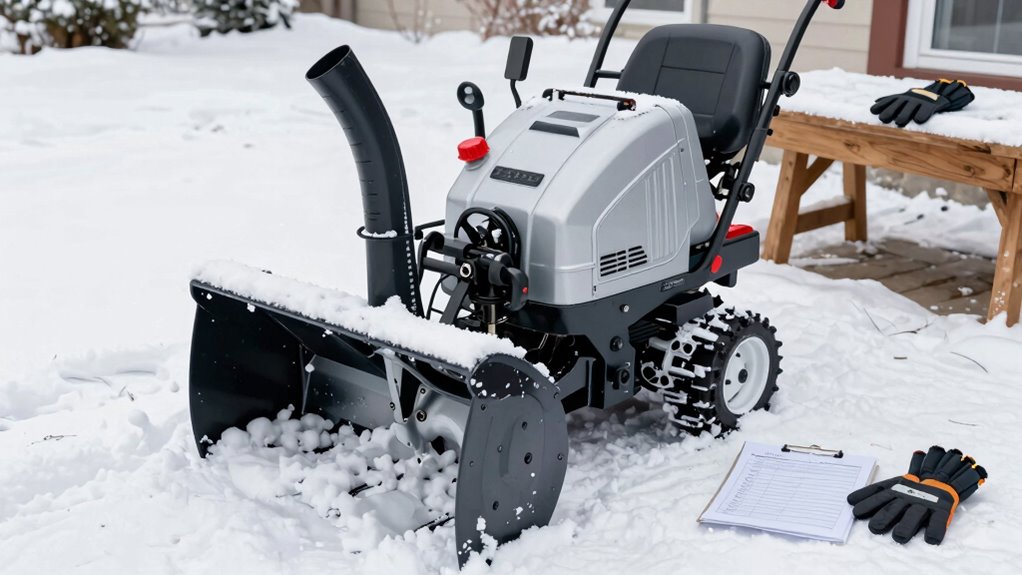
As winter approaches, it’s crucial to prepare your snow blower to guarantee it works efficiently when you need it most. Proper snow blower maintenance now can save you from frustrating breakdowns during the first storm and ensure you stay safe outside. Starting with a thorough inspection, check the fuel tank. If you stored fuel from last season, drain it and refill with fresh gasoline blended with a fuel stabilizer. Old fuel can cause engine problems, so this step helps keep your snow blower running smoothly. Also, inspect the oil level, topping it off if necessary, and change the oil if it looks dirty. Clean oil helps your engine perform better and extends its lifespan, contributing to overall winter safety.
Prepare your snow blower now to prevent breakdowns and ensure safe, efficient snow removal during winter storms.
Next, examine the auger and impeller for any signs of damage or obstruction. Clear away any debris, ice, or snow that’s stuck, and make sure the blades are sharp. Sharp blades make snow clearing easier and reduce strain on the engine. Lubricate all moving parts, including the chute and scraper, to prevent rust and guarantee smooth operation during heavy snowfall. Don’t forget to inspect the drive belts for wear or cracks, replacing them if needed to prevent sudden breakdowns when you’re pressed for time. Regularly monitoring your equipment’s condition is essential for reliable performance during winter storms. Additionally, consider checking the manufacturer’s manual for specific maintenance recommendations tailored to your model.
Check the tires or tracks, depending on your model, ensuring they’re properly inflated or tensioned. Proper traction is essential for safe operation, especially on icy or uneven surfaces. Test the electric start if your model has one, and keep the cord or battery charged. Also, review your snow blower’s safety features, such as the shield and control handles, making sure they’re secure and functioning correctly. Safety should always be your priority, and a well-maintained machine reduces the risk of accidents. Additionally, understanding the importance of preventive maintenance can help you avoid costly repairs and extend the lifespan of your snow blower. Regularly inspecting and cleaning your equipment can also prevent corrosion and other damage caused by harsh winter conditions.
Finally, give your snow blower a test run in your driveway or garage. Start it up and let it run for a few minutes to identify any unusual noises or vibrations. This quick check can reveal issues before the first snowfall, saving you time and trouble. Keep a maintenance kit handy, including tools, spare shear pins, and lubricants, so you’re ready for quick repairs if needed. By investing a little time now into snow blower maintenance, you’ll be better prepared for winter storms and can focus on staying safe while clearing snow. Proper prep isn’t just about convenience; it’s about confirming your safety and the reliability of your equipment during the harshest weather conditions.
As an affiliate, we earn on qualifying purchases.
Frequently Asked Questions
How Often Should I Change the Oil in My Snow Blower?
You should change the oil in your snow blower every season or after about 25 hours of use to keep it running smoothly. Regular snow blower maintenance, including oil changes, guarantees peak performance during winter storms. If you notice dark or gritty oil, it’s time for a change. Proper seasonal preparations help prevent breakdowns and extend your snow blower’s lifespan, so don’t skip this essential maintenance step.
Can I Use Regular Gasoline in My Snow Blower?
Yes, you can use regular gasoline in your snow blower, but it’s best to improve performance with fuel additives that prevent gunk buildup. Always check your owner’s manual for the recommended octane level. To keep your engine in excellent condition, consider engine tuning and using fresh, high-quality fuel. Proper preparation ensures your snow blower starts smoothly and works efficiently when you need it most.
What Type of Snow Is Best for Testing the Blower?
You should test your snow blower with light, fluffy snow, which has low snow consistency and low snow density. This type of snow flows easily through the auger and chute, helping you identify any issues without overburdening the machine. Steer clear of wet, heavy snow initially, as its high density can strain the blower. Starting with easier snow guarantees smoother operation and helps you fine-tune your equipment before tackling heavier storms.
How Do I Store My Snow Blower During Off-Season?
Think of your snow blower as a loyal steed; it needs proper winter storage to stay strong. During the off-season, perform off-season maintenance—drain fuel, change oil, and clean parts. Store it in a dry, sheltered spot, away from the elements, just like safeguarding a trusted companion. Cover it with a tarp for extra protection, ensuring it’s ready to conquer the snow again whenever winter returns.
Is It Necessary to Sharpen the Auger Blades Regularly?
Yes, it’s necessary to sharpen the auger blades regularly for *ideal* snow blower performance. Sharp blades improve cutting efficiency and reduce strain on the motor. Additionally, check blade alignment during maintenance to *guarantee* even snow removal and prevent uneven wear. Proper auger maintenance, including sharpening and alignment, keeps your snow blower running smoothly, extends its lifespan, and makes clearing snow quicker and easier when the storm hits.
Conclusion
Now that you’re all set with your snow blower, you’re practically invincible against winter’s icy grip—until the first snow hits and you realize you forgot to actually, you know, turn it on. But hey, at least you’ll look good trying to start it, right? So, enjoy your well-prepped machine, because nothing says “winter warrior” like frantically pulling cords while snow piles up. Stay warm, stay vigilant, and maybe keep that shovel handy just in case.
Fall Picks
fall essentials
As an affiliate, we earn on qualifying purchases.