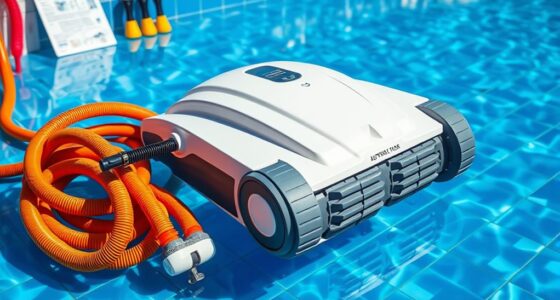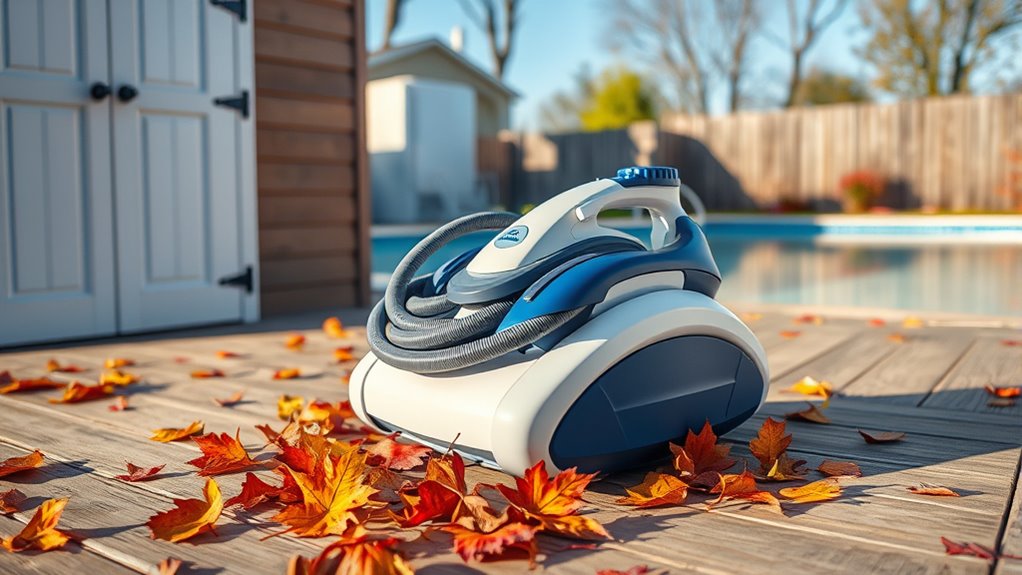

To store your suction pool cleaner properly in the off-season, start by thoroughly cleaning all parts, removing dirt, leaves, and algae. Disassemble the cleaner following the manufacturer’s instructions, then store the components in a cool, dry, and climate-controlled area away from direct sunlight. Coil hoses loosely and check for damage before storage. Ensuring all parts are dry and in good condition helps prevent mold and damage. Keep reading for detailed tips to extend your cleaner’s lifespan.
Key Takeaways
- Thoroughly clean and rinse all parts to remove debris, dirt, and algae before disassembly.
- Disassemble the cleaner following manufacturer instructions and store components in a dry, cool, and climate-controlled environment.
- Coil hoses loosely, avoiding kinks, and store them away from freezing areas to prevent cracking.
- Inspect hoses and parts for damage, replace worn components, and keep a maintenance log during the off-season.
- Reassemble and test the cleaner before the next use, ensuring proper operation and readiness for the new season.
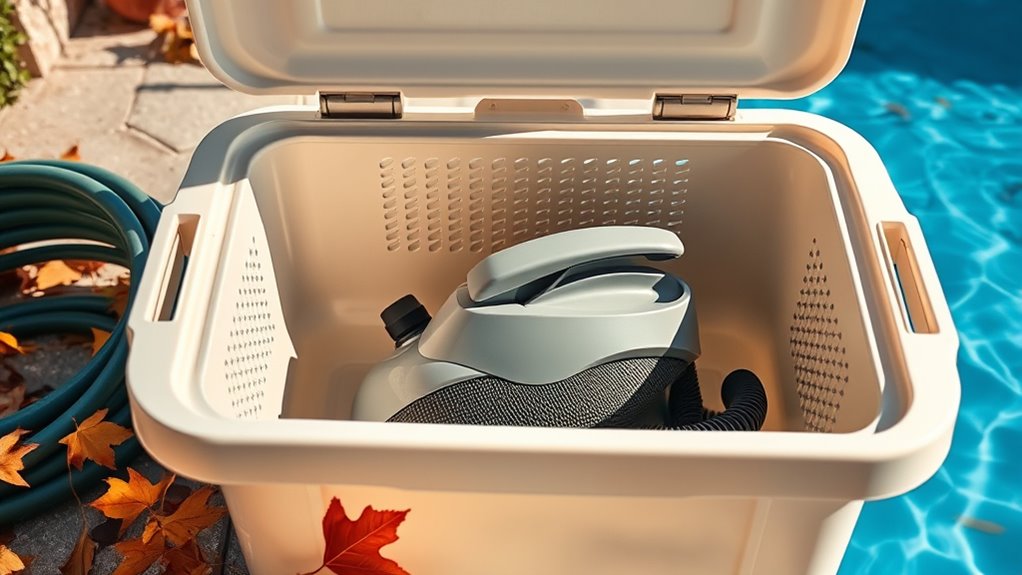
As the swimming season winds down, it’s vital to properly care for your suction pool cleaner to guarantee it stays in good shape for next year. Proper pool maintenance doesn’t end when you close the pool; it extends to your equipment, especially your suction cleaner. Storing it correctly during the off-season ensures it remains functional and ready to use when the weather warms up again. Neglecting equipment storage can lead to damage, mold buildup, or deterioration that might require costly repairs or replacements later on.
Start by thoroughly cleaning your suction pool cleaner. Remove any debris, leaves, or dirt trapped in the hoses and brushes. Use a hose to rinse off all parts, ensuring no dirt or algae remains that could cause mold or corrosion during storage. Check the hoses for cracks or leaks and replace any damaged sections. This step is essential because it prevents issues that could worsen over the off-season, making your next pool maintenance easier and more effective. Incorporating proper cleaning techniques can further extend the lifespan of your equipment.
Next, disassemble the cleaner if possible, following the manufacturer’s instructions. Store each part in a dry, cool place away from direct sunlight. Moisture and heat can accelerate wear and promote mold growth, so keeping your equipment in a climate-controlled environment is best. Before storing, make sure all parts are completely dry to prevent rust or mold formation. If your cleaner has any filters or small components, consider replacing or cleaning them thoroughly, as these parts can become breeding grounds for bacteria if left dirty. Additionally, taking steps to prevent mold growth can help maintain your equipment’s integrity. Ensuring proper storage conditions can significantly reduce the risk of damage over the off-season.
When it comes to equipment storage, avoid leaving hoses or parts in areas prone to freezing temperatures. Freezing and thawing cycles can cause hoses to crack or become brittle. Instead, coil hoses loosely and store them in a way that avoids tight bends or kinks. Store the cleaner and its parts in a designated area where they won’t be stepped on or damaged. Proper storage not only prolongs the lifespan of your equipment but also makes setup easier when the season begins again. Additionally, inspecting your high-quality components ensures your equipment remains reliable for the next season.
Finally, keep a record of any repairs or replacements you make during this process. Maintaining a maintenance log helps you stay organized and ensures you don’t overlook important steps next season. It’s also advisable to consult home security systems advice on storage environments to ensure your equipment is stored safely and securely. When you’re ready to reopen your pool, inspect your suction cleaner one last time, reassemble it carefully, and give it a test run. Proper off-season storage is an investment in your equipment’s longevity, making your upcoming pool season hassle-free and more enjoyable.
Frequently Asked Questions
How Do I Troubleshoot My Suction Pool Cleaner During the Off-Season?
To troubleshoot your suction pool cleaner during the off-season, start by inspecting and cleaning the filters to remove debris and guarantee proper suction. Check the hoses and connections for leaks or blockages. While it’s not battery-powered, if your model has a motor, make sure to lubricate moving parts if needed. Regularly maintain the cleaner by cleaning filters and inspecting parts, so it’s ready to go when pool season resumes.
Can I Leave the Cleaner in the Pool During Winter?
Leaving your suction pool cleaner in the pool during winter is like inviting trouble for a guest who overstays their welcome. It’s best to avoid winter storage in the pool, as harsh conditions can damage your cleaner. Instead, remove it, clean thoroughly, and store it in a dry, sheltered spot. When covering your pool, make sure the cleaner is out of the way to prevent damage from pool cover considerations.
What Repairs Should I Perform Before Storing the Cleaner?
Before storing your suction pool cleaner, you should perform essential repairs. Start with pool brush maintenance to verify your cleaner’s brushes are in good condition. Next, check the battery inspection if your model has a battery, making sure it’s fully charged and free of corrosion. Address any damage or worn parts, and clean the filter. Proper repairs now will keep your cleaner functioning well when you’re ready to use it again.
How Do I Prevent Mold and Mildew During Storage?
To prevent mold and mildew during storage, you should guarantee your suction pool cleaner is thoroughly cleaned and dried. Mold prevention and mildew control are key, so wipe down all parts and leave the cleaner in a well-ventilated area. Consider applying a mold inhibitor or a light coating of silicone spray to prevent moisture buildup. Proper storage in a dry, cool space helps keep your cleaner in top shape for next season.
Is It Necessary to Replace Any Parts Before Storing?
You should consider parts replacement before storing your suction pool cleaner to guarantee it’s in good shape for the next season. Performing seasonal maintenance, like replacing worn brushes or seals, prevents future issues and keeps your cleaner running efficiently. Check the manufacturer’s recommendations, and if any parts show signs of wear or damage, replace them now. This way, your cleaner stays ready and reliable when you need it again.
Conclusion
Remember, storing your suction pool cleaner properly is like giving it a gentle vacation—it’ll thank you with a longer life and better performance next season. Think of your cleaner as a trusty companion, deserving of some tender care during the off-season. By taking these simple steps, you’re not just preserving equipment; you’re safeguarding your summer fun. So, treat your cleaner well, and it’ll be ready to plunge in when the sunny days return—ready for its next splash adventure.