Start by placing leak detectors near water heaters, under sinks, and around washing machines in your home, as these spots are common leak sources. In industrial areas, install them close to pipes, valves, and tanks at high risk for leaks. Make sure you follow manufacturer guidelines for height and placement, avoiding dead spots and ensuring good airflow. Regular maintenance and strategic positioning help prevent costly damage. To discover more essential locations and tips, keep exploring how to maximize your leak detection system.
Key Takeaways
- Place leak detectors near water heaters, under sinks, and around washing machines in residential areas.
- Install detectors close to pipes, valves, and storage tanks in industrial settings for early leak detection.
- Position detectors at high-risk leak zones, especially where water or gas could cause significant damage.
- Follow manufacturer guidelines for height and secure mounting to ensure reliable operation.
- Regularly test and maintain detectors in these locations to ensure optimal performance and safety.
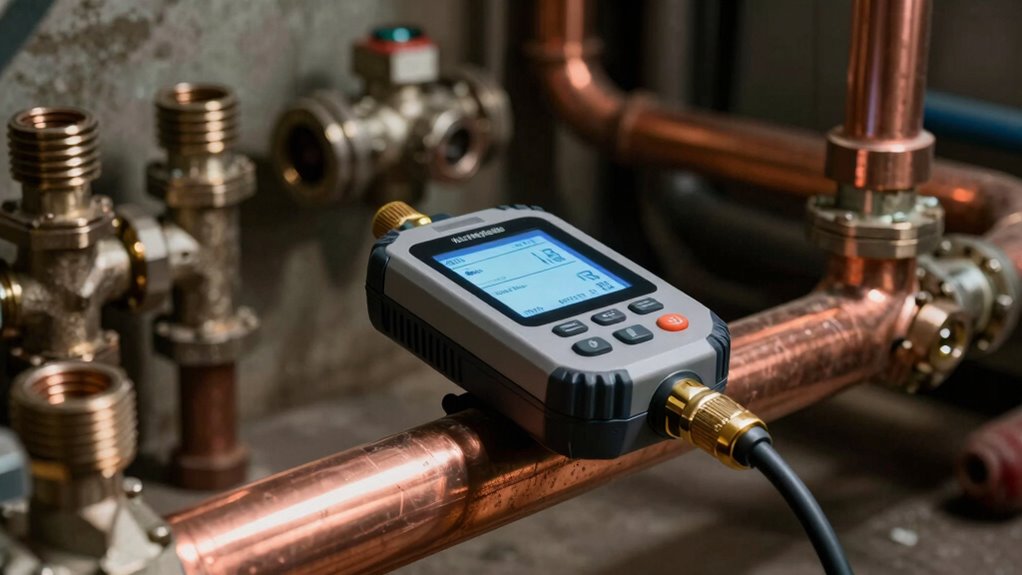
Leak detectors are your first line of defense, helping you identify problems early and prevent costly repairs. When it comes to installing these devices, proper placement is essential. You want to position leak detectors where leaks are most likely to occur or where water or gas could cause significant harm. For example, in a residential setting, installing leak detectors near water heaters, under sinks, and around washing machines makes sense because these areas are prone to leaks. In industrial environments, placing detectors near pipes, valves, or storage tanks ensures quick detection of leaks that could lead to hazardous situations.
Installation tips are critical to guarantee your leak detectors work effectively. First, make sure the detectors are installed at the manufacturer’s recommended height and location. Avoid placing them too high or low, as this can impair their ability to sense leaks promptly. Also, keep in mind that detectors should be installed in areas with good airflow, avoiding dead spots where leaks might go unnoticed. Regularly check the placement—over time, dust, dirt, or humidity can hamper performance. Mount the devices securely to prevent false alarms and ensure consistent operation. If you’re installing multiple detectors, consider their placement carefully to create a thorough coverage zone, minimizing blind spots. Proper installation and placement are essential for maximizing the lifespan and effectiveness of your leak detection system.
Maintenance procedures are equally important to keep your leak detection system functioning at its best. Regular testing ensures the sensors are responsive; many detectors have a test button or require a test spray. Schedule routine inspections, especially in high-risk areas, and replace batteries or units as recommended. Clean the detectors periodically to remove dust or debris that could obstruct sensing elements. If your detectors are connected to a monitoring system, verify that alerts are functioning correctly—this includes checking the alarm signals and ensuring the communication lines are intact. Remember, a well-maintained leak detector isn’t just about replacing batteries; it’s about proactive care to prevent failures when you need them most. Additionally, understanding the chemical safety associated with leak detection can help prevent hazardous situations during maintenance. Regular upkeep and understanding of leak detection technology are vital in ensuring your system remains reliable over time. Incorporating preventive maintenance strategies can extend the operational life of your detectors and improve their overall performance. Being aware of common leak sources can also guide you in prioritizing areas for inspection and maintenance, and implementing proper safety procedures can further reduce risks during upkeep.
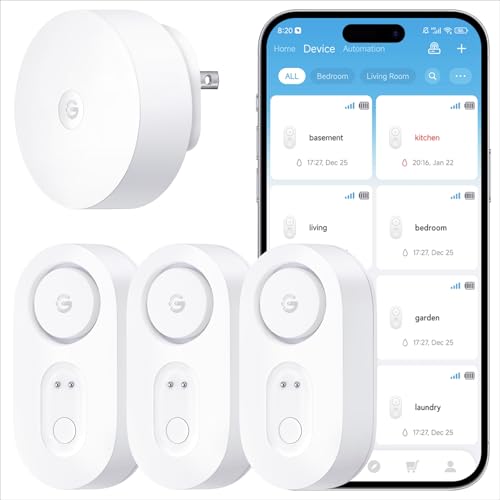
GoveeLife Upgraded Smart Water Leak Detector 1s with High Alarm, 3 Pack
- Long-Range Connectivity: Up to 1804 feet through walls
- Multiple Notification Methods: SMS, Email, App alerts, Sound alarm
- User-Friendly App Features: Instant notifications, Find device function
As an affiliate, we earn on qualifying purchases.
As an affiliate, we earn on qualifying purchases.
Frequently Asked Questions
How Often Should Leak Detectors Be Calibrated?
You should calibrate your leak detectors according to the manufacturer’s recommended calibration frequency, typically once every 6 to 12 months. Incorporate this into your maintenance schedule to guarantee accuracy and early detection. Regular calibration helps prevent false alarms and maintains detector sensitivity. Always check the user manual for specific guidelines, and perform calibration more frequently if your environment is particularly harsh or if the detector is used heavily.
Are Leak Detectors Suitable for Outdoor Use?
Yes, leak detectors can be suitable for outdoor use if they’re built with outdoor durability and weather resistance in mind. Think of them as vigilant guardians standing firm against the elements. Look for models specifically designed to withstand rain, wind, and temperature swings. When you choose a weather-resistant leak detector, it becomes a reliable sentinel, keeping watch over your outdoor systems without faltering in harsh conditions.
What Is the Lifespan of a Typical Leak Detector?
A typical leak detector has a lifespan of around 2 to 5 years, depending on its durability and usage. You should regularly check for signs of wear or battery issues to guarantee reliable leak detection. Proper maintenance, like keeping it clean and storing it correctly, can prolong its durability. Investing in a high-quality detector often means it will last longer and provide more accurate leak detection over time.
Can Leak Detectors Detect Gas Leaks or Only Liquids?
Leak detectors can detect both gas leaks and liquids, depending on their design. Gas-sensitive detectors are specifically made to identify various gas leaks, so proper detector placement is essential for maximum effectiveness. You should position gas leak detectors near potential leak sources like pipelines or appliances. Regularly check their sensitivity levels to guarantee they remain effective, and always follow manufacturer guidelines for placement to catch leaks early and prevent hazards.
How Do I Maintain and Store Leak Detectors Properly?
To maintain and store leak detectors properly, follow a regular maintenance checklist, including calibrating them and checking sensors for damage. Use proper storage techniques, like keeping detectors in a cool, dry place away from direct sunlight and chemicals. Always turn off devices after use and clean sensors gently with recommended materials. Proper storage and routine maintenance prolong their lifespan and ensure accurate leak detection when you need it most.
Conclusion
Now that you know the top nine spots to place leak detectors, you’re better equipped to catch issues early and prevent costly damage. Some believe these detectors can’t catch every leak, but studies show they markedly improve detection rates when placed strategically. By trusting this technology and positioning them wisely, you’re taking a proactive step toward safeguarding your home. Remember, regular checks make all the difference—so stay vigilant and keep your space secure.